Emergencies
Drying Out After a Leak: How Long It Really Takes
Realistic drying timelines after a water leak, when mould becomes a risk, and whether DIY drying is enough. Practical advice for TW area homeowners.
Published 30 June 2026
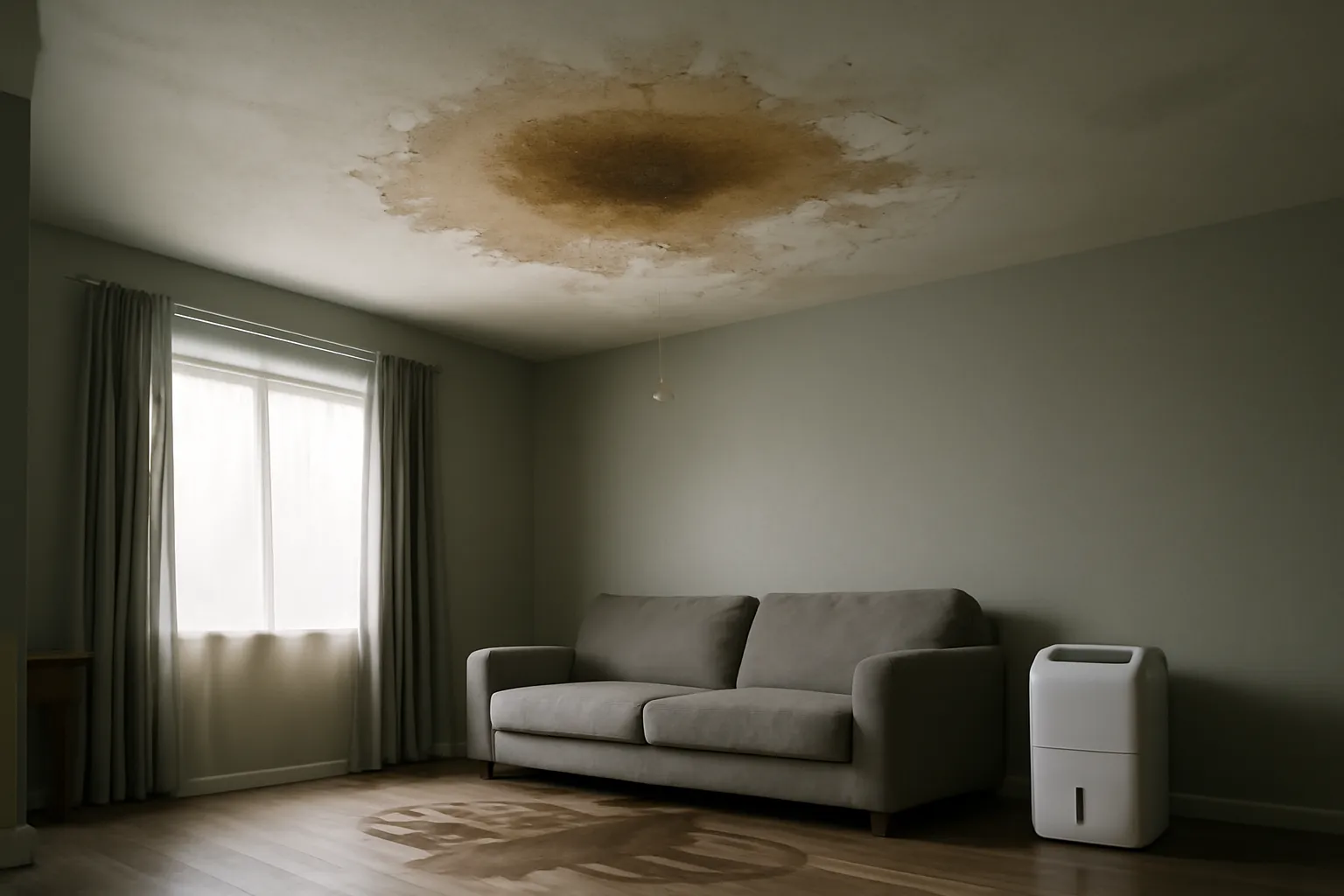
Drying after a leak can take days or weeks, depending on the material, how wet it became and the drying conditions. A dry surface does not prove that the wall, floor or ceiling underneath is ready to repair. Use the ranges below as a guide, then confirm the moisture level before redecorating.
Still Leaking, or Ready to Dry?
If the wet patch is spreading, water is still dripping or you have not found the source, get the leak checked before concentrating on drying. A dehumidifier cannot fix a leaking pipe.
Need help with an active leak in the TW area? Call 07360 268948. Tell us where the water is appearing and whether you have been able to turn it off. See our water leak service or local help in Ashford TW15 and Teddington TW11.
Once the source is repaired, the next step is assessing what got wet and how it can be dried safely. If water has affected electrics, have them checked before using electrical drying equipment. Government guidance on recovering from flooding explains the precautions.
Why Drying Takes Longer Than It Looks
Water does not just sit on the surface. Within minutes of a leak, moisture travels into plasterboard, timber joists, insulation, flooring substrates, and the cavities between walls. The visible wet patch is rarely the full picture.
Several factors affect how long drying takes:
- Material type — plasterboard absorbs water rapidly and dries slowly; concrete and screed can hold moisture for weeks
- Depth of saturation — a brief drip versus an hour of water through a ceiling are very different situations
- Ventilation — a well-ventilated room dries significantly faster than a sealed one
- Time of year — humidity in the TW area tends to be higher in autumn and winter, slowing natural evaporation
- How quickly you acted — the sooner extraction and drying begins, the shorter the overall process
Realistic Drying Timelines
These are general ranges, not guarantees. Every situation is different.
Surface materials (carpets, soft furnishings)
2–7 days with good airflow and a dehumidifier running. Carpets that have been soaked through for more than 24 hours are often better replaced than dried in place, as the underlay traps moisture and becomes a mould source.
Plasterboard walls and ceilings
1–3 weeks for a moderate soak. Severely saturated plasterboard often cannot be dried effectively and needs to be cut out and replaced — attempting to dry it in place can leave hidden damp that causes mould months later.
Timber floorboards and joists
2–6 weeks depending on thickness and how long the water was present. Timber is particularly vulnerable to warping and rot if drying is rushed or incomplete.
Concrete floors and screeds
4–12 weeks in some cases. Concrete is dense and holds moisture deep within. This is where professional moisture meters matter most — the surface can feel dry while the substrate is still significantly damp.
The Mould Risk Window
This is the detail most people are not told: mould can begin to develop within 24 to 48 hours of a water incident, given the right temperature and humidity. In a typical UK home in a warm room, that window is very real.
Mould does not always appear immediately where you expect it. It often starts behind skirting boards, inside wall cavities, or beneath flooring — places you cannot easily see until the problem is already established.
To reduce mould risk:
- Start drying as soon as the leak is stopped
- Run a dehumidifier continuously, emptying it regularly
- Keep the room ventilated but avoid cold draughts that cause condensation on cool surfaces
- Check behind furniture and in corners, not just the obvious wet area
- Do not redecorate or seal surfaces until moisture readings confirm they are genuinely dry
DIY Drying vs Professional Drying
When DIY is reasonable
A small, contained leak — a dripping pipe caught quickly, a minor overflow — that has affected a limited area of hard flooring or a single small patch of plaster can often be managed with a household dehumidifier, fans, and good ventilation. Check progress with a damp meter if you can hire or borrow one.
When professional drying is worth considering
- Water has come through a ceiling or spread across a large floor area
- The leak ran for more than an hour before being stopped
- Timber joists, floorboards, or structural elements are involved
- You can see or smell any sign of mould developing
- You need documentation for an insurance claim (professional drying reports are often required)
Professional drying companies use industrial-grade dehumidifiers and air movers alongside thermal imaging and moisture meters to map exactly where the water has travelled and confirm when drying is complete. It is not always necessary, but for anything beyond a minor incident it is worth getting an assessment.
A Note on Redecorating Too Soon
One of the most frustrating outcomes after a leak is watching fresh paint bubble, new plaster crack, or flooring lift — because the work was done before the structure was fully dry. Give materials the full time they need. If in doubt, hire a damp meter or ask a professional to take readings before you spend money on repairs.
Still Dealing With the Leak Itself?
If water is still coming through your ceiling, a pipe has not been isolated, or you are not sure the source has been properly fixed, call us before you worry about drying out.
Emergency Plumbers TW are available 24 hours a day, 7 days a week across Twickenham, Richmond, Teddington, Hounslow, Feltham, Staines and the surrounding TW postcode area.
Call 07360 268948 for help getting the leak under control. If the source is already repaired, our guide to drying a wall after a leak explains the next stage in more detail.