Emergencies
Leaking Roof or Ceiling in Teddington? Read This Before You Panic
Water coming through your ceiling in Teddington? Here's what to do right now — safe first steps, common causes, and when to call an emergency plumber.
Published 26 July 2026
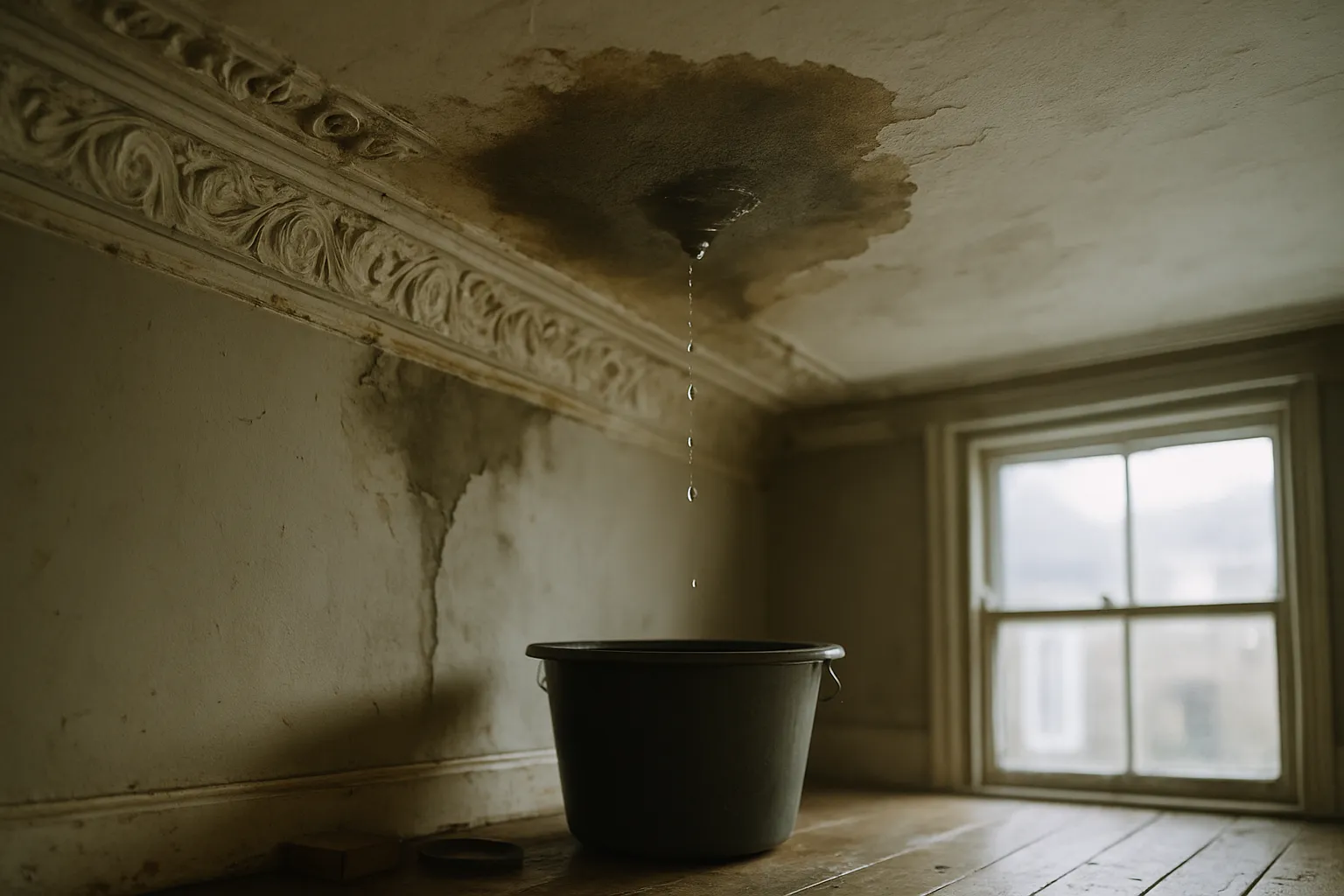
Water Coming Through Your Ceiling in Teddington? Here Is What to Do First
A damp patch spreading across the ceiling, a steady drip, or — worst case — a bulging plaster bubble full of water. It is alarming, but if you act in the right order you can limit the damage significantly. This guide walks you through the immediate steps, the most common causes in Teddington homes, and how to decide whether you need an emergency plumber right now.
Step One: Make the Area Electrically Safe
Before you touch anything or put a bucket down, check whether the leak is near a light fitting, a ceiling rose, or a pendant lamp. Water and mains electricity are a dangerous combination.
If water is dripping from or near a light fitting:
- Do not switch the light on or off at the fitting itself.
- Go to your consumer unit (fuse box) and switch off the circuit for that room — usually labelled “lighting downstairs” or similar.
- If you are unsure which circuit to isolate, switch off the main breaker until you know it is safe.
- Do not restore power to that circuit until a qualified electrician has confirmed it is dry and undamaged.
This one step prevents the majority of secondary injuries and fire risks associated with ceiling leaks.
Step Two: Relieve the Pressure If the Ceiling Is Bulging
A plaster ceiling that is sagging or forming a dome is holding a reservoir of water. Left alone it will collapse — often suddenly and without warning, bringing plaster, insulation and dirty water with it.
- Clear the room of people, pets and anything valuable.
- Place a large container underneath.
- Using a screwdriver, carefully pierce the lowest point of the bulge to release the water in a controlled stream rather than a sudden collapse.
This feels counterintuitive, but a controlled release causes far less damage than an uncontrolled one.
Step Three: Identify the Likely Source
Water through a ceiling in Teddington can come from several places. Knowing the rough source helps you take the right next step.
The flat or bathroom directly above
The most common cause in the terraced and semi-detached Victorian and Edwardian houses that make up much of Teddington. A failed bath seal, a cracked toilet pan, a leaking shower tray, or a slow drip from a supply pipe under the floorboards can all saturate the subfloor over days before appearing at your ceiling.
A central heating or hot water pipe
Older properties in the TW11 area often have pipework running through floor voids. A pinhole corrosion leak or a failed joint can drip unnoticed until the ceiling gives way. If the water is warm or the leak worsens when the heating comes on, this is the most likely cause. An emergency plumber can isolate the circuit and carry out leak detection to pinpoint the exact location without unnecessary lifting of floorboards.
Your boiler or its associated pipework
If the leak is close to where a boiler sits on an upper floor — or where its flue or overflow pipe runs — it is worth checking whether the boiler is the source. A faulty pressure relief valve, a cracked heat exchanger, or a weeping joint on the primary circuit can all cause water to track along joists and appear some distance from the actual fault. Emergency boiler repair in Teddington should always be carried out by a Gas Safe registered engineer; do not attempt to work on the boiler itself.
Roof or external water ingress
If there has been heavy rain and no plumbing is above the affected ceiling, the source may genuinely be the roof. Missing or slipped tiles, failed lead flashing around a chimney stack, or a blocked valley gutter are common culprits in Teddington’s older housing stock. A roofer is the right call here rather than a plumber — though a plumber can help with leak detection to confirm no internal pipework is involved.
Step Four: Document Everything
Whatever the source, take photographs and short video clips before any repair work begins. Capture:
- The wet patch or bulge from multiple angles
- Any visible drips and where they are falling from
- The room above if you can safely access it
- Any damaged belongings
This documentation belongs to you. If you later need to make a claim on your home insurance, your insurer will ask for evidence of the cause and extent of the damage. A written report from your plumber — including cause, photographs, moisture readings, and scope of work — forms part of that record.
When to Call an Emergency Plumber Right Now
Call immediately if:
- Water is dripping near electrics and you cannot isolate the circuit with confidence
- The ceiling is actively bulging and you cannot safely relieve it
- The water is warm, suggesting a live heating or hot water leak
- You cannot identify or reach the source to stop it
- The leak is worsening by the minute
For leak detection in Teddington or water-through-ceiling emergencies across TW11 and the surrounding area, we are available around the clock.
Call Emergency Plumbers TW on 07360 268948 — we are here 24 hours a day, seven days a week.
Take a breath. You have done the right things. Help is on its way.