Emergencies
Ceiling Cracks After a Leak: Cosmetic or Structural?
Learn how to tell whether a cracked or stained ceiling is safe to leave or a structural danger that needs urgent attention after a water leak.
Published 1 July 2026
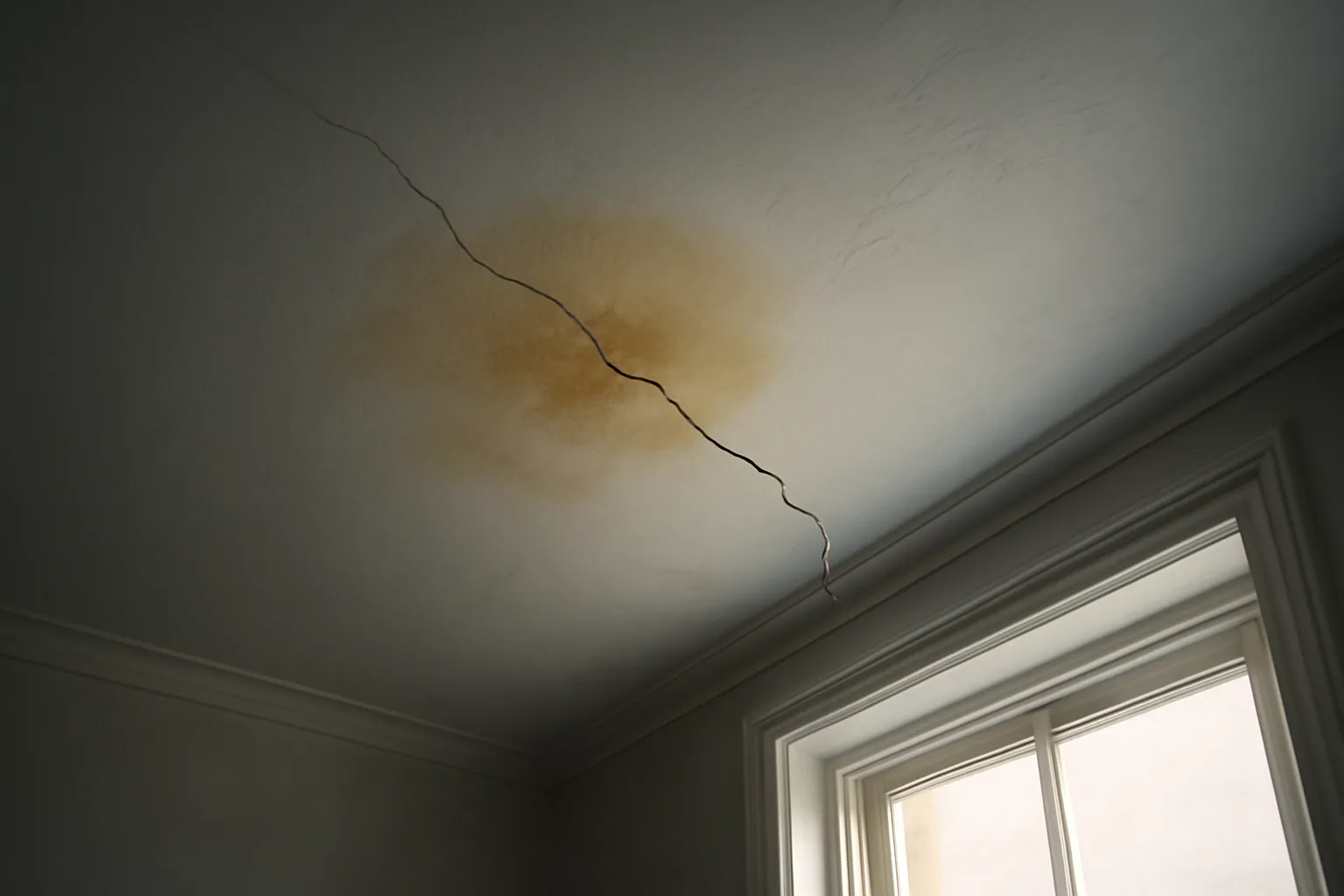
A damp patch or crack appearing on your ceiling after a leak is unsettling. The good news is that many ceiling blemishes are purely cosmetic. The less good news is that some are a genuine safety hazard. Knowing which you are dealing with helps you decide whether to book a decorator or call an emergency plumber right now.
Why Leaks Damage Ceilings
Water that escapes from a pipe, an overflowing bath, or a leaking appliance above soaks into the ceiling material — usually plasterboard, lath-and-plaster, or a combination of both in older TW-area properties. As the water accumulates it adds weight, softens the material, and can attack the fixings that hold it in place. Even after the leak is fixed, the ceiling continues to change as it dries out unevenly.
Signs the Damage Is Cosmetic
You can usually treat the following as decorating jobs once the source of the leak has been resolved and the ceiling is fully dry:
- A flat, well-defined brown or yellow stain with no distortion of the surface
- Hairline cracks running along existing plaster joints or corners
- Paint that is bubbling or flaking in a small, contained area
- The ceiling feels firm when you gently press it (never press a sagging area)
These marks are annoying but they pose no immediate danger. Allow at least two to four weeks for the ceiling to dry thoroughly before applying a stain-blocking primer and repainting.
Warning Signs That Suggest a Structural Problem
Take the following signs seriously. If you notice any of them, keep people away from the area and seek professional advice promptly.
Sagging or Bulging
A ceiling that bows downward — even slightly — is holding water or has lost its structural integrity. This is the single most dangerous sign. A waterlogged plasterboard ceiling can weigh significantly more than its dry weight, and it can come down without further warning.
Widespread or Widening Cracks
A crack wider than roughly 3 mm, a crack that runs diagonally across the ceiling rather than along a joint, or a crack that appears to be growing are all reasons for concern. In lath-and-plaster ceilings common in Victorian and Edwardian homes throughout Richmond, Twickenham, and Teddington, the plaster keys can fail after water ingress, leaving large sections held up by very little.
Cracks at the Ceiling-to-Wall Junction
Where the ceiling meets the wall is a load-bearing junction in many properties. Cracks that open up along this line after a leak may indicate movement beyond simple cosmetic damage.
Soft or Spongy Texture
If the ceiling surface gives when touched, or if you can hear a hollow, loose sound when you tap it, the material has delaminated or the fixings have failed.
Recurring Damp Without an Obvious Active Leak
If a stain keeps reappearing despite the leak being repaired, there may be a secondary source — or the ceiling void is retaining moisture and continuing to degrade.
What to Do Right Now
- Stop the water source first. If the leak is still active, turn off the water supply at the stopcock and call an emergency plumber.
- Keep the room clear. Do not stand beneath a sagging or heavily stained ceiling. Move furniture and valuables out of the area.
- Relieve a bulge carefully — only if safe to do so. If a ceiling is visibly sagging and you can reach it safely from the side, placing a bucket beneath and gently piercing the lowest point with a screwdriver allows the trapped water to drain in a controlled way rather than bringing down a large section suddenly. Do this only if you can do so without standing directly underneath.
- Document everything. Photographs taken promptly will support any insurance claim.
- Do not restore power to the area until you are certain there are no electrical fittings — lights, smoke alarms, extractor fans — that may have been exposed to water.
Getting the Ceiling Properly Assessed
Once the plumbing issue is resolved, a qualified plasterer or building surveyor can assess whether the ceiling needs partial or full replacement. In many cases a localised patch repair is sufficient. In older lath-and-plaster properties, a full re-skim or board replacement is sometimes the safer and more cost-effective long-term solution.
Still Not Sure? Err on the Side of Caution
Ceiling collapses are rare but they do happen, and they cause injury. If you are uncertain whether what you are looking at is safe, treat it as unsafe until someone qualified tells you otherwise.
If the leak is still active, the ceiling is sagging, or you have water coming through a light fitting or around electrical fittings, that is an emergency.
Call Emergency Plumbers TW any time, day or night: 07360 268948.
We cover Twickenham, Richmond, Teddington, Isleworth, Hounslow, Feltham, Staines, and the surrounding TW postcode area around the clock.