Emergencies
Damp Patch on the Ceiling: Leak or Condensation?
Brown stain or damp patch on your ceiling? Learn how to tell a plumbing leak from condensation and what to do next.
Published 29 June 2026
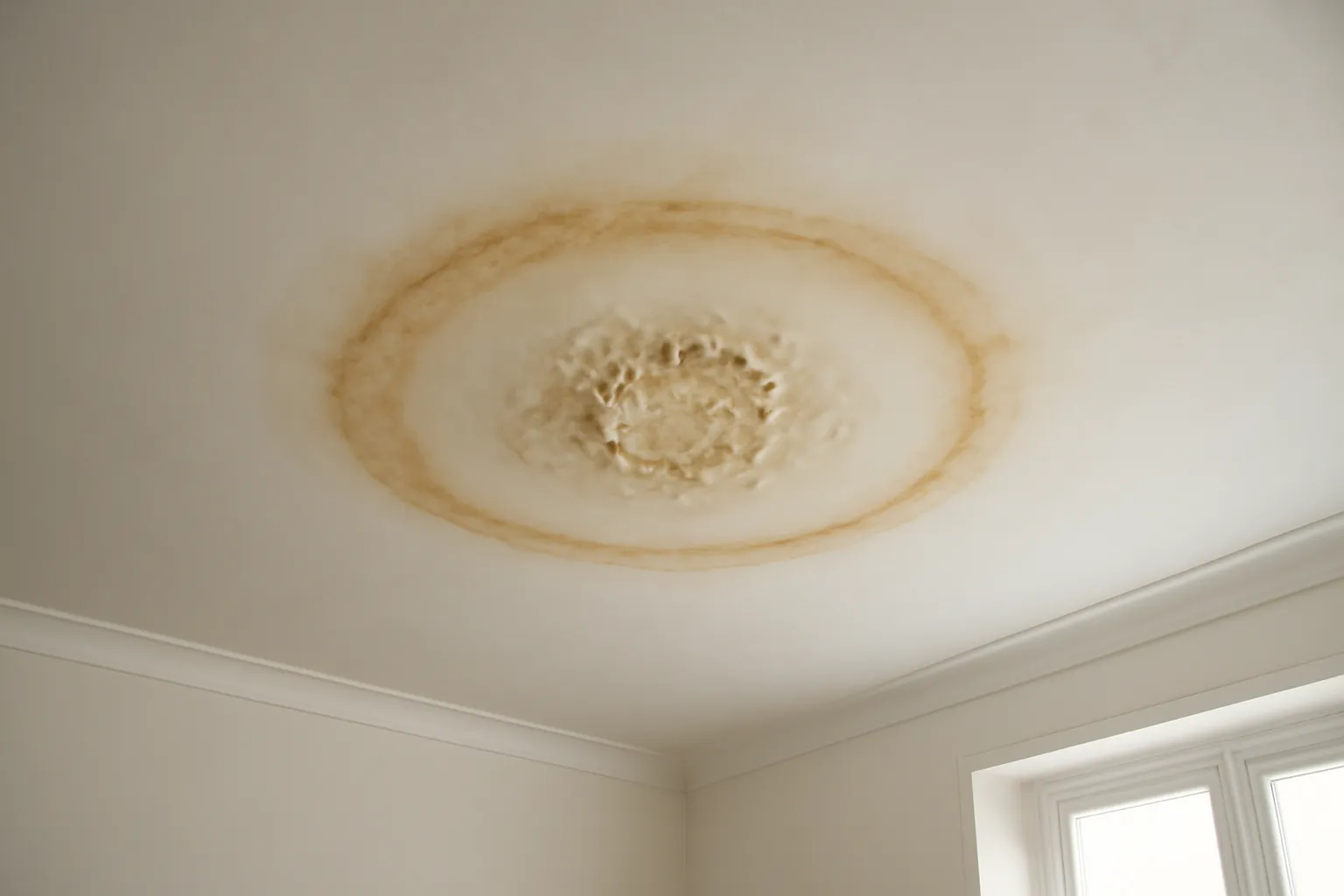
A damp patch or brown stain on the ceiling is one of those discoveries that immediately puts you on edge. The good news is that a few quick checks will usually tell you whether you are dealing with a plumbing leak — which needs prompt attention — or condensation, which is a ventilation problem you can tackle more slowly.
Why It Matters to Get the Diagnosis Right
Water from a slow leak can travel a long way through joists and plasterboard before it appears on your ceiling. Left alone, it can rot timber, encourage mould, damage electrics, and eventually cause a ceiling to fail. Condensation is far less dramatic but can still cause mould and peeling paint if ignored. Either way, knowing which you have tells you what to do next.
What the Stain Looks Like
The appearance of the patch gives you the first clue.
Likely a leak:
- A defined brown or yellow ring, sometimes called a “tide mark,” around the edge of the damp area
- The centre of the patch feels wetter than the edges
- The stain grows after rain, or after someone has used the bathroom or kitchen above
- Plaster feels soft or bubbling
- Paint is flaking or blistering in a concentrated spot
Likely condensation:
- A more diffuse, grey or dark patch with no clear ring
- Appears in corners or along the edge where the ceiling meets an outside wall
- The whole area feels slightly cool and damp to the touch rather than wet in one spot
- Often accompanied by mould spots, especially in poorly ventilated rooms such as bathrooms or kitchens
What the Location Tells You
Directly below a bathroom or wet room
This is one of the most common scenarios. A brown stain directly beneath a bath, shower tray, toilet cistern, or basin is almost always a plumbing leak — either from a failed seal, a loose joint, or a cracked waste pipe. Run the shower or bath and watch whether the patch grows within a few minutes.
Directly below a kitchen
Leaks under kitchen sinks and from dishwasher or washing machine connections are frequent. Check the cabinet under the sink for moisture and look behind the appliances if you can.
Below a flat roof or skylight
If the ceiling is on the top floor and there is a flat roof or skylight above, rainwater ingress is a strong possibility. This is a roofing matter rather than plumbing, but the ceiling damage is identical.
In a room with no wet room above
If there is no bathroom or kitchen directly above the patch, suspect either a leaking pipe buried in the floor structure, a radiator pipe joint, or — if it is an external wall — condensation or a roofing issue.
The Cold-Surface Test for Condensation
Hold a piece of kitchen foil flat against the damp patch and tape all four edges so no room air can get behind it. Leave it for 24 hours. When you remove it:
- Moisture on the room side of the foil → condensation; warm, moist air is hitting the cold ceiling surface
- Moisture on the ceiling side of the foil → water is coming through from above; treat it as a leak until proven otherwise
Quick Checks Before You Call a Plumber
- Check the floor above — open the airing cupboard, look under the bath panel, and inspect under the sink. Any standing water or dripping joints are a clear sign.
- Turn off appliances — isolate the washing machine and dishwasher, then watch whether the patch changes.
- Look at the stopcock — if you suspect a burst or leaking pipe, know where your stopcock is so you can turn off the water supply quickly.
- Check your water meter — turn off everything that uses water and note the meter reading. Wait 30 minutes without using any water. If the meter has moved, you have a leak somewhere.
When to Call an Emergency Plumber
Call immediately if:
- Water is actively dripping or running through the ceiling
- The ceiling feels soft, is sagging, or looks as though it may come down
- The damp patch is near a light fitting, consumer unit, or any electrical fitting — water and electrics are a serious safety risk
- The patch has appeared suddenly and is growing quickly
In those situations, turn off the water at the stopcock, switch off the relevant circuit at the consumer unit if you can do so safely, and call a plumber straight away.
Still Not Sure?
If you have done the checks above and you are still uncertain, err on the side of caution. A slow leak that is ignored for weeks will cost far more to put right than an early call-out. An experienced plumber can trace the source without unnecessary damage to your ceiling or flooring.
If you are in the TW postcode area and need someone to take a look, call Emergency Plumbers TW any time on 07360 268948. We are available 24 hours a day, seven days a week.