Emergencies
How to Turn Off Your Water at the Mains (Before It's an Emergency)
A step-by-step guide to finding and using your internal stop tap and outside stopcock — the single most useful thing to know in a plumbing emergency.
Published 26 June 2026
When a pipe bursts or a tap won’t stop running, every second counts. The single most useful thing you can do — long before a plumber arrives — is shut off the water at the mains. If you’ve found your stop tap once, calmly, on a dry afternoon, you’ll know exactly what to do when it actually matters. This guide shows you where to look and what to do.
What you’re looking for
Most homes have two ways to cut off the water supply:
- The internal stop tap (also called a stopcock). This is inside your home and controls the cold water coming into the property. Turning it off stops water reaching your pipes, tank and most appliances.
- The outside stopcock. This sits below ground at your boundary, usually under a small metal or plastic cover near the pavement, and is the water company’s cut-off. You’ll rarely need it, but it’s good to know it exists.
For almost every household emergency, the internal stop tap is the one you want.
Where to find your internal stop tap
It’s usually within a metre or two of where the water pipe enters the house. Common spots:
- Under the kitchen sink — the most common location by far.
- In a downstairs bathroom or cloakroom, near the cold tap.
- Inside or near an airing cupboard, or under the stairs.
- In a utility room, garage, or near the front door in a flat.
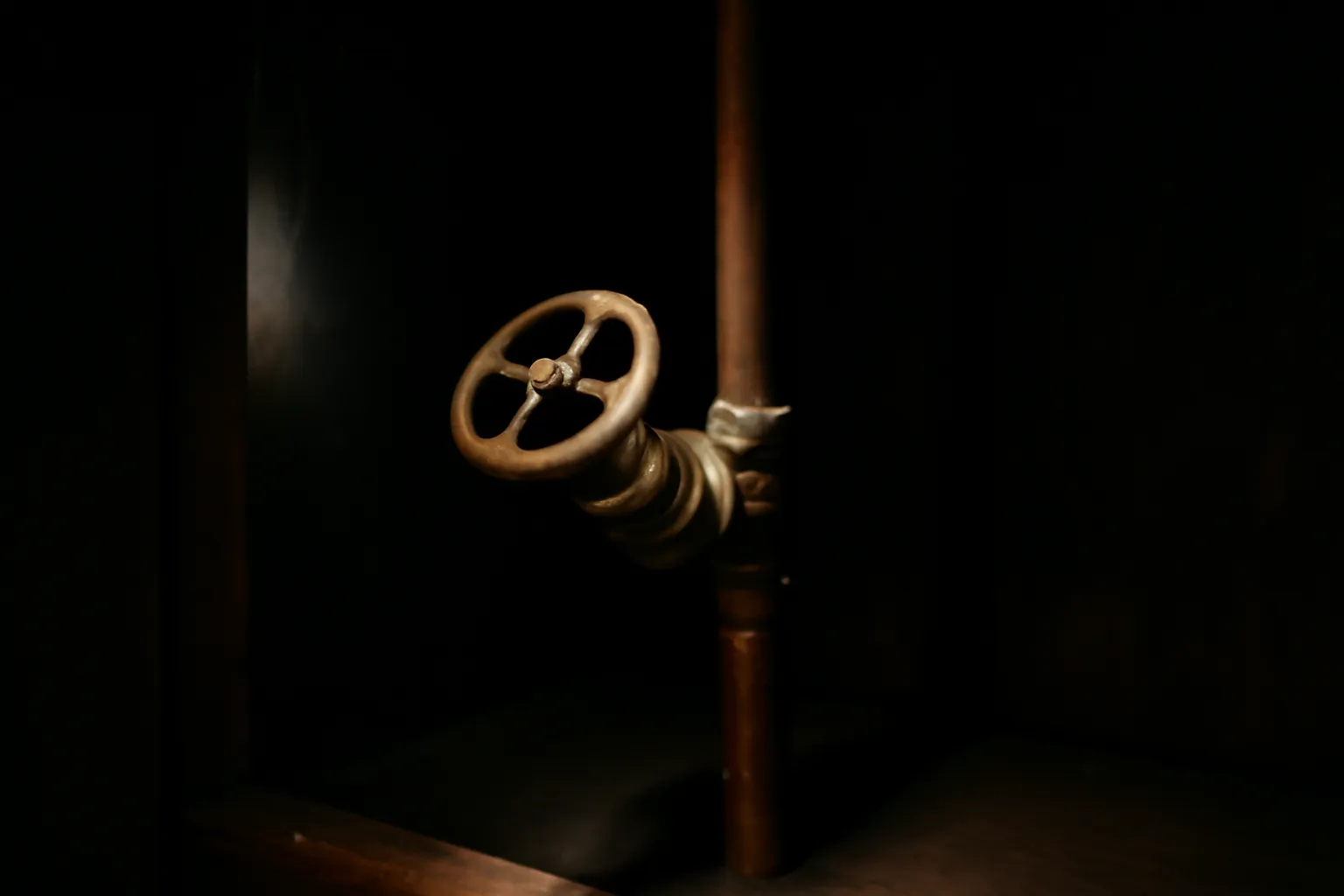
It looks like a small tap or a lever valve on the incoming pipe. Older homes often have a round, brass wheel-style handle; newer ones may have a quarter-turn lever.
How to turn it off
- Wheel-style (round handle): turn it clockwise (“righty-tighty”) until it stops. Don’t force it past the natural stop.
- Lever-style: turn the lever a quarter-turn so it sits across the pipe rather than along it.
- Check it worked: run the cold kitchen tap. The flow should slow to a trickle and stop within a minute or so.
If the tap is stiff — which is common if it hasn’t been touched in years — don’t wrench it. A gentle back-and-forth often frees it. If it won’t budge or starts to weep around the spindle, leave it and call us; a seized stop tap is a repair in itself.
After the water’s off
- Open the cold taps downstairs to drain the remaining water in the pipes and relieve pressure.
- If water has been near electrics, stay clear and switch off at the consumer unit if it’s safe to reach.
- Turn off the water heating to avoid the boiler or immersion running dry.
- Move valuables, rugs and electricals away from any water.
A two-minute job worth doing today
Find your stop tap now, while everything’s calm. Turn it off and on once so you know it moves freely, and make sure everyone in the house knows where it is. If yours is seized, hidden, or you simply can’t find it, that’s worth sorting before you need it — we can locate, free off or replace a stop tap quickly.
If you’re dealing with a leak or burst right now across the TW area, turn off the mains and call us. We answer 24/7, and your details go straight to a local plumber.