Emergencies
No Hot Water? A Quick Checklist Before You Call
No hot water at home? Work through our quick checklist to spot simple fixes before calling a plumber. Covers boilers, pilots, and more.
Published 27 June 2026
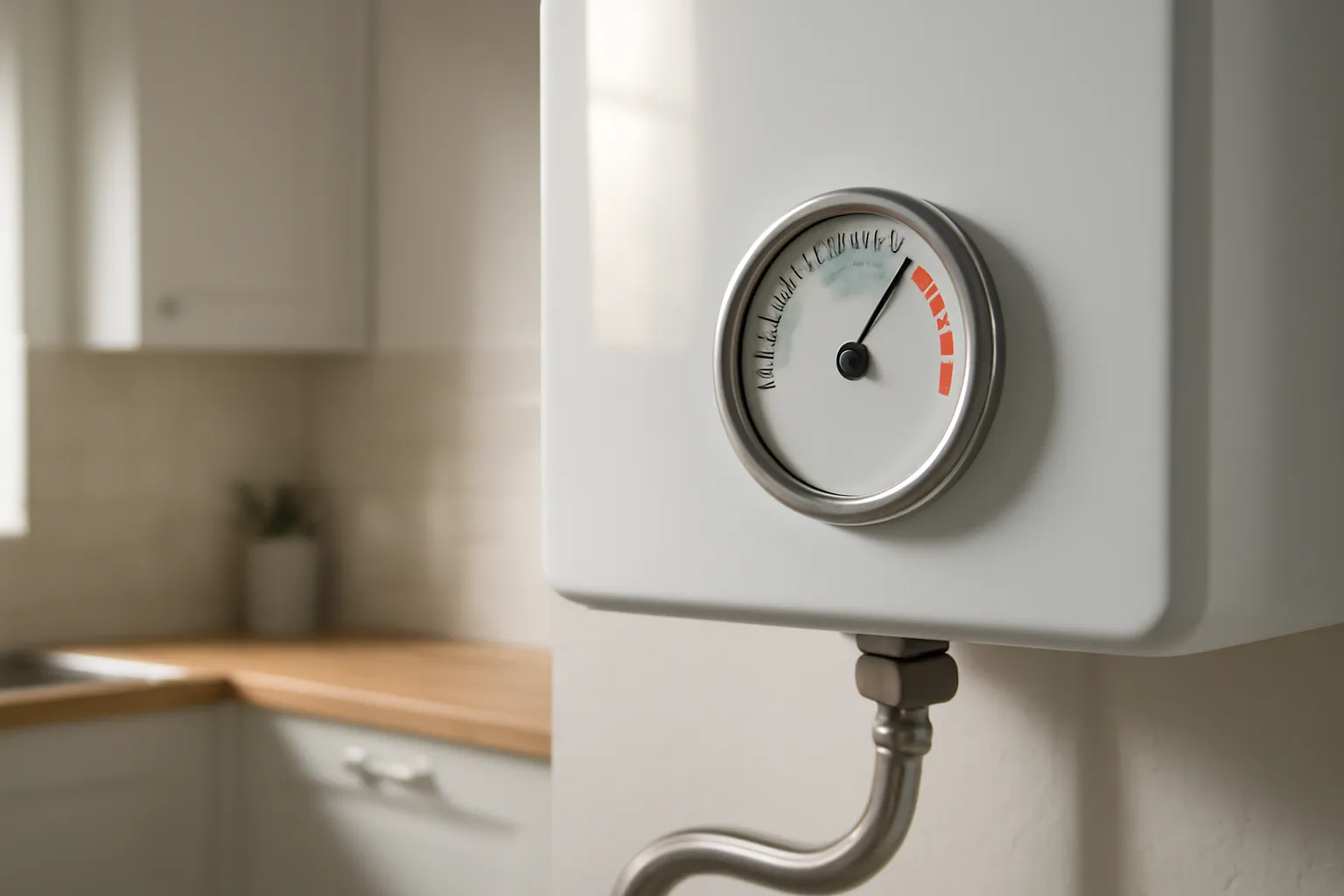
No Hot Water? Start Here
Waking up to a cold shower is miserable, but before you pick up the phone, it is worth running through a few quick checks. Many no-hot-water calls turn out to have a simple cause that you can sort yourself in minutes. This guide walks you through the most common culprits — and tells you clearly when it is time to call a professional.
Step 1: Check Whether It Is Just You
Before assuming your boiler has broken down, confirm the problem is limited to your property.
- Ask a neighbour whether they have hot water (a street-level outage affects everyone).
- Check your cold taps — if you have no water at all, contact your water supplier first.
- If only the hot water is affected, carry on with the checklist below.
Step 2: Look at Your Boiler Display
Modern boilers show fault codes on a small screen. A flashing light or error code is the boiler’s way of telling you what has gone wrong.
- Note the code displayed and search for it alongside your boiler make and model.
- Common codes relate to low pressure, ignition failure, or a frozen condensate pipe.
- If the display is completely blank, check the boiler has power (see Step 3).
Step 3: Check Power and the Fuse Spur
It sounds obvious, but boilers can lose power without any drama.
- Make sure the boiler’s isolator switch (usually on the wall beside the unit) is turned on.
- Check your consumer unit (fuse box) for any tripped breakers.
- Reset a tripped breaker once. If it trips again immediately, do not keep resetting — call us.
Step 4: Check the Boiler Pressure
Most combi and system boilers need a water pressure of between 1 and 1.5 bar when cold. Low pressure is one of the most frequent reasons for no hot water.
- Find the pressure gauge on the front of the boiler — it is usually a dial or a digital reading.
- If it reads below 1 bar, you may be able to repressurise using the filling loop (a flexible silver hose beneath the boiler).
- Your boiler manual will show you how to do this safely. If you are unsure, stop and call a plumber rather than risk overpressurising the system.
Step 5: Check the Condensate Pipe (In Cold Weather)
If this happens in winter, a frozen condensate pipe is a very common culprit. The condensate pipe carries waste water from the boiler to an outside drain, and it can freeze solid in cold snaps.
- The pipe is usually a white or grey plastic pipe that exits through an external wall.
- You can thaw it carefully by pouring warm (not boiling) water along its length.
- Once thawed, reset the boiler and allow a few minutes for it to fire up.
Step 6: Check the Thermostat and Timer Settings
Your hot water may simply be switched off by the controls.
- Check that the hot water is set to come on at the current time of day.
- Make sure the thermostat is set above the current room or cylinder temperature.
- If the clocks have recently changed, your programmer may be running an hour out.
Step 7: Check the Pilot Light (Older Boilers)
If you have an older boiler with a standing pilot light, check whether it has gone out.
- A pilot light can be blown out by a draught or extinguished by a faulty thermocouple.
- Relighting instructions are usually printed on the inside of the boiler casing.
- If the pilot will not stay lit after two or three attempts, do not keep trying — call a Gas Safe registered engineer.
When to Stop and Call a Professional
Some situations are not DIY territory. Call a plumber or Gas Safe engineer straight away if:
- You smell gas at any point — leave the property, do not use switches or flames, and call the National Gas Emergency line on 0800 111 999 immediately.
- The boiler is making loud banging, gurgling, or kettling noises.
- You see water leaking from the boiler or pipework.
- The pressure keeps dropping even after you repressurise.
- A fault code reappears after you reset the boiler.
- You are simply not confident — there is no shame in that, and pushing ahead can make things worse.
Still No Hot Water After All That?
If you have worked through the checklist and still have no joy, the fault is most likely internal to the boiler — a faulty diverter valve, heat exchanger, or pump, for example — and needs a qualified engineer to diagnose it properly.
We cover the TW postcode area around the clock, including Twickenham, Richmond, Teddington, Hounslow, Feltham, Staines, and everywhere in between. We will give you an honest assessment and get your hot water back on as quickly as possible.
Call us any time on 07360 268948. We are here 24 hours a day, seven days a week.