Emergencies
What to Do When Water Comes Through the Ceiling
Water coming through your ceiling? Follow these safety-first steps to protect yourself from electrics, contain the damage, and get help fast.
Published 27 June 2026
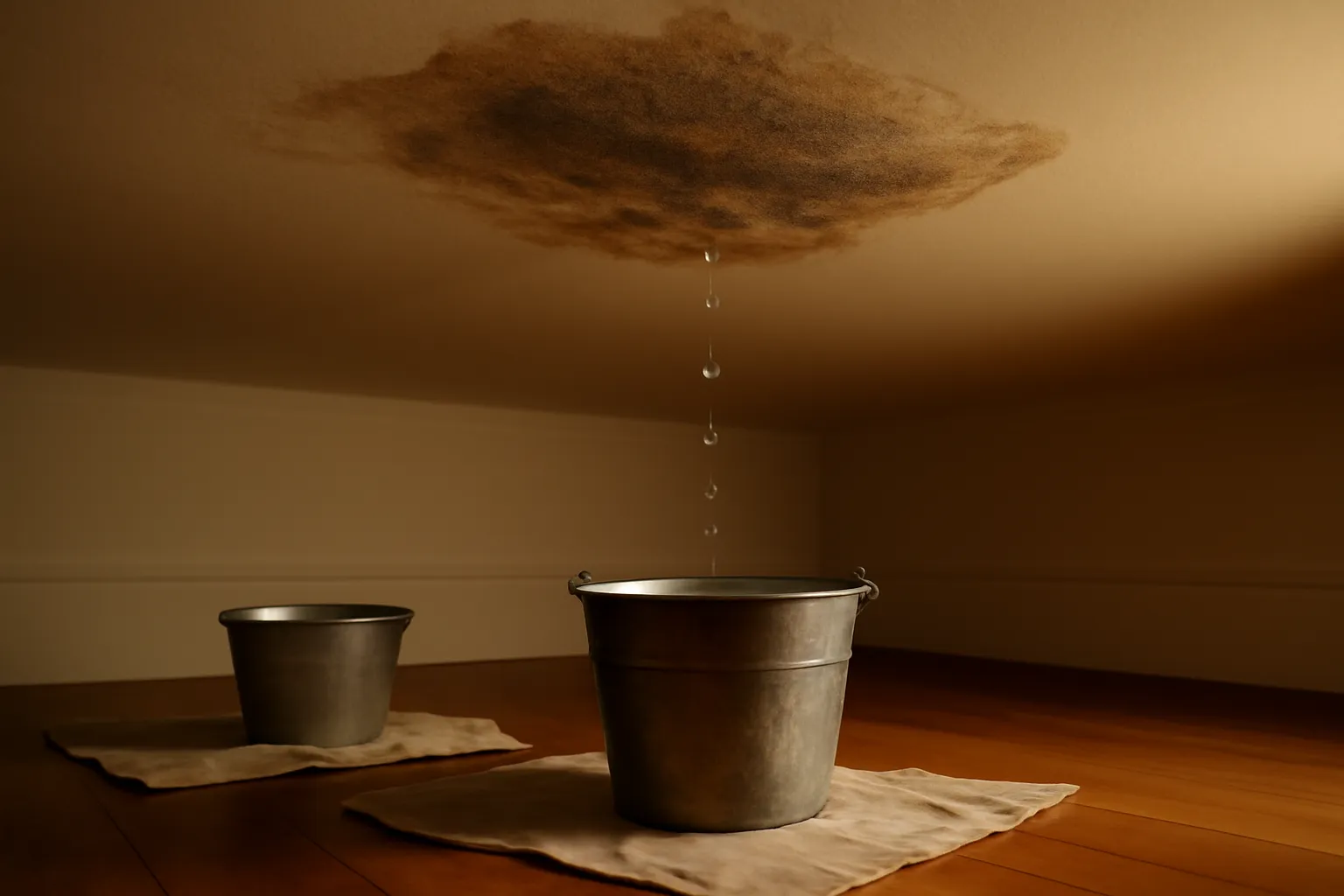
Water Coming Through the Ceiling? Here Is What to Do Right Now
A wet patch spreading across your ceiling, a steady drip, or worse — water pouring through — is alarming. Try to stay calm. Most ceiling leaks can be contained quickly if you act in the right order. Follow these steps.
Step 1: Deal With the Electrics First
This is the most important step and the one people most often skip in a panic.
Water and electricity are a dangerous combination. Before you do anything else:
- Switch off the electricity at the consumer unit (fuse box) for any room where water is coming through — or for the whole property if you are unsure which circuit is affected.
- Do not touch light fittings, switches, or sockets in the affected area, even if the water looks like it is nowhere near them. Water travels inside ceiling voids and walls in ways you cannot see.
- If you smell burning or see sparks, leave the property immediately and call 999.
Only once you are confident the electrics are isolated should you move on to the next steps.
Step 2: Find and Stop the Source of Water
Water coming through a ceiling nearly always originates from somewhere above — a burst pipe, an overflowing bath or toilet, a failed appliance, or a roof leak after heavy rain.
If it is coming from a pipe or fitting above:
- Turn off your stop tap (usually under the kitchen sink or where the mains enters the property) to cut the water supply to the whole house.
- If you are in a flat and the leak is from a neighbour’s property above, knock on their door straight away. If there is no answer, contact your building management or call us — we can help trace the source.
If it is coming from a roof or guttering:
- You will not be able to stop this yourself, but you can limit the spread. Skip to Step 3.
If it is coming from a boiler or heating pipe:
- Turn the boiler off and, if you can locate it safely, close the isolating valve on the feed pipe. Do not attempt to open or move any pipework yourself.
Step 3: Contain the Water and Protect Your Belongings
Once the source is controlled — or while you wait for help — focus on limiting damage:
- Place buckets, bowls, or any large containers under the drip points.
- Lay down old towels or blankets to soak up water on the floor.
- Move furniture, rugs, and valuables out of the affected area.
- If the ceiling is bulging, it has collected a pocket of water. Carefully place a bucket directly underneath, then use a screwdriver to make a small hole in the lowest point of the bulge. This sounds counterintuitive, but releasing the water in a controlled way prevents a larger, sudden collapse.
Step 4: Document the Damage
Before you start clearing up:
- Take photographs and short video clips of the ceiling, the drip points, any pooled water, and any damaged belongings.
- This evidence is important for insurance purposes. Contact your home insurer as soon as the immediate situation is under control.
Step 5: Call a Plumber
Even if the dripping has slowed or stopped, a ceiling leak should always be inspected by a qualified plumber. What you can see is rarely the whole picture — water can sit inside floor joists and ceiling voids for days, causing structural damage and mould if left untreated.
A plumber will:
- Confirm exactly where the leak originated
- Carry out a lasting repair rather than a temporary fix
- Advise on any further damage that needs attention
When to Call 999 or Your Gas Emergency Line
- If you smell gas at any point, leave immediately and call the National Gas Emergency line on 0800 111 999.
- If there is any risk to life from electrics or structural collapse, call 999.
Common Causes of Ceiling Leaks
| Cause | Signs |
|---|---|
| Burst or leaking pipe | Sudden, heavy flow; often after cold weather |
| Overflowing bath or toilet | Water appears shortly after someone was upstairs |
| Washing machine or dishwasher | Leak appears in kitchen or room below utility area |
| Roof or guttering failure | Leak appears during or after heavy rain |
| Boiler or heating system | Discoloured water; near a radiator or airing cupboard |
You Do Not Have to Handle This Alone
Ceiling leaks are stressful, but they are something we deal with every day across the TW postcode area. If you are unsure what to do, if the water is not stopping, or if you simply want a professional to take over — call us now.
Emergency Plumbers TW are available 24 hours a day, 7 days a week.
We cover Twickenham, Richmond, Teddington, Isleworth, Hounslow, Feltham, Staines, Ashford and the surrounding area. Help is closer than you think.