Emergencies
How Long Does a Wall Take to Dry Out After a Leak?
Brick, plaster or plasterboard — drying times after a leak vary widely. Learn the realistic timeline, moisture targets and when it is safe to replaster.
Published 5 August 2026
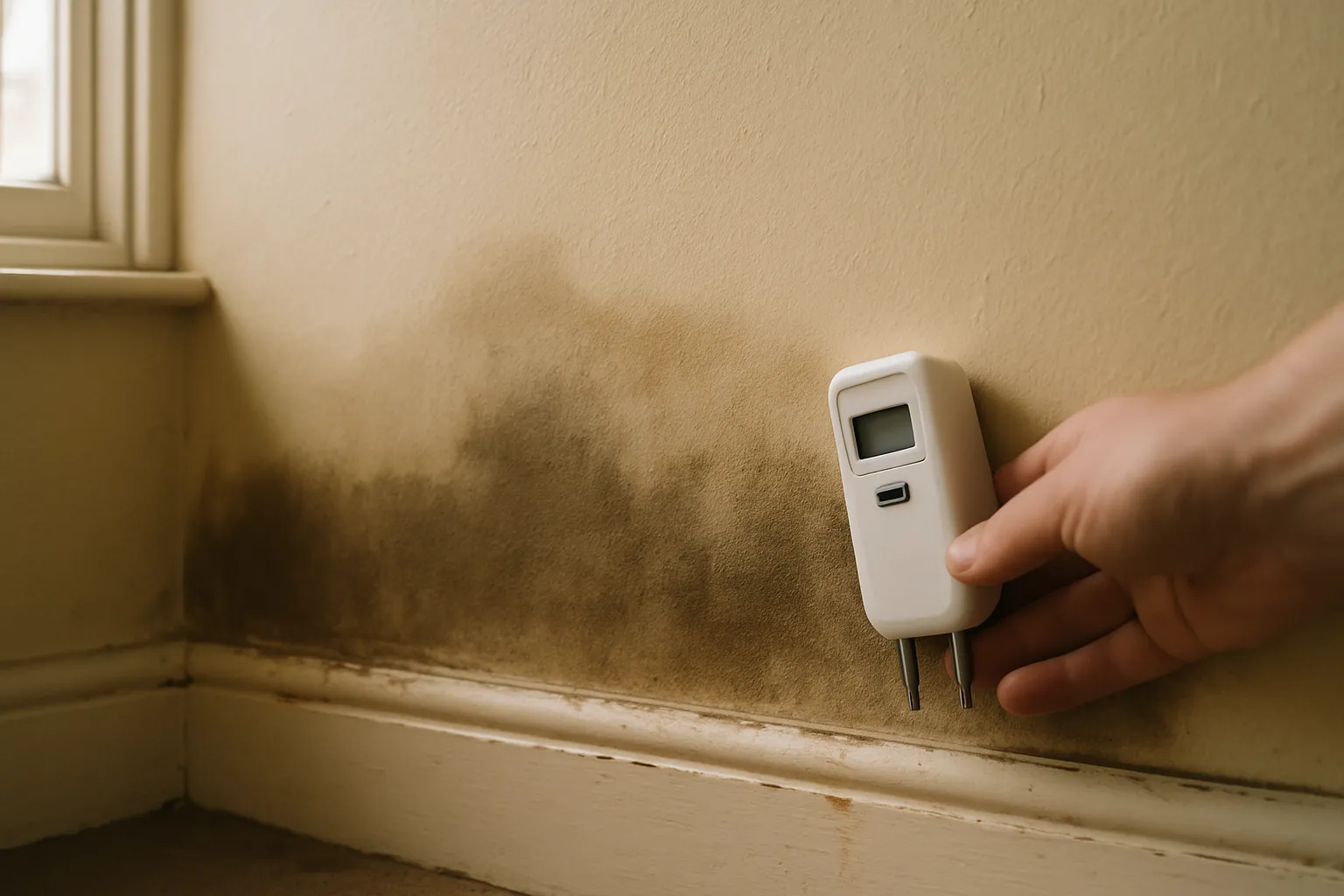
The honest answer is: longer than most people expect. A wall that looks dry on the surface can still hold significant moisture inside, and plastering or decorating too soon is one of the most common — and costly — mistakes homeowners make after a leak.
Below is a practical guide to drying timelines, the factors that affect them, and how to know when a wall is genuinely ready for repair.
Why Drying Time Varies So Much
Several factors determine how quickly a wall dries:
- How long the leak ran — a slow drip over weeks saturates far more deeply than a sudden burst pipe caught quickly
- Wall construction — solid brick, cavity brick, dot-and-dab plasterboard and timber-framed stud walls all behave differently
- Depth of saturation — moisture migrates outward from the source, so a pipe buried in a 300 mm solid wall takes far longer to dry than one behind 12.5 mm plasterboard
- Season and ventilation — warm, well-ventilated rooms dry faster; cold, north-facing rooms with no airflow dry very slowly
- Whether the source has been fixed — a wall cannot dry if water is still entering it
Drying Times by Wall Type
Solid Brick or Stone Walls
These are the slowest to dry. Brick is dense and holds water tenaciously. A rule of thumb used by remediation specialists is one month of drying time for every inch (25 mm) of wall thickness. A traditional 225 mm (9-inch) solid brick wall that has been thoroughly saturated can realistically take six months or more to reach a safe moisture level, even with active drying equipment running.
Dot-and-Dab Plasterboard on Masonry
This construction is common in 1970s–2000s homes across the TW area. Water from a leak can travel behind the plasterboard and pool at the base without being visible at the surface. The plasterboard itself dries relatively quickly — often four to eight weeks with good airflow — but the masonry behind it may still be wet. Removing the plasterboard for inspection is often the only reliable approach.
Timber-Framed Stud Walls with Plasterboard
Plasterboard on a timber frame dries faster than masonry, typically two to six weeks under normal conditions. The risk here is the timber: if studs or noggins remain damp beyond about four weeks, mould growth and early-stage timber decay become a concern. Checking moisture in the timber, not just the plasterboard face, matters.
Wet Plaster on Masonry (Lime or Gypsum)
Freshly applied plaster that has been re-wetted by a leak needs to be assessed carefully. Gypsum plaster that has been saturated often loses its bond and will need to come off. Lime plaster is more forgiving. Either way, expect six to twelve weeks of drying before any new finish coat.
Using a Moisture Meter
A moisture meter removes the guesswork. Most remediation contractors and loss adjusters will expect readings before and after drying. General targets:
| Reading | What it means |
|---|---|
| Below 17 % (wood scale) | Dry — safe to redecorate |
| 17–20 % | Borderline — monitor for another week or two |
| Above 20 % | Still wet — do not plaster or board |
Take readings at multiple heights and depths. Surface readings alone are not reliable — use a deep-probe or hammer-electrode meter where possible.
How to Speed Up Drying
- Fix the source first — obvious, but essential
- Run a refrigerant dehumidifier continuously; empty or drain it daily
- Increase ventilation — open windows on opposite sides of the room to create a through-draught
- Use a fan heater alongside the dehumidifier in cold months
- Strip wet plasterboard early — leaving it in place traps moisture against the masonry behind it
- Avoid sealing the surface — do not apply paint, plaster or membranes until readings confirm the wall is dry
A professional drying company can place desiccant dehumidifiers and thermal imaging cameras to map moisture and give you a documented drying log.
When Is It Safe to Replaster?
Wait until moisture meter readings are consistently below 17 % on the wood-equivalent scale across the whole affected area on at least two checks a week apart. One low reading is not enough — moisture can redistribute as conditions change.
If you are planning to make an insurance claim, keep a photographic record of the damage, the drying equipment in place, and your moisture readings over time. Your insurer or loss adjuster will typically want evidence that the wall was fully dry before reinstatement work began. That documentation belongs to you and supports your own claim.
Still Dealing With the Leak Itself?
Drying times only start once the source of water is stopped. If you have a burst pipe, a leaking joint or any active water ingress, call us first — we are available around the clock across Twickenham, Richmond, Hounslow, Feltham, Staines and the wider TW postcode area.
Call 07360 268948 any time — day or night.
Once the leak is fixed, we can provide a written record of the cause, photographs and the scope of work carried out, which you can use as part of your own insurance documentation.