Emergencies
Basement or Cellar Flooding From a Drain: Emergency Steps for Period Homes
Cellar flooding from a blocked or backed-up drain in a Victorian home? Follow these emergency steps and call our 24/7 team in the TW area.
Published 18 July 2026
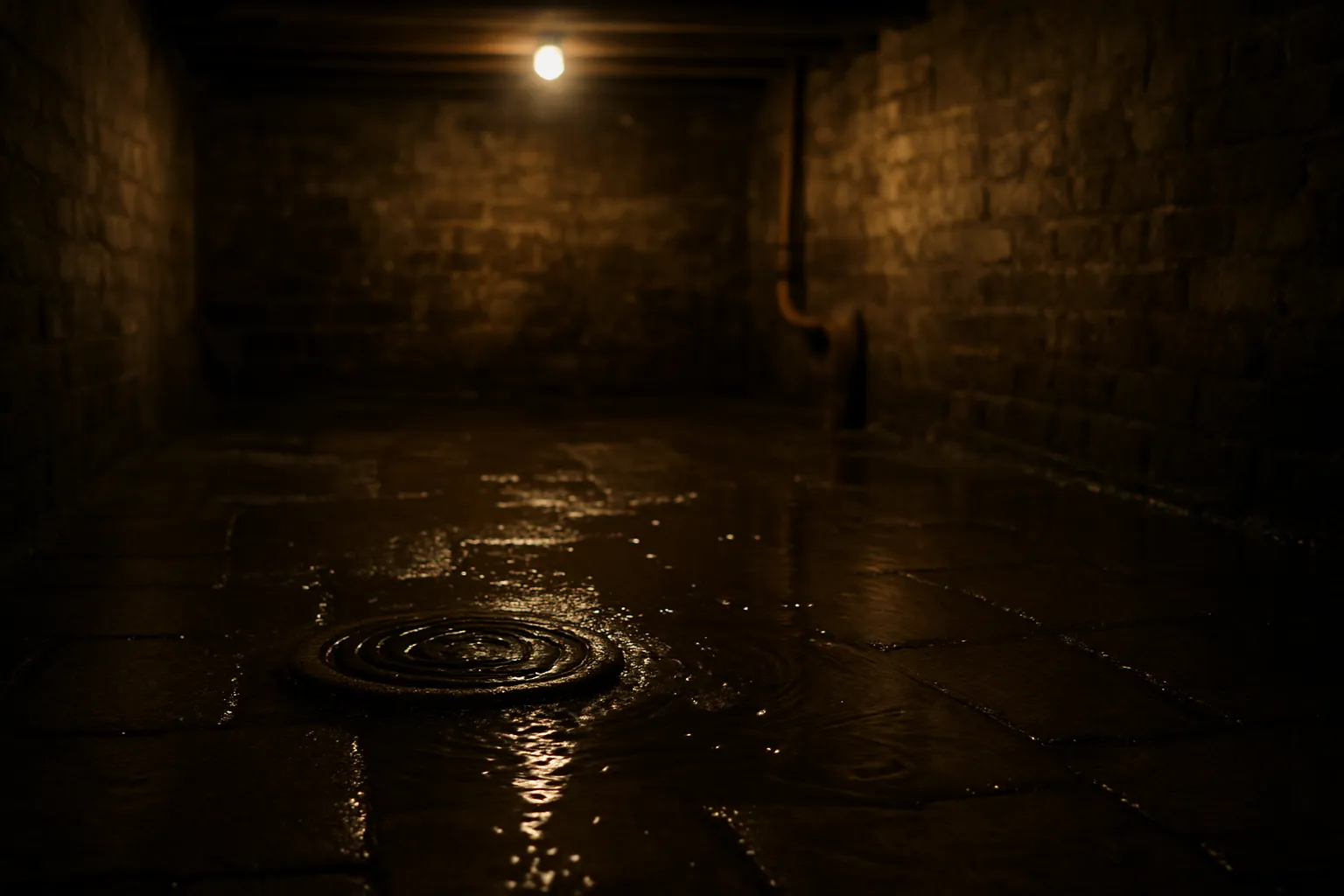
A flooded cellar is one of the most stressful plumbing emergencies a homeowner can face — and if you live in a Victorian or Edwardian property in Richmond, Twickenham or the surrounding area, it is also one of the most common. Older homes were built with drainage systems that were never designed for today’s water usage or the intensity of modern storm events. Knowing what to do in the first few minutes can limit damage significantly.
If water is rising now, call us on 07360 268948. We are available 24 hours a day, every day.
Why Victorian Cellars Flood From Drains
Period homes across Richmond and the surrounding TW postcodes share a few drainage characteristics that make them vulnerable:
- Cellar gullies at or below street level. Many Victorian cellars have a floor-level gully or trapped gulley that connects directly to the main drain. When that drain surcharges — fills beyond capacity during heavy rain — water has nowhere to go but back up through the lowest point in the system, which is often your cellar floor.
- Combined drainage systems. Older properties frequently share a single pipe for both rainwater and foul water. In a downpour, surface water overwhelms the pipe and pushes sewage backwards into the building.
- Root ingress and silted pipes. Mature trees — a feature of many Richmond streets — send roots into clay or pitch-fibre drains over decades. Partial blockages that cause no obvious problem in dry weather can trigger a backup the moment flow increases.
- No backflow protection. Many period homes have never had an anti-flood valve or non-return valve fitted to the cellar drain. Without one, the drain acts as an open door when the sewer surcharges.
Immediate Steps When Your Cellar Is Flooding
1. Cut the electricity to that zone first
Before you step into a flooded cellar, go to your consumer unit and isolate any circuits serving the basement. Water and live electrics are an immediately life-threatening combination. If you are in any doubt about what is live, do not enter — call us and wait.
2. Identify the source
Look for where water is entering. Common entry points in period homes:
- The cellar floor gully or trapped gulley
- A washing machine or utility standpipe in the cellar
- Gaps around old pipe penetrations through the cellar wall
If water is bubbling up through the floor gully, you are almost certainly dealing with a drain backup rather than a burst pipe. The two require different responses, so this distinction matters.
3. Do not use any water in the house
Tell everyone in the property to stop using sinks, toilets, baths and showers immediately. Every flush and every drain adds to the volume pressing back through the system. This single step can slow or stop water ingress while you wait for help.
4. Remove valuables and document everything
If it is safe to enter, move items off the floor and away from rising water. Then photograph and video everything before you touch anything else — the water level, the source point, any possessions affected, and the condition of walls and floor. This record belongs to you and will be useful when you speak to your insurer about what your policy covers.
5. Do not attempt to unblock the drain yourself
It is tempting to lift a drain cover and try to clear the blockage. In a surcharging sewer situation this can be dangerous: pressurised sewage can eject upwards when a cover is lifted. Leave drain clearance to a professional with the right equipment and protective gear.
After the Emergency: Anti-Flood Valves
Once the immediate crisis is resolved, the most effective long-term protection for a cellar at risk of drain backflow is a non-return valve (sometimes called an anti-flood valve or backflow prevention valve) fitted to the cellar drain. When the sewer surcharges, the valve closes automatically, preventing water from re-entering. It reopens when pressure equalises, allowing normal drainage to resume.
These valves are particularly well-suited to Victorian cellar gullies and can usually be fitted without major structural work. We can assess whether your drainage layout is suitable and install the correct valve type.
What to Have Ready for Your Insurer
Your insurer will typically want to understand the cause of the flood, its extent, and the remedial work carried out. It helps to have:
- Photographs and video taken before any clean-up
- A written report from the attending plumber stating the cause (drain backup, blockage, surcharging sewer, etc.)
- Moisture readings if damp-related damage is involved
- Receipts and a clear scope of work for any repairs
We provide a written record of cause, findings and work completed with every job. That document is yours to use however you need to.
We Cover Richmond and the Surrounding TW Area Around the Clock
Cellar flooding in a period home is a high-damage scenario that gets worse with every hour of delay. Our team understands Victorian drainage layouts, carries CCTV drain survey equipment, and can respond quickly across Richmond, Twickenham, Teddington, Isleworth and the rest of the TW postcode area.
Call us now on 07360 268948. We are here 24 hours a day, seven days a week — including weekends and bank holidays. The sooner we arrive, the less damage there is to deal with.
A cellar is often the first overflow point on the run. Our sister drainage firm Drainiacs explain why a storm blockage overflows where it does.