Emergencies
Blocked Drain Teddington: Local Causes and Real Fixes
Why drains block in Teddington, from Victorian shared pipes to Bushy Park tree roots — and when to rod it yourself versus call a plumber.
Published 26 July 2026
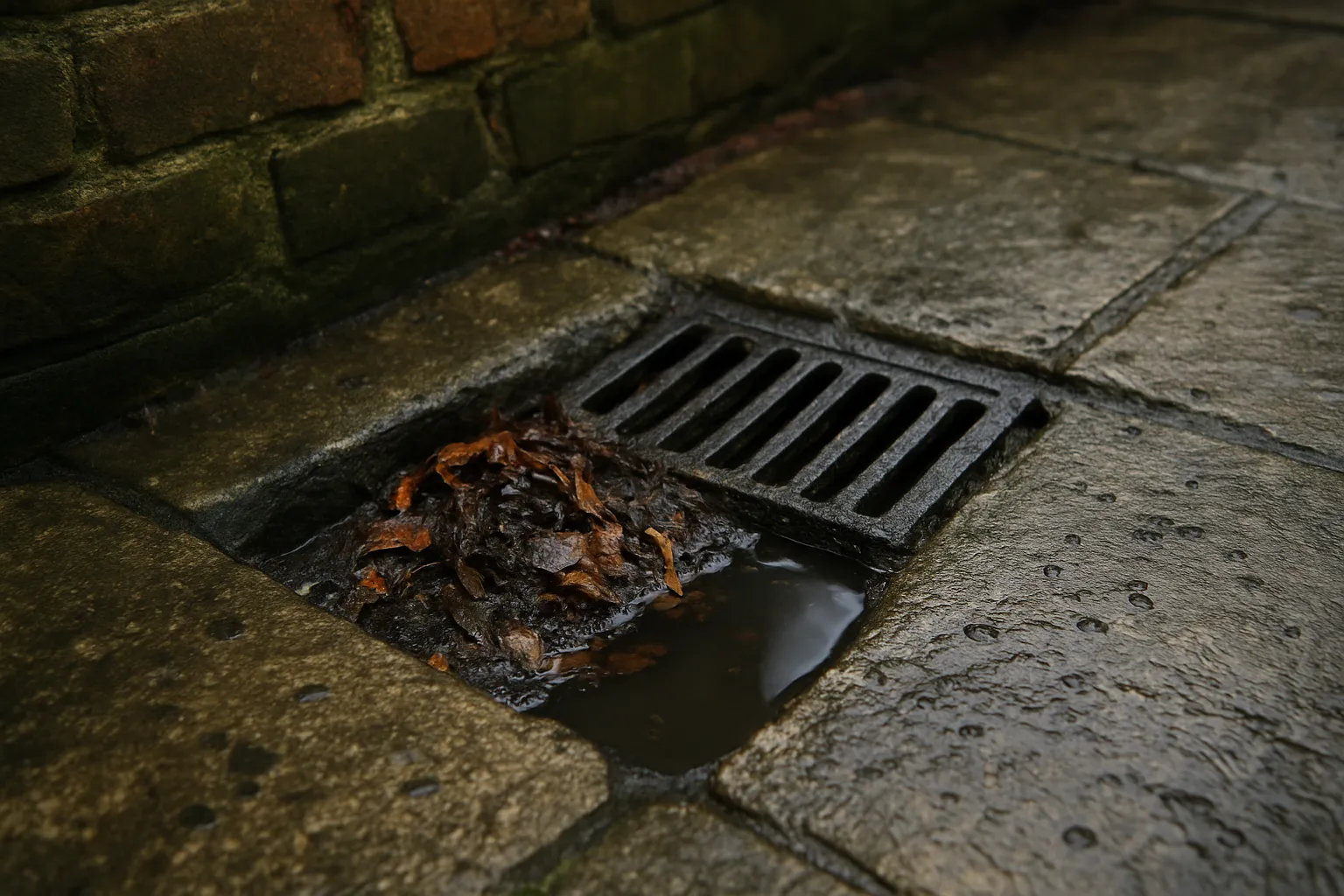
A slow-draining sink or a gurgling toilet is easy to ignore — until the water backs up into the bath or a manhole lid lifts. In Teddington, a handful of very local factors make drain blockages more common than in newer parts of London. Understanding them helps you decide whether a plunger will do the job or whether you need a professional with a high-pressure jetter.
If water is already rising or you can smell sewage, call us now on 07360 268948. We cover Teddington 24 hours a day, seven days a week.
Why Teddington Drains Block More Often
Victorian and Edwardian shared drainage
Most of Teddington’s residential streets were built between 1880 and 1910. The original clay-pipe drains beneath them are now well over a century old. Several things happen to clay pipes at that age:
- Joints open up. Clay sections are sealed with mortar or a rubber collar. Over decades, ground movement causes hairline gaps that catch wipes, grease and debris.
- Pipes go oval. Soil pressure distorts older clay, reducing the internal diameter and slowing flow.
- Shared runs become everyone’s problem. Many Teddington terraces share a single lateral drain that runs beneath multiple gardens before connecting to the public sewer. One household’s fat build-up becomes a blockage that affects three or four neighbours.
Root ingress from Bushy Park
Properties on the eastern side of Teddington — particularly along Queens Road, Park Road and the streets directly bordering Bushy Park — sit within the root zone of mature lime, oak and horse chestnut trees. Tree roots actively seek moisture, and a slightly open joint in a clay pipe is an open invitation. Once inside, roots fan out into a dense mat that traps everything passing through.
Root ingress rarely announces itself loudly. You may notice slow drainage for months before a complete blockage occurs.
The Thames flood plain
Teddington sits at the tidal limit of the Thames. During prolonged wet weather, groundwater levels rise and can partially surcharge the public sewer network. When the sewer is under pressure, your household drains have less gradient to drain into — and partial blockages that were manageable suddenly become full ones.
What You Can Try Yourself
Not every blockage needs a professional. If the problem is isolated to one fitting (a single basin or shower) and there is no sewage smell, try these steps first.
- Plunge properly. Use a cup plunger for sinks and a flange plunger for toilets. Cover the overflow with a damp cloth to create suction, then pump firmly a dozen times.
- Clear the trap. Unscrew the U-bend beneath a basin and remove any accumulated hair or grease. Have a bucket ready.
- Use boiling water on kitchen drains. Pour a full kettle slowly down the kitchen sink. Repeat twice. This works well on fresh grease but not on a full blockage.
- Try a drain rod on an outside gully. If the blocked gully is accessible and the blockage is shallow, a basic drain rod set (available at any DIY shop) can shift compacted debris.
Do not use chemical drain unblockers if the water is completely standing still. Caustic products sitting in a blocked pipe can damage older clay or plastic joints, and they create a hazard if you or a plumber later need to open the pipe.
When to Call a Plumber
Call us rather than persisting yourself if:
- Multiple fittings are draining slowly or not at all (this points to a blockage on the shared lateral or the main stack)
- Water or sewage is backing up through a ground-floor drain or toilet
- You can hear gurgling from a fitting you are not using
- The outside manhole is full or overflowing
- You suspect root ingress — rodding alone will not clear roots, and forcing a rod can compact the mass further
- The blockage keeps returning within a few weeks
For root ingress and collapsed sections, we use CCTV drain surveys to locate the exact problem before any work starts, so you are not paying to clear the wrong section of pipe.
What Happens When We Attend
- We locate the blockage using rods or a CCTV camera pushed through the nearest access point.
- We clear the blockage with a high-pressure water jetter, which flushes debris downstream rather than compacting it.
- For root ingress we use a root-cutting attachment, then re-inspect with the camera to confirm the pipe is clear.
- We advise you on whether the pipe needs a patch liner or a full section replacement, and give you a written report with photographs.
The written report is yours to keep — it is useful evidence if you later need to discuss the condition of a shared drain with a neighbour, a landlord, or your insurer.
A Note on Shared Drains
If the blockage is on a shared lateral that serves more than one property, Thames Water is responsible for maintenance once the drain passes beyond the boundary of the last property it serves. We can advise you on where that boundary is likely to fall, and provide the documentation you would need to raise the matter with Thames Water if required.
Blocked drains in Teddington are rarely a simple fix, but they are always solvable. If you are unsure what you are dealing with, the safest and quickest approach is to call a local plumber who knows the area’s drainage history.
Call us any time on 07360 268948. We are local, we are available around the clock, and we will give you a straight assessment before any work begins.
Blocked drains in Teddington are cleared by our sister drainage firm Drainiacs. Their blocked drains Teddington page has the local details.