Emergencies
Collapsed Drain: Warning Signs, Repair Costs and Whether Insurance Pays
Sinking ground, bad smells, constant blockages — learn how to spot a collapsed drain early, what repairs cost, and how to document it for your insurer.
Published 16 July 2026
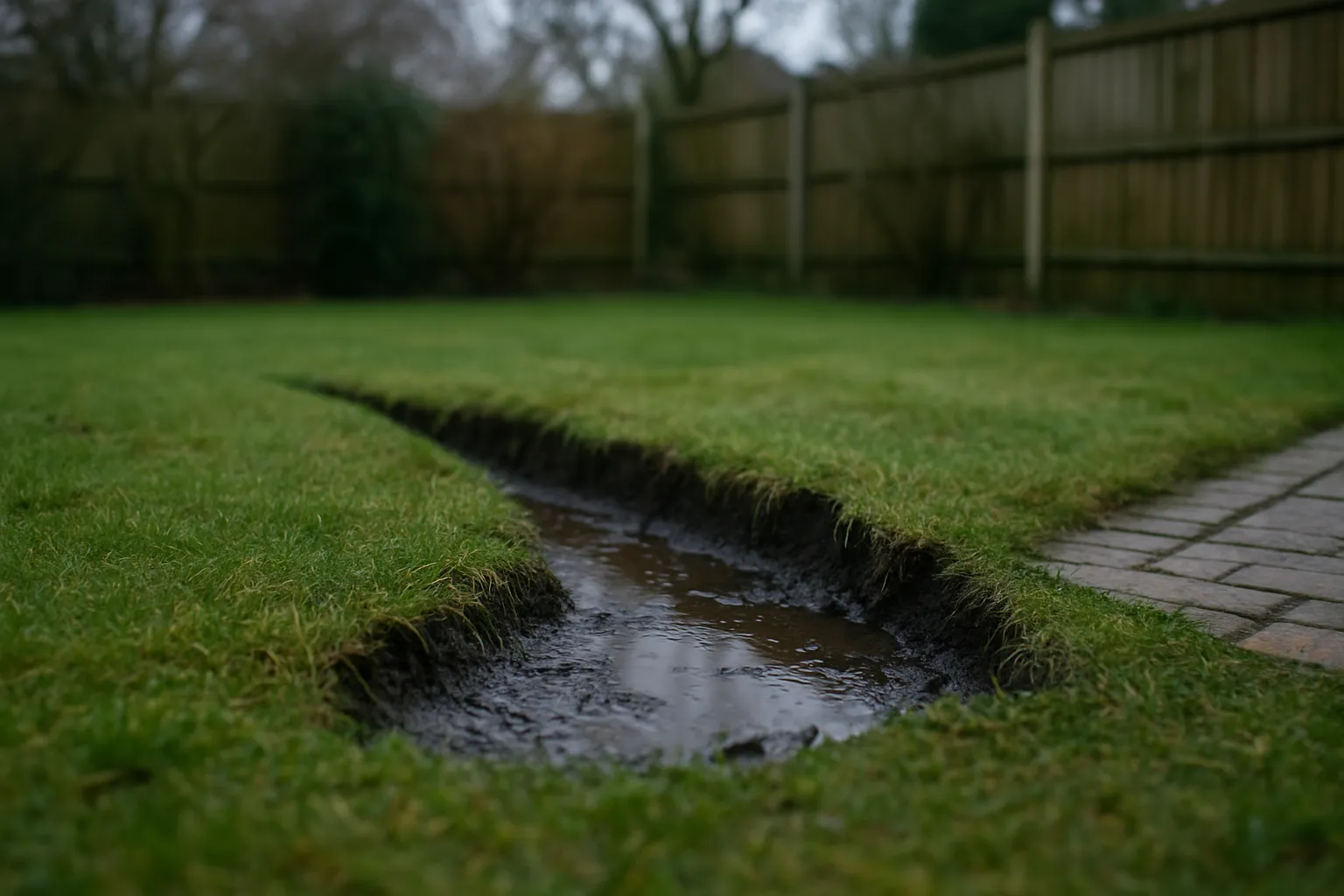
A collapsed drain rarely happens without warning. The problem is that the early signs are easy to dismiss — a slow sink, a faint smell, a patch of lawn that feels a little soft underfoot. By the time the ground visibly sinks or sewage backs up into the house, the repair bill is considerably larger than it would have been a few months earlier.
This guide walks you through the escalation story, from the first subtle clues to full collapse, explains what repairs typically involve, and sets out the kind of documentation your insurer will usually want to see.
Early Warning Signs You Should Not Ignore
1. Recurring or Unusually Stubborn Blockages
A single blockage is usually just debris. A blockage that comes back every few weeks, or one that resists rodding and jetting, often points to a structural problem — a crack, a joint that has shifted, or a section of pipe that has started to deform and catch waste.
2. Slow Drainage Across Multiple Fixtures
If one basin drains slowly, the blockage is probably local. If the bath, the kitchen sink and the downstairs toilet all drain sluggishly at the same time, the issue is likely further down the line — possibly where the drain has begun to sag or collapse.
3. Gurgling Sounds
Gurgling from a toilet or plughole when you run water elsewhere in the house suggests air is being displaced somewhere it should not be — a classic symptom of a partial obstruction caused by a deformed or cracked pipe.
4. Persistent Bad Smells
Sewer gas escaping through cracks in a drain line produces a sulphurous smell that tends to linger even after thorough cleaning. If the smell is outdoors as well as indoors, that is a strong indicator of a fracture in the underground run.
5. Sunken or Soft Ground
This is the sign most people associate with a collapsed drain, but it usually appears after the damage is well advanced. The surrounding soil erodes into the void left by a broken pipe, creating a depression or a patch of ground that feels spongy. Do not ignore this — the void can grow, and in some cases it can undermine paths, driveways or even foundations.
6. Unusual Lush Growth
A strip of particularly green, fast-growing grass or plant growth in a straight line across your garden can indicate a leaking drain fertilising the soil below. Follow the line and you may find the drain run.
The Escalation Story: From Blockage to Collapse
Most drain collapses follow a pattern:
- Joint movement — ground settlement, tree root intrusion or age causes a joint to shift slightly.
- Cracking — the pipe cracks at the weak point; debris begins to catch; slow drainage begins.
- Partial collapse — the pipe deforms or a section drops, creating a permanent low spot where waste pools.
- Soil ingress — water and fine soil enter through the crack; the surrounding ground begins to hollow out.
- Full collapse — the pipe fails entirely; sewage has nowhere to go; the ground sinks visibly.
The jump from stage 2 to stage 5 can take months or years. Catching it at stage 2 with a CCTV drain survey is almost always the cheapest outcome.
What Repair Typically Involves
| Situation | Likely approach |
|---|---|
| Crack or root intrusion, pipe otherwise intact | Drain lining (no-dig) |
| Partial deformation, accessible location | Patch lining or sectional repair |
| Full collapse, shallow run | Excavation, replacement, reinstatement |
| Full collapse, deep run or under structure | Excavation with temporary support, specialist reinstatement |
CCTV survey first, always. Without a camera survey you are guessing at the location, depth and extent of the damage. A survey typically takes an hour or two and produces a written report with footage — essential for any repair quote and for any insurance paperwork.
Insurance: What You Need to Know
Home insurance policies vary considerably in what they cover for drain damage. Some cover sudden, unforeseen collapse; others exclude gradual deterioration or anything outside the property boundary. Only your own policy documents and insurer can tell you what applies to your situation.
What insurers typically ask for when a drain claim is submitted:
- Cause of damage — was it sudden or gradual? Was there a specific event (subsidence, nearby works)?
- Photographs — of the sunken ground, any visible damage, and the interior of the pipe if a CCTV survey has been done.
- A written report — stating the location, the nature of the defect, moisture or soil readings where relevant, and the scope of work needed.
- Quotes or invoices — from a qualified contractor.
Our role is straightforward: we stop the leak, carry out or arrange the repair, and provide you with a clear written record — cause, photographs, CCTV footage, scope of work. That record belongs to you, and you use it to support your own claim with your insurer.
We do not contact insurers or loss adjusters on your behalf, and we do not advise on what your policy will or will not pay. Your insurer or an independent loss assessor is the right source of advice on that.
Act Early — It Really Does Cost Less
The difference between a no-dig lining repair and a full excavation can be significant. If you are seeing any of the warning signs above — especially recurring blockages combined with soft ground or persistent smells — the sensible move is a CCTV survey before the situation deteriorates further.
If you are already dealing with sewage backing up, a sinkhole forming, or a drain that has clearly failed, that is an emergency and needs attention now.
Call us any time on 07360 268948. We cover Richmond, Twickenham, Teddington and across the TW postcode area, 24 hours a day, seven days a week.
A sunken patch of lawn is the sign most people miss. Our sister drainage firm Drainiacs cover drain collapse warning signs in detail.