Emergencies
Who to Call for Water in the Ceiling in the UK
Water dripping from your ceiling? Find out whether to call a plumber, your landlord or your insurer first — and what to do right now.
Published 4 August 2026
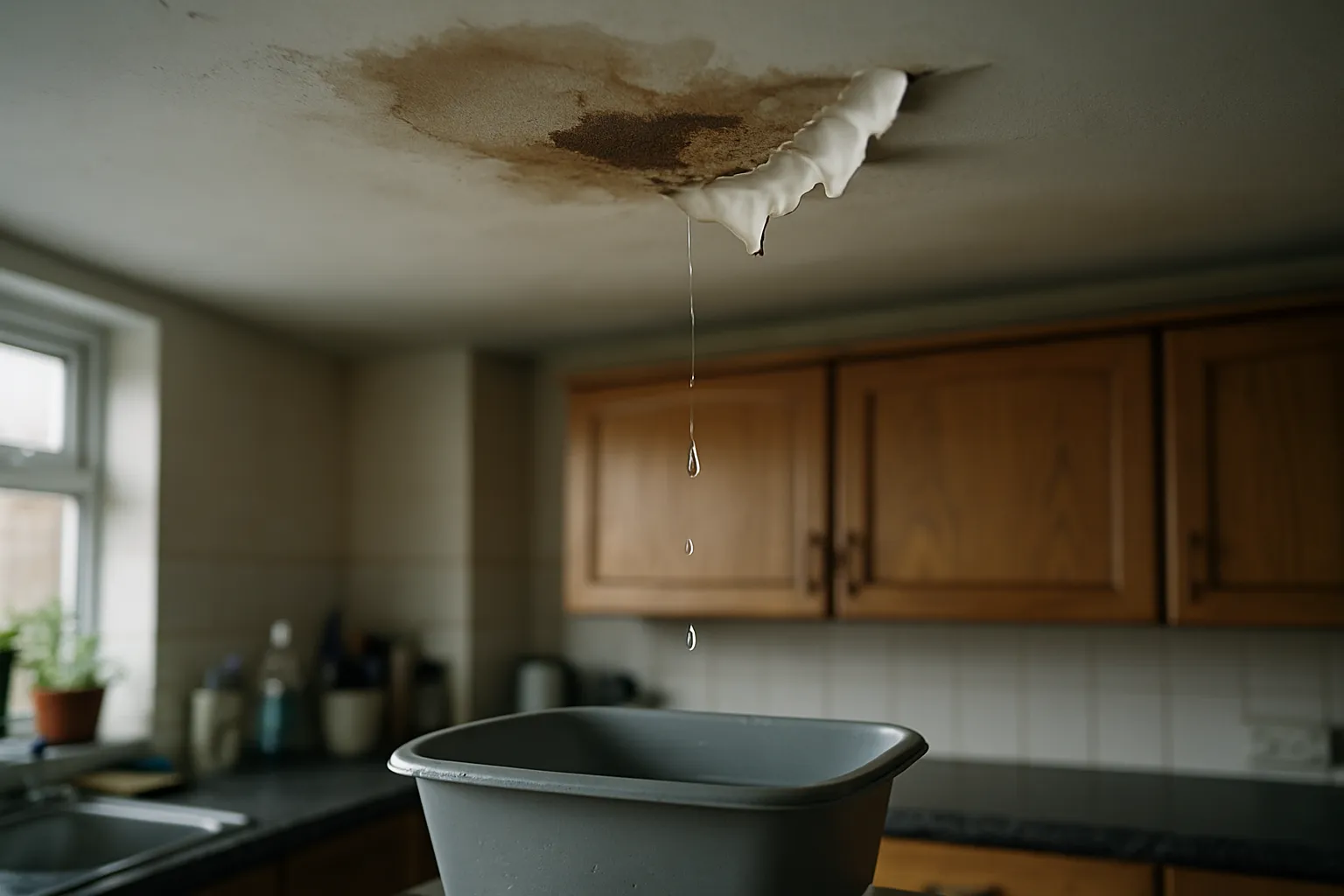
Water From the Ceiling — Who Do You Call First?
Water dripping through a ceiling is one of those situations where panic sets in fast. The short answer: call a plumber first to stop the water, then deal with everything else. But the fuller picture depends on your situation, so here is a straightforward guide to help you decide.
Step One: Stop the Water Before Anything Else
Whatever your tenancy or ownership situation, the very first priority is stopping more water entering the building fabric. Every extra minute of soaking makes the damage worse and the eventual repair bill larger.
- Turn off the water supply at the stopcock (usually under the kitchen sink or where the supply pipe enters the building).
- Turn off any electrical circuits that run near the wet area — water and electricity are a serious combination.
- Put towels and buckets under the drip to limit spread.
- Photograph everything — ceiling staining, the source if you can see it, any belongings affected. Date-stamped photos are useful evidence for any future paperwork.
Once you have done those things, you are ready to make calls.
Decision Tree: Who to Call and When
Are you a homeowner?
Call a plumber. A plumber will trace the source, stop the leak, and give you a written record of the cause, the work carried out, and any moisture readings taken. That documentation belongs to you and will be useful if you later need to notify your home insurer. After the plumber has attended, contact your insurer directly to report the incident and ask what evidence they need.
Are you a tenant in a private rental?
Call your landlord or letting agent immediately — they are legally responsible for the structure and water supply. If you cannot reach them and water is actively pouring in, most tenancy agreements allow you to call an emergency plumber yourself and recover reasonable costs. Keep every receipt. Once the landlord is involved, the insurance question becomes theirs to manage, not yours.
Are you a leaseholder in a flat?
Water through a ceiling in a flat almost always originates from the property above. Call your freeholder or managing agent — they hold the buildings insurance for the block and are responsible for tracing the source. If the neighbour above is unresponsive and water is actively damaging your home, an emergency plumber can attend to assess what can be done from your side while the managing agent pursues access upstairs.
Is the water coming from a flat above that you own?
You may need to knock on the neighbour’s door, call your managing agent, and call a plumber in parallel. If the flat above is empty or unresponsive, your managing agent has powers to arrange access in genuine emergencies.
What a Plumber Can and Cannot Do
A plumber can:
- Trace the leak to its source (burst pipe, failed joint, overflowing bath, faulty appliance)
- Isolate the affected section of pipework or appliance
- Make the repair or a safe temporary fix
- Provide a written report with cause, photographs, and scope of work
A plumber cannot advise you on what your insurance policy covers, speak to your insurer, or predict what a loss adjuster will decide. That part of the process is between you and your insurer. What the plumber gives you — a clear written record of what happened and what was done — is the foundation of any conversation you choose to have with your insurer.
When to Call Your Insurer
Once the water is stopped and the repair is either complete or under way:
- Locate your buildings and/or contents policy documents.
- Call your insurer’s claims line to report the incident.
- Have your plumber’s report, photographs, and any receipts ready.
- Ask your insurer what they need from you and what the next steps are.
Your insurer will tell you whether a loss adjuster will attend, what excess applies, and what is covered under your specific policy. Every policy is different — only your insurer can answer those questions.
Common Sources of a Ceiling Leak
- A burst or split pipe in the floor above
- An overflowing bath, shower tray, or basin
- A failed washing machine or dishwasher hose
- A leaking radiator or central heating joint
- A blocked or overflowing condensate pipe
- Roof or guttering failure (not a plumbing issue — you would need a roofer)
If there is any doubt about the source, a plumber can use moisture detection equipment to trace it without unnecessary damage to the structure.
We Cover the TW Postcode Area, 24 Hours a Day
If you have water coming through your ceiling right now and you are in Twickenham, Richmond, Teddington, Hounslow, Feltham, Staines, Isleworth or anywhere else in the TW postcode area, we can be with you quickly.
Call us any time on 07360 268948. We will stop the leak, document everything clearly, and leave you with a full written record of the work.