Emergencies
Water Leak Inside the House: A Room-by-Room Detective Guide
Spotted a water leak in your home? This room-by-room guide helps you find the source fast and know when to call an emergency plumber.
Published 29 July 2026
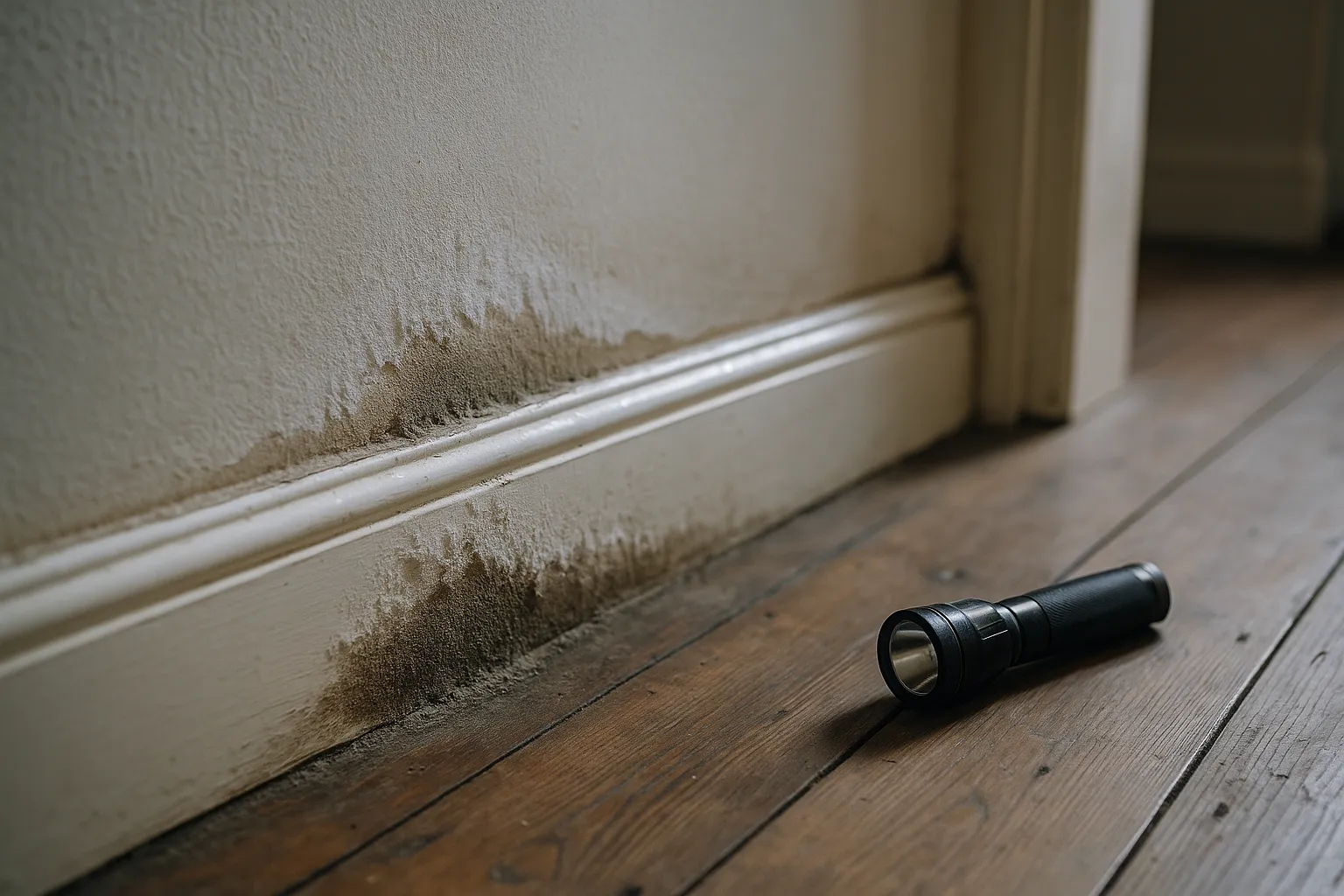
A wet patch on the ceiling. A damp smell you cannot quite place. Water pooling somewhere it should not be. Internal leaks have a habit of hiding — and the longer they go unnoticed, the more damage they cause. This guide walks you through each room systematically so you can narrow down the source quickly, take sensible first steps, and decide whether you need a plumber right now.
If water is flowing freely, a pipe has clearly burst, or you can see structural damage, stop reading and call us on 07360 268948. We cover the TW postcode area around the clock.
First: Turn Off the Water if Needed
Before you start investigating, know where your stopcock is. In most TW-area homes it sits under the kitchen sink or in a utility cupboard. Turning it clockwise shuts off the mains supply to the whole house. Do this immediately if:
- Water is coming through a ceiling or light fitting
- A pipe has visibly burst
- You cannot identify the source and water is spreading
Kitchen
The kitchen contains more water connections than almost any other room: the cold mains feed, the hot supply, the waste pipes, the dishwasher, and often a washing machine.
What to check:
- Under the sink — look at the push-fit joints on the supply pipes and the compression fittings on the trap
- Behind the dishwasher — the inlet hose and drain hose both fail over time
- Around the washing machine — the door seal and the hose connections at the back
- The cold-water supply to the fridge if you have a plumbed-in ice maker
A slow drip under a kitchen cabinet can saturate the base unit and subfloor for weeks before you notice. If you spot soft or discoloured wood, the leak has been going on longer than it looks.
Bathroom and En-Suite
Bathrooms account for a large proportion of internal leaks, partly because there are so many joints and seals in a small space.
What to check:
- Around the base of the toilet — a failed wax seal or loose pan connector lets water seep out with every flush
- Under the basin — supply valves and the trap are common failure points
- The bath or shower tray — failed silicone sealant along the edge lets water track under the tray and into the floor
- Behind a panel bath — the overflow pipe and waste can drip undetected for months
- The shower enclosure — cracked or missing grout lets water into the wall behind the tiles
Damp patches on the ceiling of the room directly below a bathroom are almost always a bathroom leak rather than a roof problem.
Upstairs Rooms and Hallway
If you have a wet patch on a ceiling or wall in a room that has no water supply of its own, the source is almost certainly above it — either a bathroom, a pipe run in the void, or a cold-water storage tank in the loft.
What to check:
- The cold-water storage tank (if you have one) — the ball valve can stick open, causing overflow via the outside pipe
- Pipe runs in the ceiling void — these are harder to access but a plumber can use moisture meters to trace the source without unnecessary damage
- Radiator connections — a weeping radiator valve can run down the wall inside the plasterwork
Utility Room and Airing Cupboard
These spaces often house the most pipework in the house: the hot-water cylinder, the boiler feed pipes, and multiple appliance connections.
What to check:
- The hot-water cylinder — look for drips from the expansion pipe or around the immersion heater boss
- The pressure-relief valve discharge pipe — if water is coming from this, the system pressure needs attention
- Washing machine connections as above
Loft and Roof Space
A drip coming through a ceiling could be a roof problem rather than a plumbing one, but do not assume that without checking. Roof leaks tend to appear or worsen after rain; plumbing leaks are usually constant or linked to water use.
If the drip appears regardless of the weather, start with the pipework and tank in the loft before calling a roofer.
How to Document What You Find
Whatever the source, take photographs before you dry anything up. Note:
- Where water is appearing
- Whether the ceiling, wall, or floor feels soft
- When you first noticed it and whether it is getting worse
- Any recent plumbing or building work in the area
A clear written and photographic record is useful if you need to discuss the damage with your insurer later. Your insurer will typically ask for evidence of the cause, the extent of the damage, and the repair carried out — so keeping that paperwork is worth doing from the start.
When to Call an Emergency Plumber
Call immediately if:
- Water is coming through a ceiling or near any electrics
- You cannot find or reach the stopcock
- A pipe has visibly burst
- The leak is getting worse or you cannot stop it
For anything in the TW postcode area — Twickenham, Richmond, Teddington, Hounslow, Feltham, Staines and surrounding areas — call 07360 268948 any time of day or night. We will help you find the source, stop the leak, and give you a full written record of the cause and work carried out.