Emergencies
Bathroom Leak Detective: Tracking Down the Source
A systematic guide to finding where your bathroom is leaking — seals, waste pipes, supply lines and more — before the damage spreads.
Published 7 July 2026
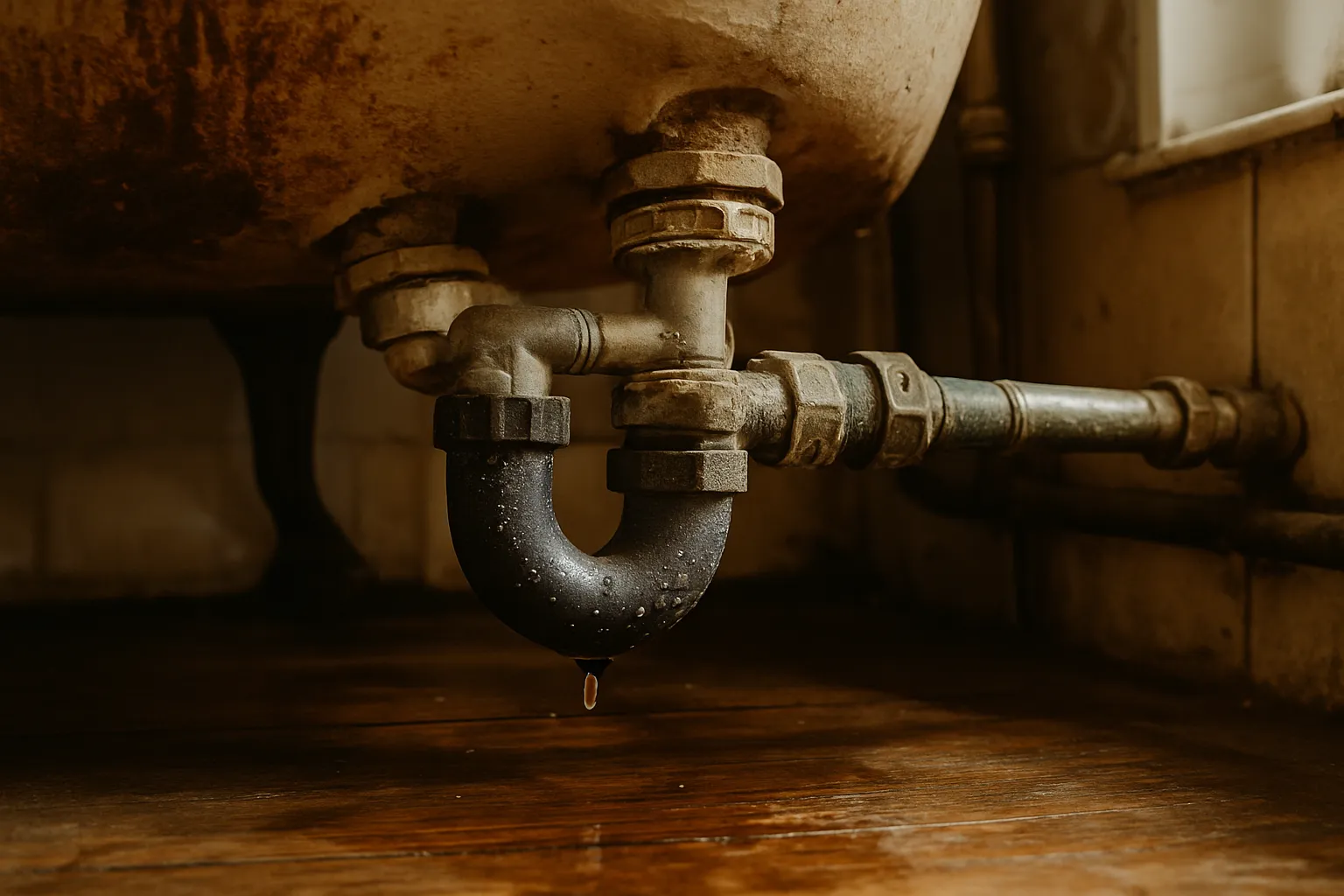
Water appearing where it shouldn’t in a bathroom can come from half a dozen different places — and they all need a different fix. The good news is that a methodical approach usually narrows it down within a few minutes. Work through the checks below in order, dry surfaces between tests, and you’ll have a clear answer without tearing anything apart unnecessarily.
If water is actively pouring, rising, or you can hear it running inside a wall, stop reading and call us now on 07360 268948. The steps below are for leaks you can investigate safely.
Step 1 — Dry Everything First
Grab old towels and dry the floor, the outside of the bath or shower tray, the basin, and the toilet base. A dry starting point is essential; otherwise one source of water masks another.
Step 2 — Check the Seals and Grout
Silicone seals and grout are the most common culprits in any bathroom.
- Bath or shower tray edge seals — Run your finger along the silicone bead where the bath or tray meets the wall tiles. Look for cracks, gaps, or sections that have pulled away. Even a 2 mm gap lets in enough water over a shower cycle to soak the floor beneath.
- Shower enclosure frame seals — Check where the glass or acrylic panels meet the tray and where vertical frame sections meet the wall.
- Grout lines — Cracked or missing grout between wall tiles allows water to track behind the tiles and appear at floor level, sometimes several feet from the actual entry point.
Test: Fill the bath or run the shower for two minutes, then watch the floor. If water appears only during use, a seal or grout failure is the likely cause.
Step 3 — Inspect the Waste and Overflow
Bath and basin wastes
Look underneath the bath (you may need to remove a side panel) and under the basin. The waste trap — the U-shaped pipe — can develop slow drips at its threaded connections, especially on older plastic fittings.
- Dry the trap and connections with a cloth.
- Fill the bath or basin and watch the trap while it drains.
- A drip appearing only when water flows points to a loose or perished washer at a joint.
Shower waste
Shower wastes sit flush with the tray and rely on a rubber seal between the tray and the waste body. If this seal deteriorates, water bypasses the waste and soaks into the floor structure. Lift the waste cover and check for debris, but also look for discolouration around the tray edge nearest the waste — a telltale sign of long-term seepage.
Step 4 — Check the Supply Pipework
Supply leaks often hide behind panels or inside vanity units. Open any access panels and look at:
- Isolation valves and stop taps — Small drips from valve stems are easy to miss but add up over time.
- Flexible hoses — The braided hoses connecting taps and the toilet cistern can split or leak at their end fittings. Run your finger along each hose and check the fittings at both ends.
- Compression fittings on copper pipe — A slight green stain or white mineral deposit around a fitting indicates a slow weep.
Test: Turn off the shower or taps, dry everything, and watch for drips. Supply leaks drip constantly regardless of use; waste leaks only appear when water drains.
Step 5 — Isolate the Toilet
The toilet is often overlooked. Check:
- The base — A wax or rubber seal between the toilet pan and the soil pipe can fail, causing foul-smelling water to appear at floor level when flushed.
- The cistern — Overflow pipes and internal fill valves can weep. Lift the cistern lid and look for water running down the inside of the pan constantly (a slow internal leak).
- Supply hose — As above, check the flexible hose from the wall isolation valve to the cistern.
Step 6 — Look Up, Not Just Down
If you cannot find the source at floor level, consider whether the bathroom above (or a flat above yours) is the origin. Water travels along joists and can appear at ceiling level in the room below, or pool at a low point far from where it entered.
Staining on a ceiling, soft plasterboard, or a persistent damp smell in a room beneath a bathroom all suggest the leak is coming from above.
When to Call a Plumber
Call us on 07360 268948 if:
- You cannot identify the source after working through these steps
- The leak is inside a wall or under a floor
- There is structural damage, soft flooring, or signs of mould
- Water is coming from a joint or pipe you cannot safely reach
- The leak is worsening
A hidden bathroom leak can cause significant damage to joists, ceilings, and plasterwork in a surprisingly short time. Finding it quickly — and fixing it properly — is always the cheaper outcome.
We cover the TW postcode area around the clock. If you are dealing with an active bathroom leak right now, call 07360 268948 and we will talk you through it.