Insurance
Escape of Water Claims: The Most Common Home Insurance Claim
Escape of water is the UK's most common home insurance claim. Here's why it happens so often and how to handle yours correctly.
Published 1 July 2026
Why “Escape of Water” Tops the Insurance Charts
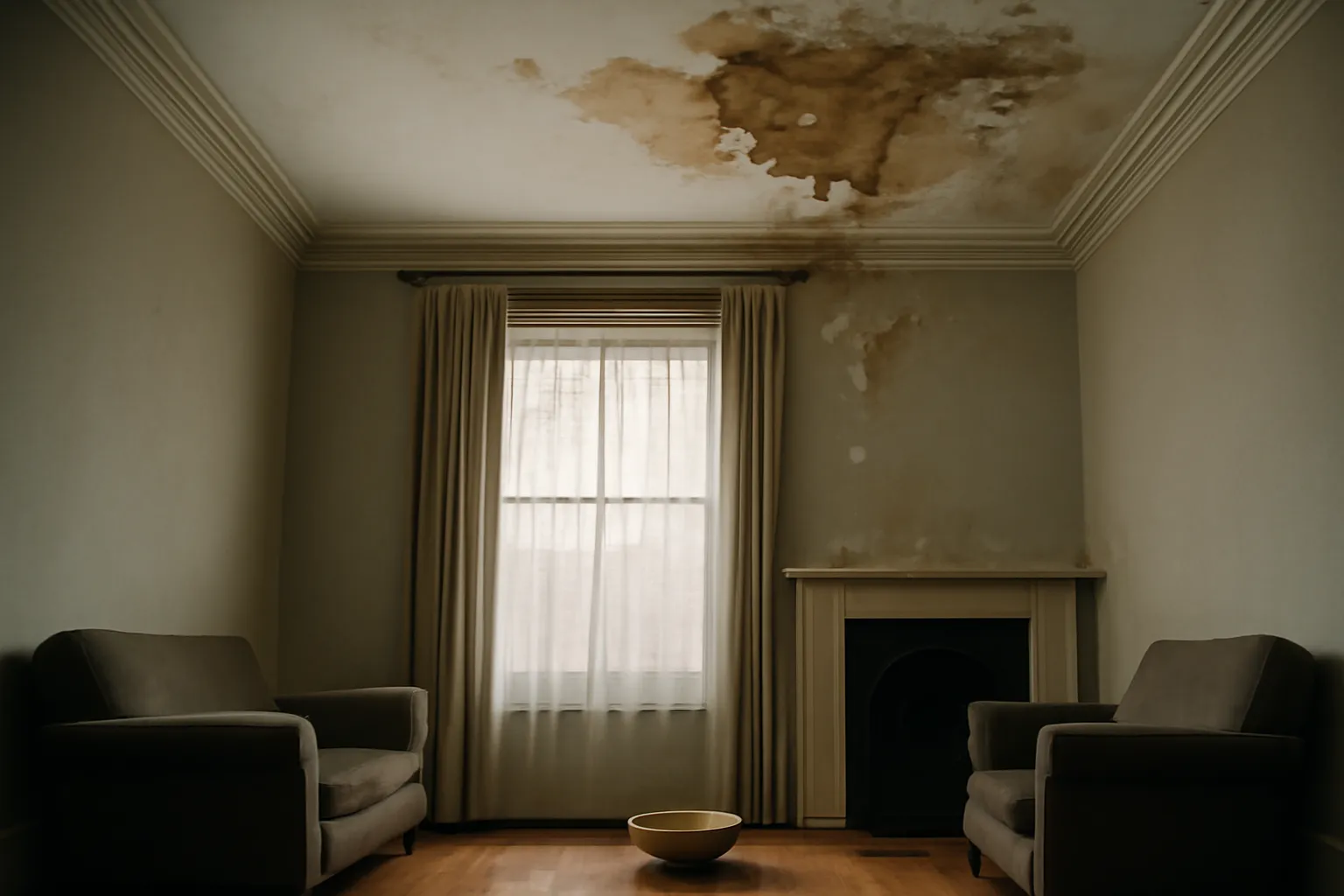
If you have ever wondered what causes more home insurance claims than storms, theft, or fire combined, the answer is water — specifically what insurers call an escape of water. Year after year, escape of water is the single most common home insurance claim in the UK, accounting for roughly a quarter of all domestic claims by volume and an even larger share by cost.
It is not hard to see why. Every home contains a network of pipes, joints, valves, and appliances that are under pressure around the clock. A slow drip behind a wall, a failed washing-machine hose, a cracked pipe in a cold loft — any of these can go unnoticed for weeks before the damage becomes visible. By then, ceilings may have collapsed, floorboards may have warped, and plaster may need full replacement.
What Counts as Escape of Water?
Insurers use this phrase to cover any situation where water leaks, bursts, or overflows from:
- Burst or cracked pipes (including those that freeze and split in winter)
- Leaking radiators, valves, or central-heating pipework
- Failed washing-machine, dishwasher, or fridge-freezer hoses
- Leaking baths, showers, or sanitary ware
- Overflowing tanks or cisterns in lofts
- Underfloor heating pipes that develop a fault
What it does not usually cover is water coming in from outside — that falls under storm or flood cover. The key word is escape: water leaving the system it was meant to stay inside.
How to Handle an Escape of Water Claim Correctly
Getting your claim right from the start saves time, money, and a great deal of stress. Follow these steps.
1. Stop the Water First
Before you do anything else, turn off your water at the stopcock. If you are not sure where yours is, it is usually under the kitchen sink or where the supply pipe enters the property. Turning it off limits further damage and, crucially, limits the size of your claim.
If you cannot locate the stopcock, or if water is coming from a heating circuit, call a plumber immediately. A qualified plumber can isolate the source quickly and safely.
2. Document Everything Before You Touch It
Take photographs and short video clips of:
- The source of the leak (or where you believe it is)
- All visible water damage — wet ceilings, stained walls, soaked flooring
- Any damaged belongings
Do this before you mop up or move items, even if it feels counterintuitive. Your insurer will need evidence of the damage as it was found.
3. Notify Your Insurer Promptly
Contact your insurer as soon as possible — most policies require you to report a claim without undue delay. Have your policy number ready and be prepared to describe:
- When you first noticed the problem
- What you believe the source is
- What steps you have already taken (e.g. turning off the water)
Ask your insurer whether they have a preferred emergency contractor or whether you are free to appoint your own plumber.
4. Get a Plumber’s Report
Most insurers will ask for a plumber’s report confirming the cause and location of the leak. This is standard practice and protects you as much as it protects the insurer. A clear, written report from a qualified plumber makes it far harder for a claim to be disputed.
5. Keep All Receipts and Correspondence
Save every invoice, receipt, and email related to the claim — emergency call-out costs, drying equipment hire, temporary accommodation if needed. These are often recoverable under your policy.
Common Reasons Claims Are Reduced or Refused
Understanding what can go wrong helps you avoid it:
- Gradual deterioration — If the leak has clearly been ongoing for months and you did not act on warning signs, an insurer may argue the damage was not sudden and accidental.
- Lack of maintenance — Pipes or fittings that were visibly corroded or poorly maintained may not be covered.
- Late notification — Delaying your report can give the insurer grounds to reduce a settlement.
- No evidence — Clearing up before photographing the damage can make it very difficult to substantiate your claim.
How We Can Help
At Emergency Plumbers TW, we attend escape of water emergencies across the TW postcode area — Twickenham, Richmond, Teddington, Hounslow, Staines, Feltham, Isleworth, and surrounding areas — around the clock, every day of the year.
We can:
- Locate and isolate the source of the leak quickly
- Carry out emergency repairs to stop further damage
- Provide a written report suitable for your insurance claim
- Advise on next steps so you are not left in the dark
The sooner a leak is stopped, the smaller the claim — and the sooner your home can get back to normal.
If you have a water leak right now, do not wait. Turn off your stopcock and call us on 07360 268948. We are available 24 hours a day, seven days a week, and we cover TW, KT and west London.