Emergencies
Condensation, Damp or Leak? A Homeowner's Diagnosis Guide
Learn how to tell condensation, rising damp and a water leak apart — and know when to call an emergency plumber in the TW area.
Published 1 July 2026
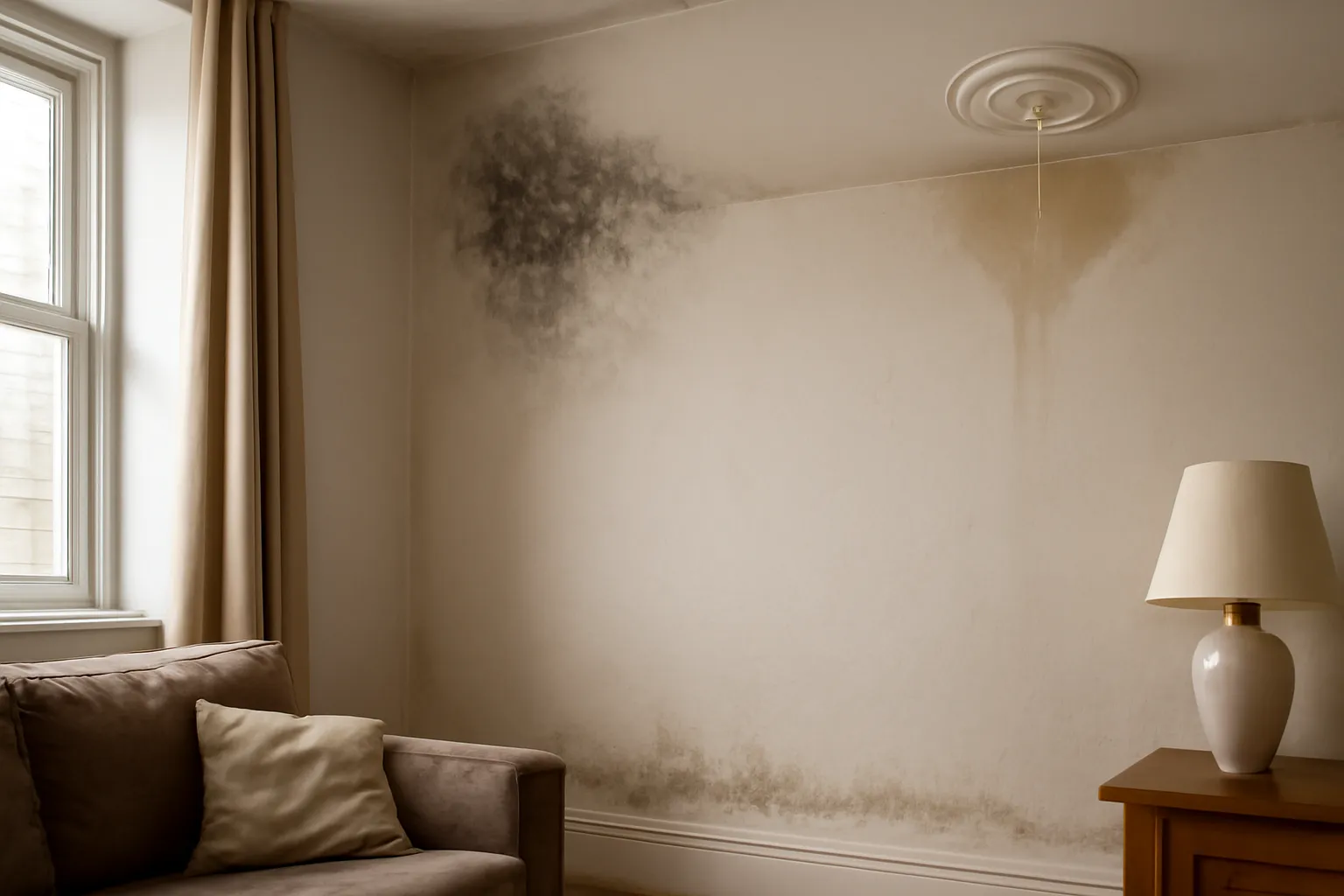
Condensation, Damp or Leak? How to Tell the Difference
Waking up to a wet patch on the wall or ceiling is unsettling. Before you panic — or before you dismiss it as “just condensation” — it helps to understand what you are actually looking at. The three most common culprits behave differently, appear in different places, and carry very different risks.
The Three Types of Moisture Problem
1. Condensation
Condensation is the most common moisture problem in UK homes, particularly during autumn and winter.
What it looks like:
- Black or grey mould patches, usually in corners or on cold external walls
- Droplets on windows and window frames
- A musty smell in bathrooms, kitchens and bedrooms
- Damp that appears after cold nights and improves in warm, ventilated weather
Why it happens: Warm, moist air meets a cold surface and the water vapour turns to liquid. Cooking, bathing, drying laundry indoors and even breathing all add moisture to the air.
The risk: Condensation is rarely a structural emergency, but persistent mould can affect air quality and health. Improving ventilation — extractor fans, trickle vents, heating rooms more evenly — usually resolves it.
2. Rising Damp
Rising damp occurs when groundwater travels upward through brickwork or masonry. It is less common than people assume, and is often misdiagnosed.
What it looks like:
- A tide-mark stain on a ground-floor wall, typically no higher than 1 metre
- Salts or white powder (efflorescence) on the wall surface
- Peeling paint or plaster at low level
- Damp that does not improve in summer
Why it happens: A failed or absent damp-proof course (DPC) allows moisture from the ground to wick upward through the wall.
The risk: Rising damp is a building defect rather than a plumbing emergency, but it can cause serious structural damage over time. You will need a specialist damp surveyor rather than a plumber.
3. A Water Leak
A leak from a pipe, joint, appliance or roof is the scenario that demands the most urgent attention.
What it looks like:
- A wet patch that appears suddenly or grows quickly
- Staining on a ceiling directly below a bathroom, kitchen or loft
- Blistering or bubbling paint
- The sound of dripping or running water when no taps are on
- An unexplained rise in your water bill
- Damp that is warm to the touch (suggesting a hot-water or central heating pipe)
Why it happens: Pipes corrode, joints fail, appliance hoses split, and frost can crack pipework in winter. Leaks can also come from above — a neighbour’s flat, a faulty flat roof, or a cracked tile.
The risk: A leak left unattended can saturate joists and plasterboard, encourage mould, damage electrics and, in serious cases, compromise the structural integrity of floors and ceilings. The sooner it is found, the lower the repair cost.
A Quick Diagnosis Checklist
Work through these questions before calling anyone:
- Where is the damp? High on a wall or ceiling → more likely a leak. Low on a ground-floor wall → consider rising damp. On cold surfaces or in corners → likely condensation.
- How quickly did it appear? Overnight or within hours → almost certainly a leak. Gradual over weeks → condensation or rising damp.
- Is it warm or cold to the touch? Warm damp suggests a hot-water pipe or central heating pipe is involved.
- Does it get worse after rain? Roof or penetrating damp is the likely cause — check gutters, flashings and roof tiles.
- Is your water meter moving when all taps are off? Turn off every tap and appliance, then watch the meter for two minutes. Movement confirms a hidden leak somewhere in the system.
When to Call an Emergency Plumber
Contact us immediately if:
- A ceiling is bulging or has already come down
- You can hear water running inside the walls or floor
- The damp patch is growing visibly
- You have turned off the stopcock but water is still appearing
- You suspect a leak near an electrical fitting or consumer unit
These are situations where waiting — even a few hours — can turn a manageable repair into a much more costly one.
Leak Tracing in the TW Area
If you cannot locate the source of a leak yourself, a professional leak trace uses specialist equipment (acoustic listening devices, thermal imaging, tracer gas) to pinpoint the problem without unnecessary damage to your home. This is far preferable to opening up walls at random.
Emergency Plumbers TW covers Twickenham, Richmond, Teddington, Isleworth, Hounslow, Feltham, Staines and the surrounding TW postcode area, around the clock.
If you are in any doubt about what you are dealing with, the safest step is to turn off your stopcock, keep people away from the affected area, and give us a call. We would rather you ring and find it is nothing serious than leave a real leak to cause further damage.
Call us any time on 07360 268948 — we are available 24 hours a day, seven days a week.