Emergencies
How to Contain an Escape of Water Before the Plumber Arrives
Step-by-step guide to containing an escape of water at home: isolate the supply, stay safe around electrics, and protect your property until help arrives.
Published 22 July 2026
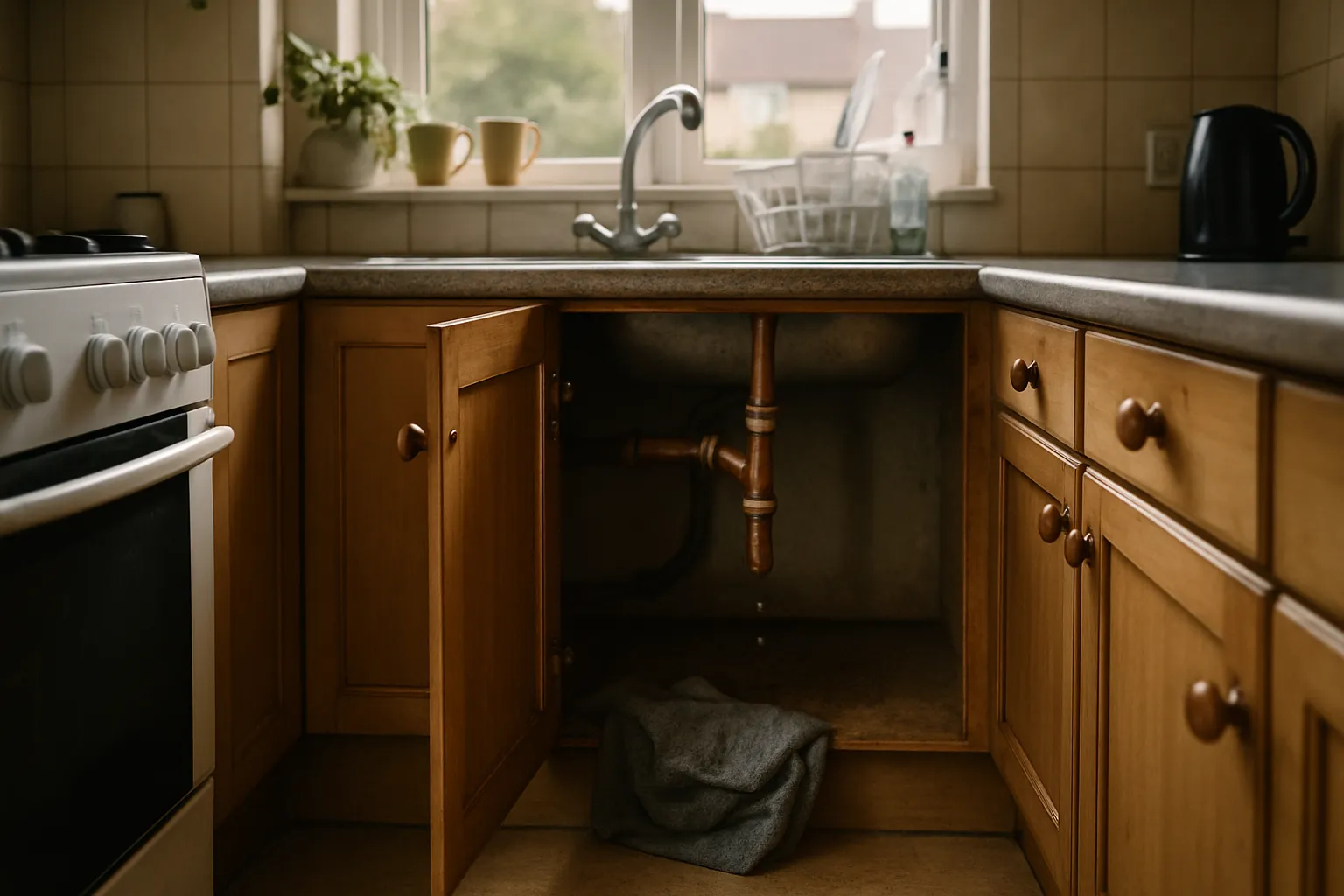
A sudden escape of water is one of the most stressful things that can happen in a home. Water moves fast, spreads silently through floors and ceilings, and can cause serious damage within minutes. The good news is that the right actions in the first few minutes make a real difference — and none of them require any tools or plumbing knowledge.
Work through the steps below in order. If at any point you feel unsafe, get out and call us on 07360 268948.
Step 1: Locate and Turn Off the Water Supply
Your first priority is to stop water entering the affected area.
Find the stopcock. In most TW-area homes it sits under the kitchen sink, in a downstairs cupboard, or just inside the front door. Turn it clockwise until it stops. The flow should reduce or stop within a few seconds.
Can’t find the stopcock, or it won’t budge? Look for local isolation valves — small flat-headed screws on the pipework feeding a specific fitting (toilet cistern, washing machine, bathroom basin). A quarter-turn with a flat-blade screwdriver closes them.
Still flowing? The external stop tap is usually in a small chamber in the pavement or front garden. A long-handled stop tap key (available at most hardware shops) fits the square spindle. Thames Water can also shut this off in an emergency — their 24-hour number is 0800 316 9800.
Step 2: Electrical Safety
Water and electricity are a dangerous combination.
- If water is near any electrical fitting — sockets, fused spurs, light fittings, consumer unit — do not touch them.
- If the ceiling is bulging or dripping near a light rose, switch that circuit off at the consumer unit (fuse board) immediately, or isolate the whole board if you are unsure which circuit is affected.
- Do not re-energise circuits until a qualified electrician or your plumber has confirmed the area is dry and safe.
When in doubt, turn everything off and stay out of the room.
Step 3: Isolate the Boiler and Heating System
If the leak is on a heating pipe, radiator, or the boiler itself:
- Switch the boiler off at its programmer or the main power switch on the unit.
- Turn the central heating thermostat to its lowest setting.
- If the leak appears to be from a radiator valve or a visible pipe joint, you can close the lockshield and thermostatic valves at each end of that radiator — this isolates just that radiator without draining the whole system.
Step 4: Drain Down If Necessary
Once the supply is off and the boiler is isolated, opening a cold tap on the ground floor helps drain residual water from the pipes quickly, reducing pressure and the volume that can leak. Flush toilets once to empty cisterns. Do not run hot taps — drawing water through the hot-water cylinder can introduce air locks.
Step 5: Contain the Water and Protect Your Belongings
- Place buckets, towels, or plastic storage boxes under active drips.
- Lay old towels or absorbent sheets at doorways to slow the spread across floors.
- Move furniture, rugs, and any valuables away from the wet area.
- If water is coming through a ceiling and you can safely access the void above, a small hole at the lowest point of a bulge lets water drain in a controlled stream rather than a sudden collapse — use a screwdriver or bradawl and have a bucket ready.
Step 6: Photograph Everything
Before you start mopping up, take photographs and short video clips. Capture:
- Where the water is coming from (the source, if visible)
- The extent of spread across floors, walls, and ceilings
- Any damaged belongings or finishes
- Meter readings if relevant
This visual record is yours to keep. Home insurers and loss adjusters typically ask for evidence of the cause and the extent of damage when a policyholder makes an escape-of-water claim, so the more thorough your documentation at this stage, the better placed you are when you speak to your own insurer. Your insurer may also ask for a written report from the attending plumber — we provide a written record of cause, scope of work, and any moisture readings as standard on every call-out.
Step 7: Call a Plumber
Once the immediate situation is contained, call us. We cover the TW postcode area — Twickenham, Richmond, Teddington, Isleworth, Hounslow, Feltham, Staines and surrounding areas — around the clock.
📞 07360 268948 — available 24 hours a day, 7 days a week.
Tell us the postcode, where the leak is, and whether you have isolated the supply. That information helps us arrive with the right parts and get the repair done as quickly as possible.
Quick-Reference Checklist
- Stopcock turned off (or local isolation valve closed)
- Electrics isolated near the wet area
- Boiler and heating switched off
- Cold tap opened to drain pipes
- Buckets and towels in place
- Photographs taken
- Plumber called
Escapes of water can feel overwhelming, but following this sequence calmly will limit the damage significantly. You do not need to fix anything yourself — your job right now is to stop the flow and stay safe. We will handle the rest when we arrive.