Emergencies
How to Contain an Escape of Water Before Real Damage Sets In
A clear first-15-minutes checklist for containing an escape of water at home: stopcock, electrics, contain the pool, photograph, then call a plumber.
Published 23 July 2026
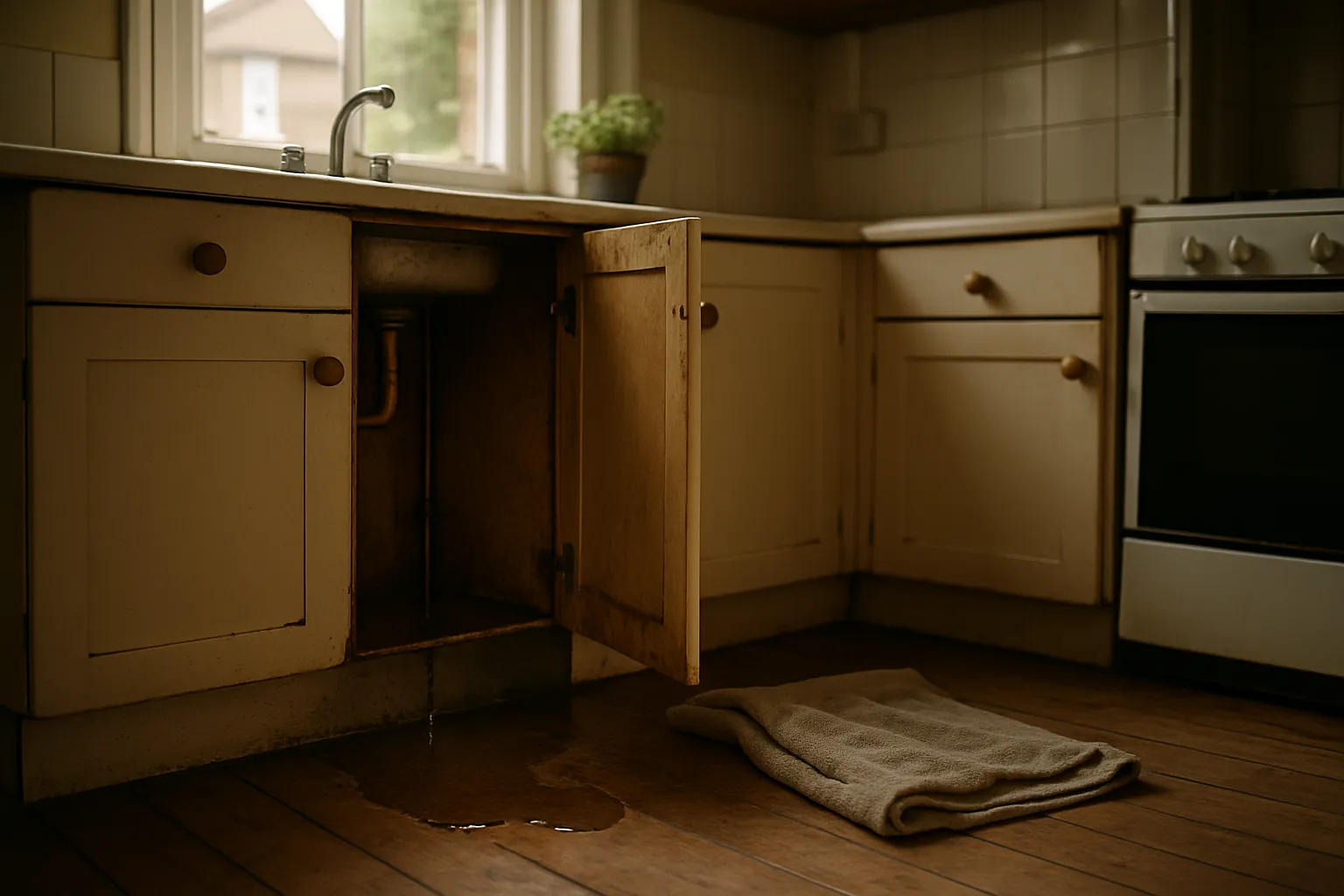
An escape of water can go from a damp patch to a ruined ceiling in under an hour. The good news is that the first fifteen minutes are yours to control — and the actions you take in that window make a genuine difference to how much damage you end up with.
This guide walks you through exactly what to do, in order, before a plumber arrives.
Step 1 — Find and Turn Off Your Stopcock (Do This First)
Your internal stopcock is almost always:
- Under the kitchen sink
- In a downstairs cupboard near the front door
- In an airing cupboard
- In a utility room or garage
Turn it clockwise until it stops. This cuts the mains supply to the whole property and immediately reduces the pressure feeding the leak. If the stopcock is stiff or seized, use both hands or grip it with a cloth — do not force it with a wrench unless you have no other option.
If you cannot find or turn the stopcock, your outside stop tap is usually under a small square cover in the pavement or front garden. You will need a stop tap key (a long-handled T-bar tool) to operate it. Some hardware shops and plumbers carry these.
Once the mains is off, open a cold tap downstairs to drain pressure from the pipes.
Step 2 — Switch Off Electricity in Affected Rooms
Water and electricity are a serious combination. Before you go near any pooling water, go to your consumer unit (fuse box) and switch off the circuits for the rooms involved — or isolate the whole property if you are unsure which circuits are affected.
Do not switch off at the consumer unit if you have to walk through standing water to reach it. In that situation, call 999 first and keep everyone out of the area.
Step 3 — Contain the Water
Once the supply is off and electrics are isolated, focus on limiting the spread:
- Lay towels or old bedding along the leading edge of any pooling water to slow it moving into adjoining rooms.
- Place buckets or large pots under active drips from ceilings.
- If a ceiling is bulging, it is holding water. Carefully pierce it at the lowest point with a screwdriver to let the water drain in a controlled stream rather than waiting for the ceiling to collapse suddenly. Stand to the side, not directly beneath.
- Move furniture, rugs and valuables out of the wet area as quickly as you safely can. Soft furnishings absorb water rapidly and become very heavy.
Step 4 — Photograph Everything
Before you start mopping up, take photographs and short video clips of:
- Where the water is coming from (pipe, joint, appliance)
- The extent of pooling on floors
- Wet walls, ceilings and any visible damage
- The stopcock position and any visible pipework
These images belong to you. They form the evidence base for any insurance claim you make yourself, and your insurer or loss adjuster will typically ask for them. A good set of photographs taken immediately is far more useful than ones taken after you have cleaned up.
Step 5 — Call a Plumber
With the immediate situation stabilised, call a qualified plumber to locate and repair the source of the leak. Even if the water has stopped flowing, the underlying fault — a split pipe, a failed joint, a faulty appliance connection — will not fix itself.
When you call, have ready:
- Where you think the leak originated
- Whether you have turned the stopcock off
- Whether the electrics are isolated
- Any visible damage (ceiling, floor, walls)
A plumber can also provide you with a written record of the cause of the leak, the work carried out, moisture readings, and photographs of the fault — all of which you will need if you are making an insurance claim. That documentation is yours to submit to your insurer in your own right.
What Not to Do
- Do not turn the electricity back on until a qualified electrician has confirmed it is safe.
- Do not use a hairdryer or fan heater to dry out a wet ceiling — you risk fire and you mask the true extent of saturation.
- Do not assume the leak has stopped just because the dripping has slowed. Pipework can re-pressurise when a stopcock is not fully closed.
After the Emergency: Drying Out and Next Steps
Escape of water damage dries far more slowly than it appears to. Walls and subfloors can hold moisture for weeks. If you are making an insurance claim, your insurer may send a loss adjuster to assess the damage — do not carry out any repairs beyond essential emergency work until you have spoken to your insurer, as this could affect your claim.
We Are Here Around the Clock
If you have an active escape of water anywhere in the TW postcode area — Twickenham, Richmond, Teddington, Hounslow, Feltham, Staines or nearby — call us now on 07360 268948. We are available 24 hours a day, seven days a week, and we will get to you as quickly as possible to stop the leak and protect your home from further damage.