Emergencies
Washing Machine Flooded the Kitchen: First Steps
Washing machine leaked or flooded? Follow these calm, practical steps to stop the water, stay safe, and limit the damage before help arrives.
Published 28 June 2026
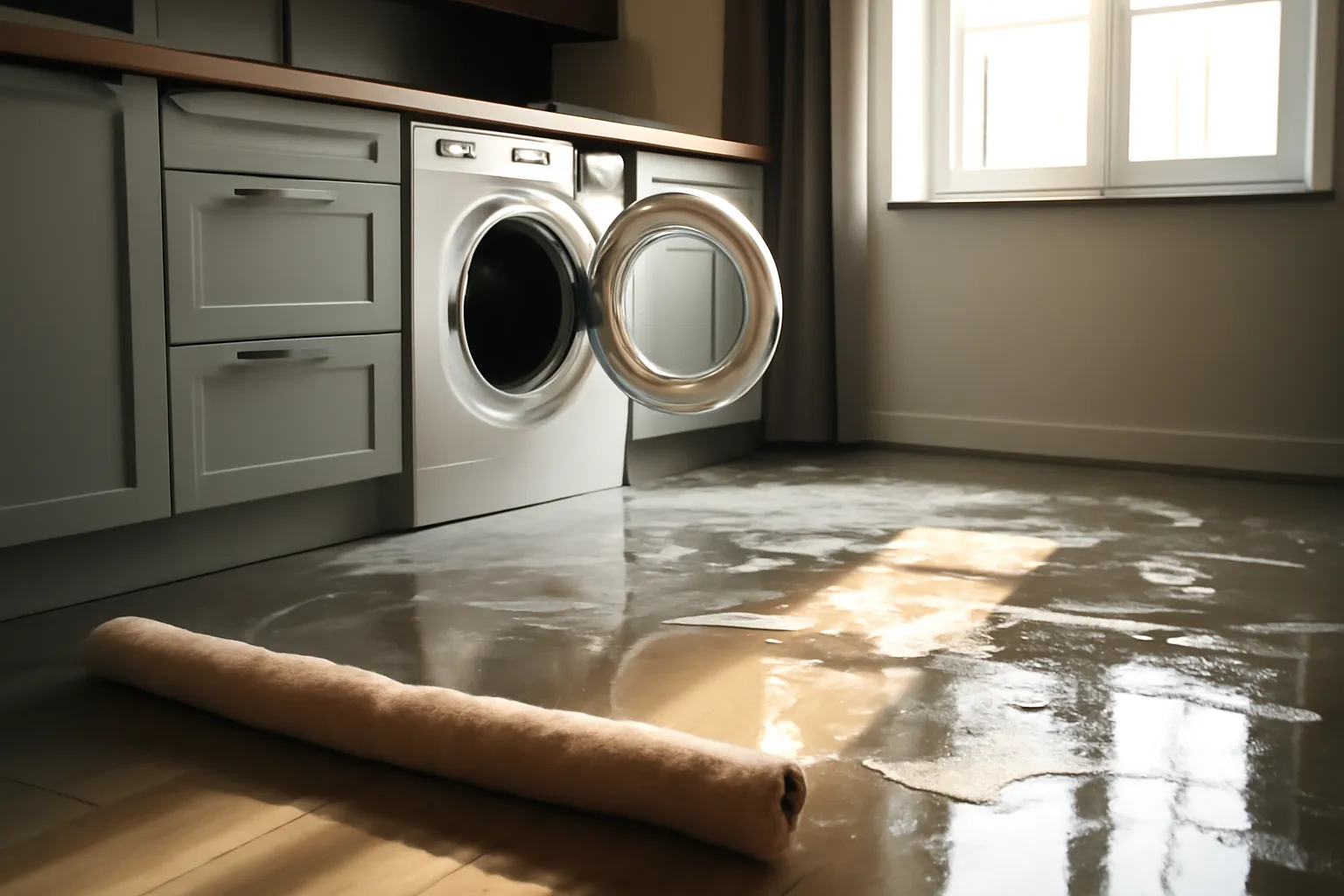
A washing machine flood can put several centimetres of water on your kitchen floor in minutes. It looks alarming, but if you work through the steps below in order you can stop the situation getting worse and keep yourself safe while you do it.
Step 1: Do Not Touch Anything Electrical First
Water and electricity are a dangerous combination. Before you reach for a mop or try to move the machine, deal with the electrics.
- Switch the washing machine off at the wall socket. Do not just press the machine’s own power button — turn off the socket switch or pull the plug out. If the socket is already wet or sparking, do not touch it.
- If the socket is wet or you cannot safely reach it, go to your consumer unit (fuse box) and switch off the circuit for the kitchen. When in doubt, switch off the main isolator switch entirely.
- Do not walk through standing water to reach a live socket. If you cannot isolate the power safely from a dry position, stay back and call for help.
Once you are certain the power is off, it is safe to move to the next steps.
Step 2: Turn Off the Water Supply to the Machine
Stopping the flow of water is your next priority.
Find the isolation valves
Most washing machines are connected to the mains via one or two flexible hoses at the back of the machine. Each hose connects to a small isolation valve — usually a quarter-turn tap with a flat-head screw slot, fitted on the wall or under the worktop nearby.
- Turn the slot across the pipe (90°) to close it. When the slot runs along the pipe, the valve is open; across the pipe, it is closed.
- If you have separate hot and cold supplies, close both.
No isolation valve?
If the machine is plumbed directly without isolation valves, go to the stopcock under your kitchen sink and turn it clockwise until firm. If that does not stop the flow, use your property’s main stopcock, which is typically under the kitchen sink or near the front door. Turn it clockwise to close.
Step 3: Contain and Remove the Water
Now the power is off and the water supply is isolated, you can start clearing up.
- Lay down old towels or bath sheets around the machine and across doorways to stop water spreading to other rooms or seeping under skirting boards.
- Use a mop and bucket to remove standing water. Work from the edges inward toward the machine.
- A wet-and-dry vacuum (if you own one) will remove water from floor joints and grout lines far more effectively than a mop.
- Open windows and doors to start the drying process — good airflow is more useful than you might expect.
- Lift any rugs or floor mats and take them outside; trapped moisture underneath causes mould quickly.
Step 4: Document the Damage
Before you clean everything up, take a few minutes to record what has happened. This matters for insurance purposes.
- Photograph the machine, the hoses, the valves, and the affected floor — wide shots and close-ups.
- Note the time the leak started (or when you discovered it).
- Check whether water has reached adjacent rooms, under kickboards, or into a ground-floor void beneath the floor.
- Keep any damaged items in place until your insurer has been notified, if possible.
Common Causes of Washing Machine Leaks
Understanding what went wrong helps you explain it to a plumber and may prevent a repeat.
- Worn or split inlet hose — the most common cause; the rubber perishes over time.
- Loose hose connection — a jubilee clip or push-fit fitting that has worked itself loose.
- Blocked or kinked drain hose — causes water to back up and overflow the drum.
- Failed door seal — water escapes from the front of the machine during a cycle.
- Faulty pump or internal component — usually needs an appliance engineer rather than a plumber.
When to Call a Plumber
Call a plumber if:
- You cannot locate or close the isolation valves and the water is still running.
- Water has reached the ceiling of a room below, or you suspect it has entered wall cavities.
- You need isolation valves fitted so this cannot happen again.
- A pipe rather than the machine itself appears to be the source.
For the appliance fault itself (a split drum seal, faulty pump, or broken door gasket), you will need a washing machine engineer rather than a plumber — but sorting the water supply side first is always the right call.
You Have Done the Right Thing
Working through these steps calmly — power off, water off, mop up, document — limits the damage significantly. Most washing machine floods look worse than they are once the water source is stopped.
If you are still dealing with running water you cannot isolate, or you are concerned about water in walls or ceilings, call us now. We cover the TW postcode area around the clock.
Emergency Plumbers TW — 24/7: 07360 268948