Emergencies
Sewage Backing Up Into Your Garden: What to Do in the First 30 Minutes
Sewage in your garden is a health emergency. Here's exactly what to do in the first 30 minutes — from keeping safe to who you need to call.
Published 17 July 2026
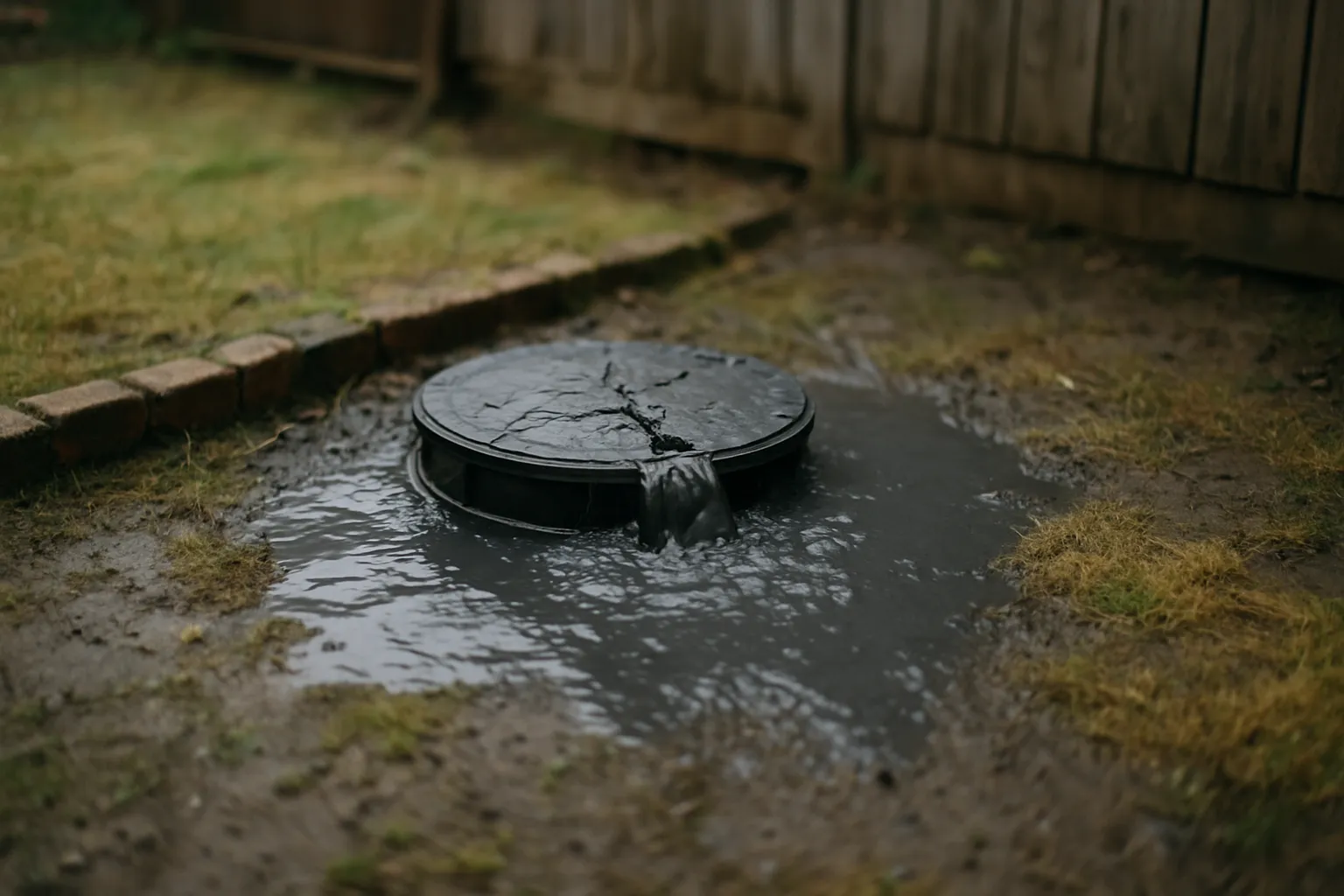
Raw sewage appearing in your garden is not just unpleasant — it is a genuine health hazard. The good news is that the right actions in the first half hour can limit the damage, protect your family, and give you a clear record of what happened. Here is what to do, in order.
Step 1: Keep Everyone Away from the Affected Area (Right Now)
Before you do anything else, stop anyone going near the overflow.
- Children and pets should be brought indoors immediately. Sewage contains bacteria such as E. coli and salmonella, as well as viruses and parasites. Even brief contact with contaminated ground can cause serious illness.
- Do not walk through it to reach the drain or inspection cover. If you must approach, wear rubber boots and disposable gloves.
- Warn neighbours if the flow is spreading towards a shared boundary, a footpath, or a watercourse.
Step 2: Do Not Hose It Away
It is tempting to reach for the garden hose, but do not. Hosing raw sewage spreads contamination across a wider area of soil, potentially into flower beds, vegetable patches, or water features. It can also wash it towards a neighbour’s property or a surface water drain, which may create a separate environmental problem. Leave the affected area as it is for now.
Step 3: Photograph Everything
Before any cleaning or repair work begins, take clear photographs and, if safe to do so, a short video. Capture:
- The source of the overflow (the inspection cover, gully, or drain that is backing up)
- How far the sewage has spread
- Any standing water or pooling
- Damage to lawn, paving, planting, or fencing
- The date and time stamp on your phone
This visual record belongs to you. It is the evidence your home insurer will typically ask for when you make a claim, and it documents the condition of your garden before any work takes place.
Step 4: Work Out Whose Drain It Is
This determines who is responsible — and who to call.
Private drain (your responsibility)
If the overflow is coming from a drain that serves only your property — a gully, a downpipe connection, or an inspection cover within your garden boundary — it is almost certainly a private drain. Responsibility for clearing and repairing it sits with you as the homeowner. This is when you call us: 07360 268948.
Public sewer (Thames Water’s responsibility)
If you can see sewage bubbling up from a cover in the pavement, the road, or a shared back-alley, or if multiple properties are affected at the same time, the problem is likely in the public sewer network. Report it to Thames Water on 0800 316 9800 (free, 24 hours). They are legally obliged to attend.
Not sure which it is? Call us anyway. We can help you identify the source and advise you on the right next step — there is no charge for that conversation.
Step 5: Stop Adding Water to the System
Until the blockage is cleared, avoid anything that puts more water into the drains:
- Do not flush toilets more than necessary
- Do not run the dishwasher or washing machine
- Keep showers and baths to an absolute minimum
Every litre you add to a blocked system increases the pressure behind it and can make the overflow worse.
Step 6: Call a Plumber — Do Not Wait
A sewage backup outside is not a problem that resolves on its own. The blockage causing it — whether it is a build-up of fat and wipes, a collapsed section of pipe, or tree root intrusion — will not clear without intervention. The longer raw sewage sits on your garden, the deeper it soaks into the soil and the more expensive the remediation becomes.
We cover Hampton and the wider TW postcode area around the clock. Our engineers carry CCTV drain inspection equipment, high-pressure water jetting, and the tools to diagnose whether the issue is a simple blockage or something structural. We will also give you a written report of the cause, the work carried out, and any photographic evidence we gather — documentation you can pass directly to your insurer if needed.
After the Emergency: Cleaning Up Safely
Once the drain is cleared and the flow has stopped:
- Use a disinfectant approved for outdoor use on hard surfaces such as paving and concrete
- Topsoil contaminated with sewage should ideally be removed and replaced — do not grow vegetables in it until it has been professionally assessed
- Wash all clothing and footwear that came into contact with sewage separately, at 60 °C or above
- Anyone who has had skin contact should wash thoroughly with soap and water and monitor for symptoms
The Bottom Line
Sewage in your garden is an emergency. Keep people away, leave it where it is, photograph it, work out whether it is a private or public drain, and get the right people on the phone quickly.
If it is your private drain and you are in Hampton or anywhere across the TW postcode area, call us now on 07360 268948. We are available 24 hours a day, every day of the year.
Our sister drainage firm Drainiacs clear these call-outs across TW. Their guide to the first fifteen minutes of a drain emergency picks up where this one ends.