Emergencies
Drain Flies in Your Bathroom: What They're Telling You About Your Drains
Small flies hovering near your plughole are a sign of organic build-up or a broken pipe. Fix the drain and the flies disappear. Here's how.
Published 19 July 2026
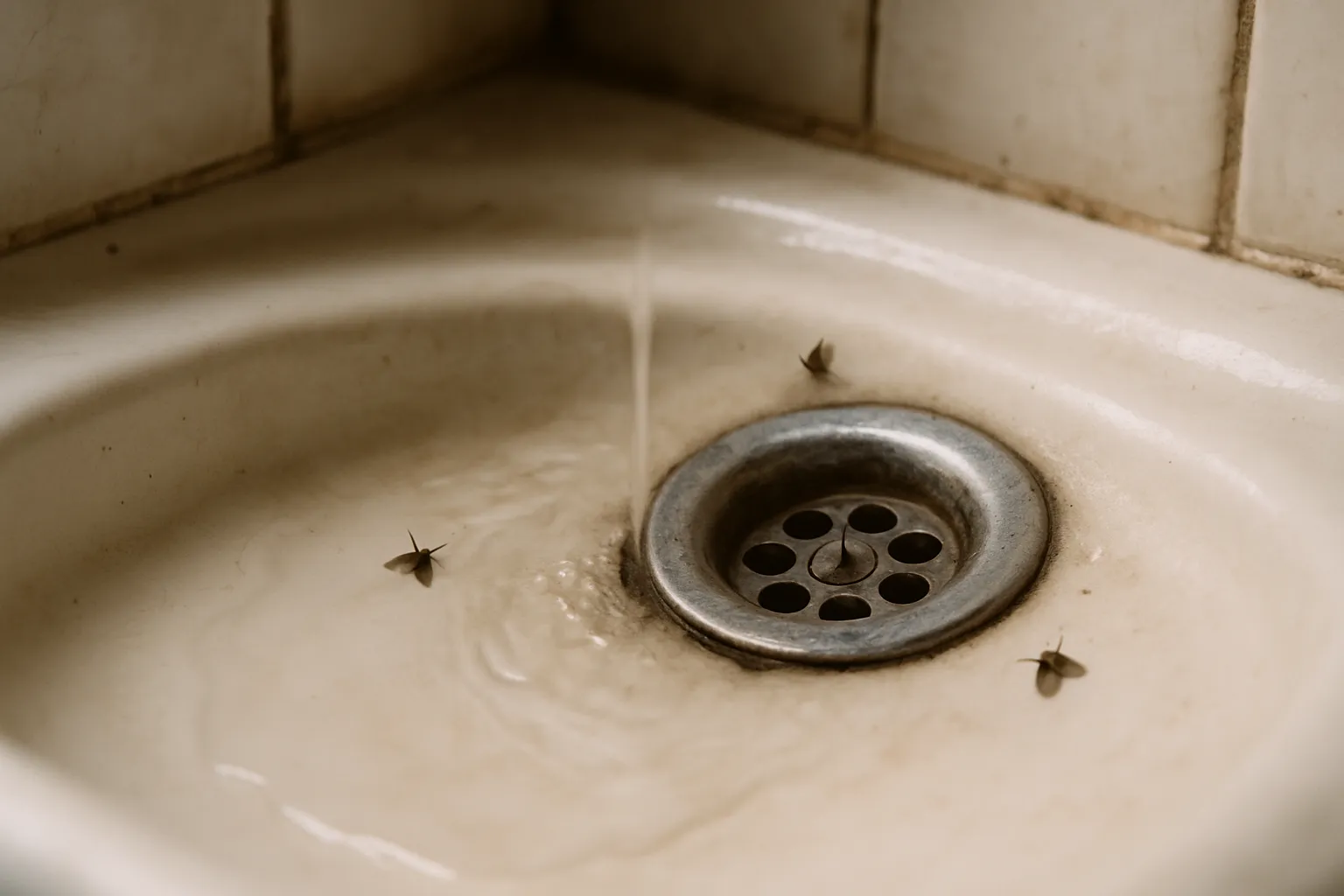
Those Tiny Flies Are Not a Pest Problem — They’re a Plumbing Problem
If you’ve noticed small, moth-like flies hovering around your bathroom plughole, your shower tray, or the base of your toilet, the instinct is often to reach for an insect spray. That will kill the adults you can see, but within days they’ll be back — because the source is underground, not in the air.
Drain flies (also called moth flies or filter flies, Psychoda species) breed in the layer of organic slime that coats the inside of slow or partially blocked drains. They don’t come in from outside; they hatch from your pipework. The flies are a symptom. The drain is the diagnosis.
Why Drain Flies Appear
Organic build-up in the trap or pipe
Hair, soap scum, toothpaste residue, and skin cells accumulate inside the U-bend and further down the waste pipe. This biofilm is warm, moist, and rich in the organic matter drain flies need to breed. Even a drain that appears to run freely can carry enough build-up to support a colony.
A slow or partial blockage
A partial blockage creates standing water and a thicker layer of slime. If your basin or shower takes noticeably longer to empty than it used to, that sluggishness is almost certainly feeding the infestation.
A cracked or broken pipe beneath the floor
This is the scenario most people don’t consider. If a waste pipe under a concrete floor or suspended timber floor has cracked — from age, ground movement, or a previous repair that didn’t hold — sewage and moisture escape into the void beneath. Drain flies breed prolifically in that dark, damp environment, then find their way up through gaps around pipework into the room above. If you’re seeing flies but your visible drain seems clear, a broken pipe is a serious possibility.
Dried-out traps
A U-bend that has dried out (common in a guest bathroom used infrequently) loses its water seal, and drain flies — along with sewer gases — can travel up freely. Running the tap for thirty seconds every week or two keeps the trap charged.
How to Confirm the Source
Before calling anyone, do a quick test:
- Tape test — stick a piece of clear tape, sticky-side down, over the plughole overnight. If flies are hatching from that drain, some will be caught on the tape by morning.
- Check every drain — bathroom basin, shower, bath, and the toilet base. Flies near the toilet base specifically can indicate a failed wax seal or a crack in the soil pipe.
- Look for moisture — soft or discoloured grout, a floor tile that sounds hollow or feels slightly springy, or a skirting board that has started to bow can all point to a leak beneath the surface.
What You Can Do Yourself
- Clear the visible trap. Remove the plughole cover and pull out any hair or debris. A small drain brush or a bent wire coat hanger works well.
- Flush with boiling water. Pour a full kettle slowly down the drain to soften and shift surface biofilm. Repeat daily for a few days.
- Use an enzyme-based drain cleaner. Unlike caustic cleaners, enzyme formulas break down organic matter without damaging pipework. Follow the product instructions and give it several nights to work.
- Run infrequently used taps. Refill any dried-out traps.
These steps will resolve a mild build-up. If the flies persist after a week of treatment, or if you suspect a broken pipe, the problem is beyond a DIY fix.
When to Call a Plumber
Contact a plumber promptly if:
- Flies return within days of treatment, repeatedly
- You can smell drains in the room even with the trap full
- The floor near the toilet or shower feels soft, warm, or damp
- You can see damp patches on a ceiling below a bathroom
- A CCTV drain survey has previously flagged a defect in that run of pipework
A broken or cracked drain under a floor is not a job for a plunger. It requires a CCTV drain inspection to locate the fault, followed by either a patch repair, pipe relining, or excavation depending on the severity. Left unaddressed, the moisture causes structural damage to joists and subfloor, and the fly problem will never resolve no matter how many times you clean the visible drain.
The Simple Rule
Fix the drain, lose the flies. Drain flies cannot survive without the biofilm inside your pipework. Remove the food source — whether that’s a straightforward clean-out or a pipe repair — and the infestation ends naturally, usually within one to two weeks.
If you’re in Hampton, Twickenham, Teddington, or anywhere across the TW postcode area and you suspect a broken drain or a blockage you can’t shift, we’re available around the clock. Call us on 07360 268948 and we’ll get to the root of it.
Our sister drainage firm Drainiacs cover how to get rid of drain flies and what they say about the pipe below.