Emergencies
Why Riverside SW14 & SW13 Homes Get More Leaks (Mortlake, Barnes, East Sheen)
Older pipework, Thames damp and converted housing make Mortlake, Barnes and East Sheen homes prone to leaks. Here is what to look for and when to call.
Published 14 July 2026
Why Riverside Homes in SW14 and SW13 Are Particularly Prone to Leaks
If you live in Mortlake, Barnes or East Sheen, you may have noticed that water problems seem to crop up more often than you might expect from a well-maintained home. That is not bad luck. There are specific, local reasons why properties in this riverside cluster leak more frequently — and understanding them can help you catch problems early before they cause serious damage.
The Three Big Factors
1. Ageing Period Pipework
Much of the housing stock along the Thames corridor between SW13 and SW14 dates from the late Victorian era through to the 1930s. Many of these properties still have original or early-replacement lead, iron or early copper pipework hidden behind plasterwork, beneath floorboards and inside party walls. Pipes of this age were never designed to last indefinitely. They corrode from the inside out, develop pinhole leaks slowly over months, and can fail suddenly when water pressure spikes.
Converted properties — large Edwardian houses divided into flats, riverside warehouse conversions and coach houses turned into homes — add another layer of complexity. Conversions often involve improvised pipework runs, added stopcocks in awkward locations, and supply lines that serve multiple dwellings in ways the original builders never intended.
2. Ground Movement and Thames Proximity
The Thames flood plain runs directly through Barnes and Mortlake. The ground here is wetter, softer and more prone to seasonal movement than areas further from the river. When soil swells and contracts with moisture changes, underground supply pipes and drain runs shift. Joints that were sound can open up; older clay drainage can crack.
Properties close to the riverbank — particularly along the Mortlake waterfront, Lonsdale Road in Barnes and the streets backing onto the Thames Path — are especially exposed to this ground-movement risk.
3. Damp Conditions Accelerating Corrosion
High ambient humidity near the river speeds up corrosion on external pipework, pipe clips and fittings. Cold-water tanks in loft spaces are particularly vulnerable: condensation forms on the outside of cold pipes in humid lofts, and over time this external moisture corrodes clips and fittings even when the pipe itself is intact. The result can look like a slow drip from a joint when the real cause is external corrosion eating through a fitting.
The Most Common Leak Points in These Homes
- Under-floor supply pipes — especially in Barnes and East Sheen Victorian terraces where original pipework runs beneath suspended timber floors
- Cold-water storage tanks — common in pre-1990s period houses; tanks develop cracks, overflow pipes block, and ball valves fail silently
- Radiator connections and microbore pipework — 1970s and 1980s heating upgrades in period houses often used narrow copper microbore pipe that is now reaching the end of its reliable life
- Soil stacks and waste runs — older cast-iron soil stacks corrode at joints; converted flats often share stacks, meaning a leak from one flat can appear in another
- Flat-roof extensions — many SW14 and SW13 homes have rear kitchen or bathroom extensions with flat roofs; where roof drainage meets internal downpipes, blockages and leaks are common
- External stop taps — the boundary stop tap in the pavement or front garden is often the original Thames Water fitting; these can fail or become difficult to close fully, making it hard to isolate a leak quickly
Signs of a Slow Leak in a Period Home
Slow leaks in older properties often hide for months. Watch for:
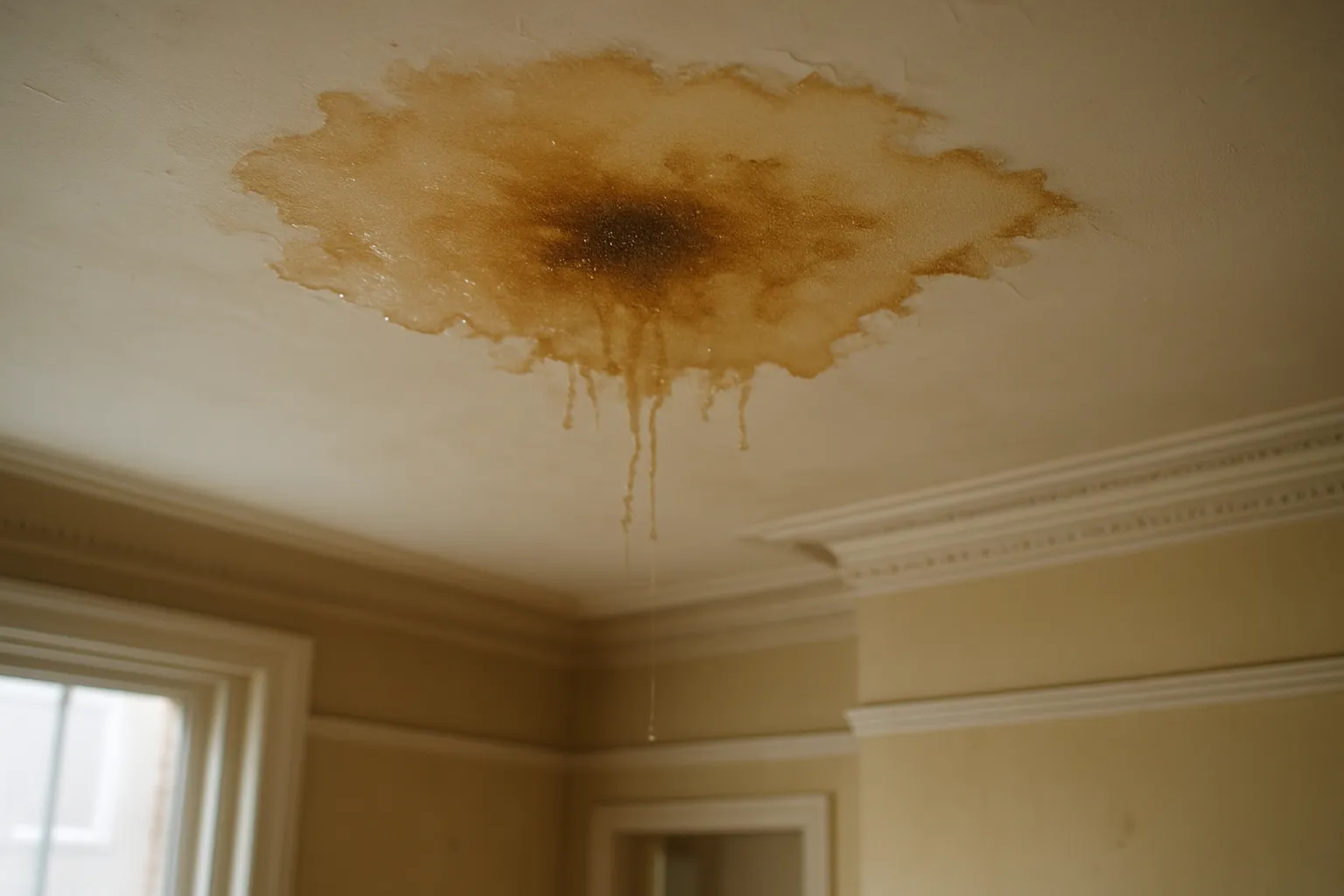
- Damp patches on ceilings that appear or grow after rain (could be roof) or regardless of rain (more likely pipework)
- Unexplained rises in your water bill
- A water meter that continues to move when all taps and appliances are off
- Musty smell in a cupboard, under the stairs or beneath floorboards
- Soft or springy floorboards, particularly in bathrooms or kitchens
- Discolouration or bubbling on plaster walls, especially on internal walls where pipes run
How to Check for a Hidden Leak Yourself
- Turn off all taps, appliances and the dishwasher or washing machine.
- Find your water meter — usually under a small cover in the pavement outside your property.
- Note the reading and wait 30 minutes without using any water.
- Check the reading again. If it has moved, water is escaping somewhere.
If your meter is inside the property (some converted flats have internal meters), the same test applies.
When to Call a Plumber
Call immediately if:
- Water is actively dripping, pooling or running
- You can hear water running inside a wall or floor with no taps open
- A ceiling is bulging or wet to the touch
- You cannot isolate the leak at your stopcock
For a suspected slow or hidden leak, it is still worth calling sooner rather than later. Leak detection equipment — acoustic sensors and thermal imaging — can locate a leak behind plaster or under a floor without unnecessary damage, and catching it early nearly always means a smaller repair.
Documentation After a Leak
If you intend to make a claim on your home insurance, your insurer will typically want to know the cause of the leak, its extent and the scope of any repair. When we attend, we provide a written report covering the cause, photographs, and the work carried out. That record belongs to you to use as you see fit with your insurer.
We Cover the Whole SW13 and SW14 Area
Our team covers Barnes, Mortlake and East Sheen as part of our wider Richmond and TW postcode service area. We are available around the clock, every day of the year.
If you have a leak — or suspect one — call us now on 07360 268948. We will help you understand what is happening and get it sorted with as little disruption to your home as possible.