Emergencies
Radiator Leaking Water — Stop It Fast
A leaking radiator can soak floors and damage ceilings below. Here's how to catch the drip, isolate the valve, and know when to call a plumber.
Published 28 June 2026
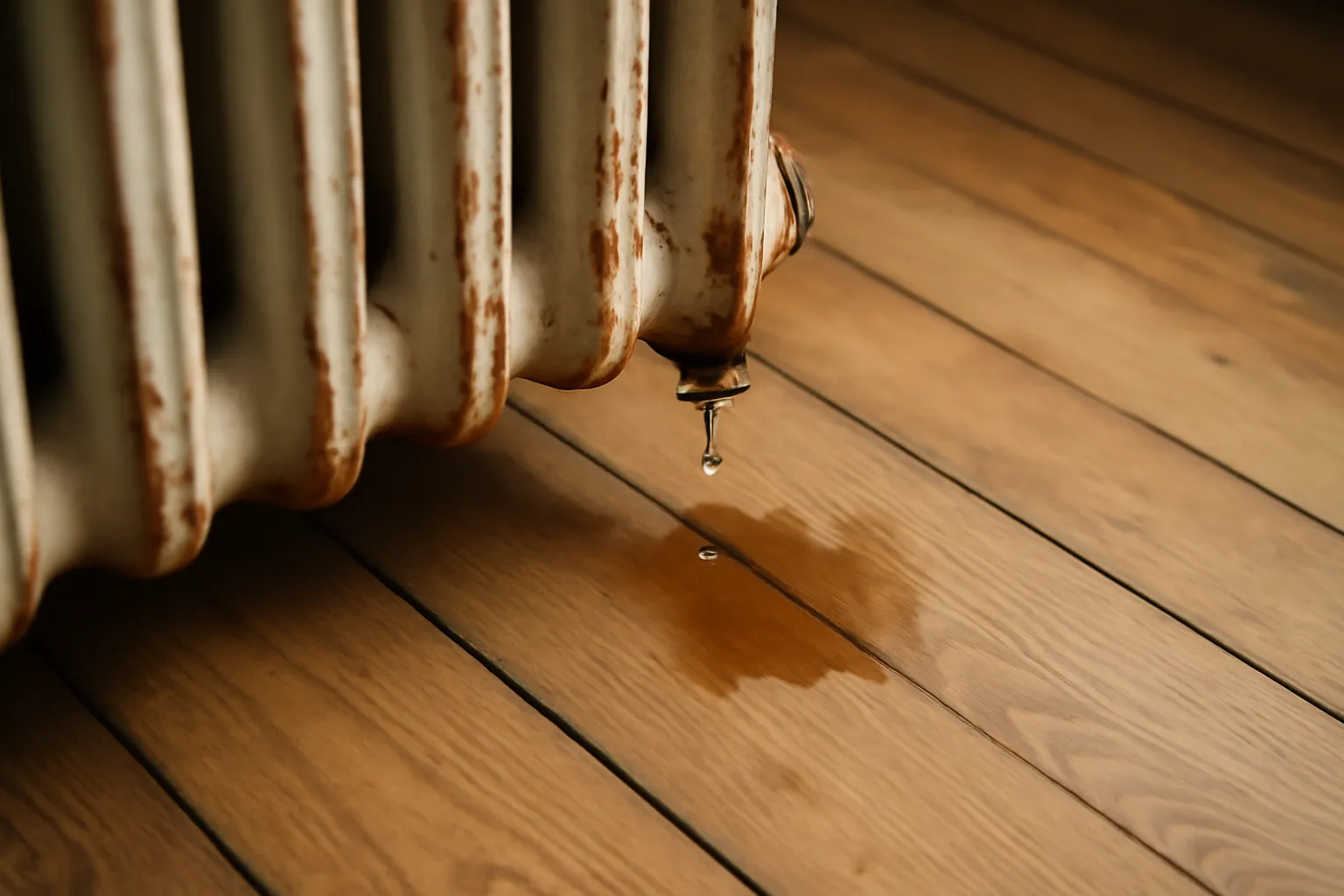
A dripping radiator rarely fixes itself. Left alone, even a slow leak can warp floorboards, rot skirting boards, and — if you’re on an upper floor — bring down the ceiling below. The good news is that most radiator leaks can be slowed or stopped in minutes with tools you already have at home.
Here’s exactly what to do.
Step 1: Find Where the Leak Is Coming From
Before you grab a towel, take thirty seconds to look carefully. The most common sources are:
- The valve at the bottom of the radiator — usually the lockshield (the capped end) or the thermostatic radiator valve (TRV, the end with numbers on it)
- The bleed valve — the small square or slotted fitting near the top corner
- A pinhole in the radiator body itself — rust or corrosion has eaten through the metal
- A loose union nut — the large nut connecting the valve to the radiator
Knowing the source tells you how serious the problem is and what to do next.
Step 2: Place a Bowl and Lay Down Towels
This sounds obvious, but do it first — before anything else. Water spreads faster than you expect, and a soaked carpet or a drip through a light fitting turns a small job into a large one.
- Use a shallow roasting tin or a wide bowl under the drip point
- Lay old towels around the base of the radiator
- If water is running along a pipe, wrap a towel around the pipe and tuck the end into the bowl
Step 3: Isolate the Leaking Valve
For most valve leaks, you can stop the flow without turning off your whole heating system.
Thermostatic radiator valve (TRV)
Turn the head fully clockwise to the 0 or off position. This closes the valve and cuts water flow to that radiator.
Lockshield valve
Remove the plastic cap (it usually pulls or clips off). Use an adjustable spanner to turn the spindle clockwise until it stops. Go gently — these valves are not designed to be turned quickly.
Both valves closed
If you close both the TRV and the lockshield, that radiator is isolated from the system entirely. The leak should slow dramatically or stop.
If the leak is at the bleed valve, insert a bleed key and turn it clockwise firmly until it seats. Do not over-tighten — the valve is brass and the thread is fine.
Step 4: Dry the Area and Monitor
Once the valves are closed, dry around the radiator and watch for ten minutes. If the drip has stopped, you have bought yourself time to arrange a proper repair. If it continues, the leak is likely from the radiator body itself or from a joint you cannot isolate with the valves alone.
When You Need to Turn Off the Whole System
Call a plumber and turn off your boiler and central heating if:
- The leak is from a pinhole in the radiator body — these worsen quickly under pressure
- Water is coming from a pipe joint behind the wall or under the floor
- The valve spindle is seized or snapped and will not turn
- You can see water dripping through the ceiling below
- The leak is fast or spreading despite your efforts
To turn off the system, switch your boiler to standby or off at the programmer, then turn off the central heating pump if you can locate it. This drops system pressure and reduces the flow.
Common Causes and What They Mean
| Source | Likely cause | DIY fix? |
|---|---|---|
| Valve body or union nut | Worn olive or packing | Tighten nut carefully; may need replacing |
| Bleed valve | Loose or corroded | Re-seat with bleed key; replace if corroded |
| Radiator body | Pinhole rust | No — radiator needs replacing |
| Pipe joint near radiator | Failed solder or compression fitting | No — call a plumber |
A Note on Leak-Sealing Additives
Products such as Fernox F4 or Sentinel X400 are sometimes used to seal small pinhole leaks from inside the system. They can work as a short-term measure, but they are not a permanent repair and can cause problems if used in excess. If someone suggests pouring sealant into your system as the only fix, ask for a proper assessment first.
When to Call Us
If you have isolated the radiator and the situation is stable, you can book a non-urgent visit at a time that suits you. But if water is still flowing, you cannot close the valves, or there is any risk to the floor or ceiling below, call us straight away.
We cover the TW postcode area — Twickenham, Richmond, Teddington, Hounslow, Staines and surrounding areas — and we are available around the clock.
Call Emergency Plumbers TW now: 07360 268948
A leaking radiator is stressful, but it is a very fixable problem. You have already done the right thing by looking it up — now let’s get it sorted.