Emergencies
Outside Gully Overflowing in Heavy Rain: Causes and Real Fixes
Gully overflowing in heavy rain? Learn the common causes, quick homeowner checks, and when to call a drain engineer in the TW area.
Published 17 July 2026
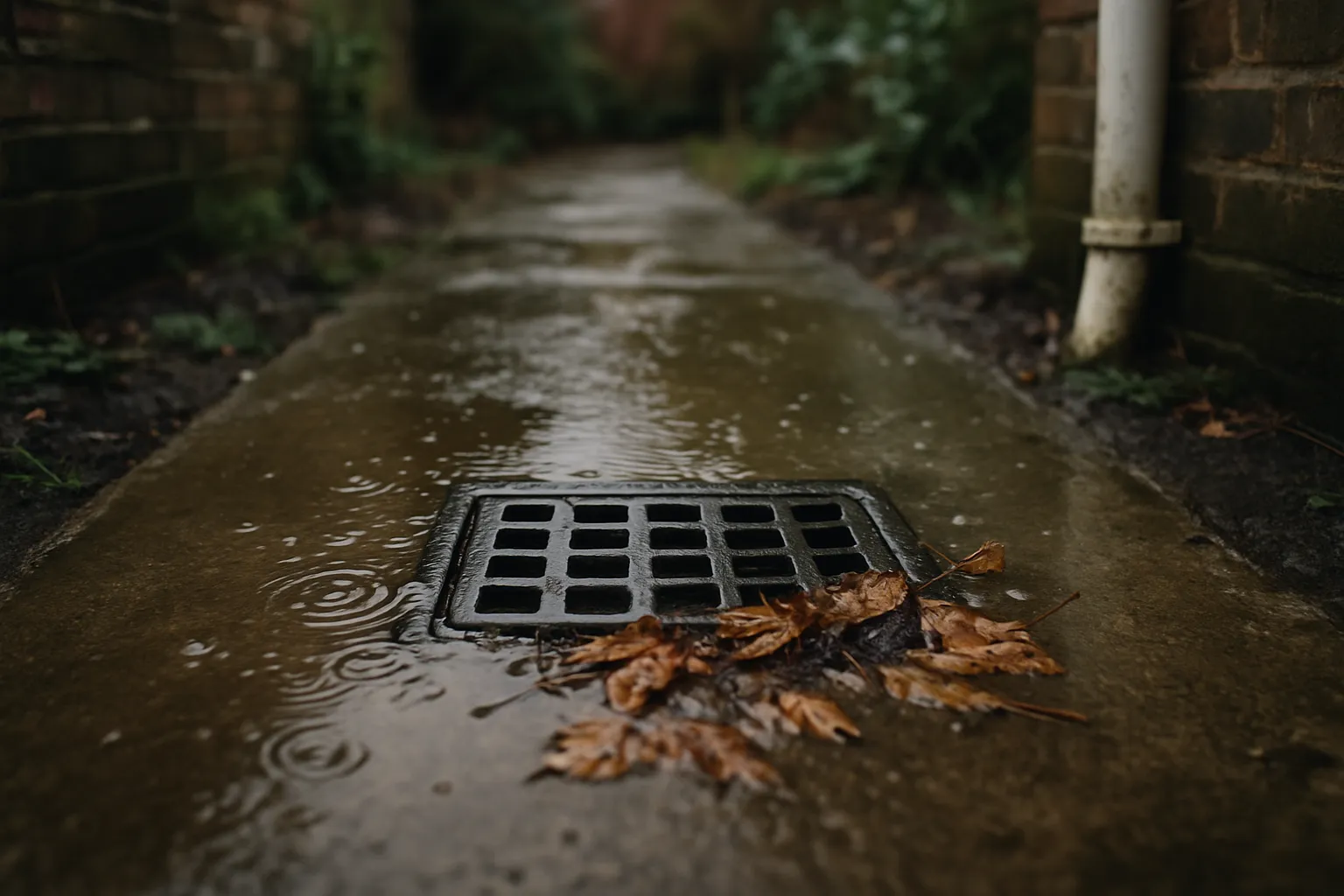
A gully that backs up the moment the rain gets heavy is one of those problems that is easy to ignore on a dry day — and impossible to ignore when water is sheeting across your path, seeping under a door, or pooling against a wall. If you are in Staines or anywhere else in the TW postcode area, the flat, low-lying ground and the proximity of the Thames mean surface water has nowhere obvious to go. A blocked gully makes that problem significantly worse.
Here is what is usually causing it, what you can safely check yourself, and when it is time to call in a drain engineer.
What Is a Gully, Exactly?
A gully is the small, grated drain set into the ground that collects rainwater from paved surfaces, paths, driveways, and sometimes downpipes. It connects to your underground surface-water drainage system, which eventually discharges to a soakaway, watercourse, or the public sewer network.
When the gully cannot clear water as fast as it arrives, it overflows — and in a downpour that can happen within minutes.
Common Causes of a Gully Overflowing in Rain
1. Silt and Sediment Build-up
Over months and years, fine grit, soil, and sand wash into the gully pot (the bucket-shaped chamber below the grate) and settle at the bottom. Once the pot is half-full of silt, its capacity drops dramatically. A moderate shower that was previously fine now causes an overflow.
This is particularly common in Staines and Laleham, where silty soil washes off riverside gardens and allotments.
2. Leaf and Debris Blockage
Autumn leaf fall is the most predictable cause. Leaves mat together on and under the grate, forming a near-waterproof seal. The gully fills faster than the small gap around the leaves can drain it.
3. A Misconnected or Overloaded Downpipe
Some downpipes discharge directly into a gully. If the downpipe serves a large roof area, the volume of water in a heavy shower can simply overwhelm the gully’s capacity to pass it on. In older TW-area properties, downpipes are sometimes connected to the wrong drainage run — surface water routed into a foul drain, or vice versa — which causes problems at both ends.
4. A Partial Blockage Further Down the Run
The gully itself may be clear, but a partial blockage in the underground pipe beyond it means water backs up and spills over the top. Tree roots (common near the Thames towpath and in established Staines gardens), collapsed pipe joints, and fat deposits from kitchen waste can all cause this.
5. Inadequate Capacity for Extreme Rainfall
Sometimes there is no blockage at all — the drainage system was simply designed for typical rainfall, not the increasingly intense downpours that the TW area now sees. This is worth knowing because it changes the solution: capacity improvements rather than just a clean.
What You Can Check Yourself
Before calling anyone, a few quick checks are safe for most homeowners:
- Lift the grate (use a flat-head screwdriver or a grate key). Look into the pot. Is it full of silt, leaves, or debris? If so, scoop it out with a trowel or gloved hand and dispose of it as waste.
- Pour a bucket of water in once cleared. Does it drain freely? If yes, you have likely solved it.
- Check the downpipe connection. Is a downpipe discharging into the gully? If it is, check the downpipe itself is not blocked or cracked above the connection point.
- Lift the nearest inspection chamber lid (usually a square or round cover in the garden or drive). Is it backed up with water? If the chamber is full, the blockage is downstream of the gully — and that needs professional equipment to clear.
Do not: put drain-cleaning chemicals into a surface-water gully. They are not designed for it, rarely work on physical blockages, and may be harmful to the watercourse the drain connects to.
When to Call a Drain Engineer
Call a professional if:
- The gully pot is clear but the drain still will not run freely
- Your inspection chamber is backed up or overflowing
- Water is getting close to a door threshold, air brick, or wall cavity
- The problem returns within a few weeks of clearing
- You suspect a misconnected downpipe or a collapsed underground pipe
A high-pressure water jetter will clear most blockages quickly and thoroughly. A CCTV drain survey will find root ingress, pipe collapse, or misconnections that no amount of manual clearing will fix.
Seasonal Maintenance Worth Doing
- Autumn: Clear gully grates after the main leaf fall — usually late October to November.
- Spring: Lift the pot and scoop out any silt that has accumulated over winter.
- Before forecast heavy rain: A quick check of the grate takes two minutes and can prevent hours of trouble.
Worried About Water Getting In Right Now?
If water is already at the door or rising against a wall, that is an emergency. Call us any time on 07360 268948 — we cover Staines and the surrounding area around the clock, every day of the year. We will get the drain running again and give you a written record of the cause and work carried out, which is useful documentation to have should you need it for any insurance purpose.
If the gully sits in a driveway or channel run, our sister drainage firm Drainiacs cover blocked driveway drains in heavy rain.