Emergencies
Mice, Rats and Broken Drains: Why Pests Often Mean a Cracked Pipe
Rats in your drains or home? A cracked sewer pipe is often the real cause. Learn how a CCTV survey and drain rat blocker stops the problem at source.
Published 21 July 2026
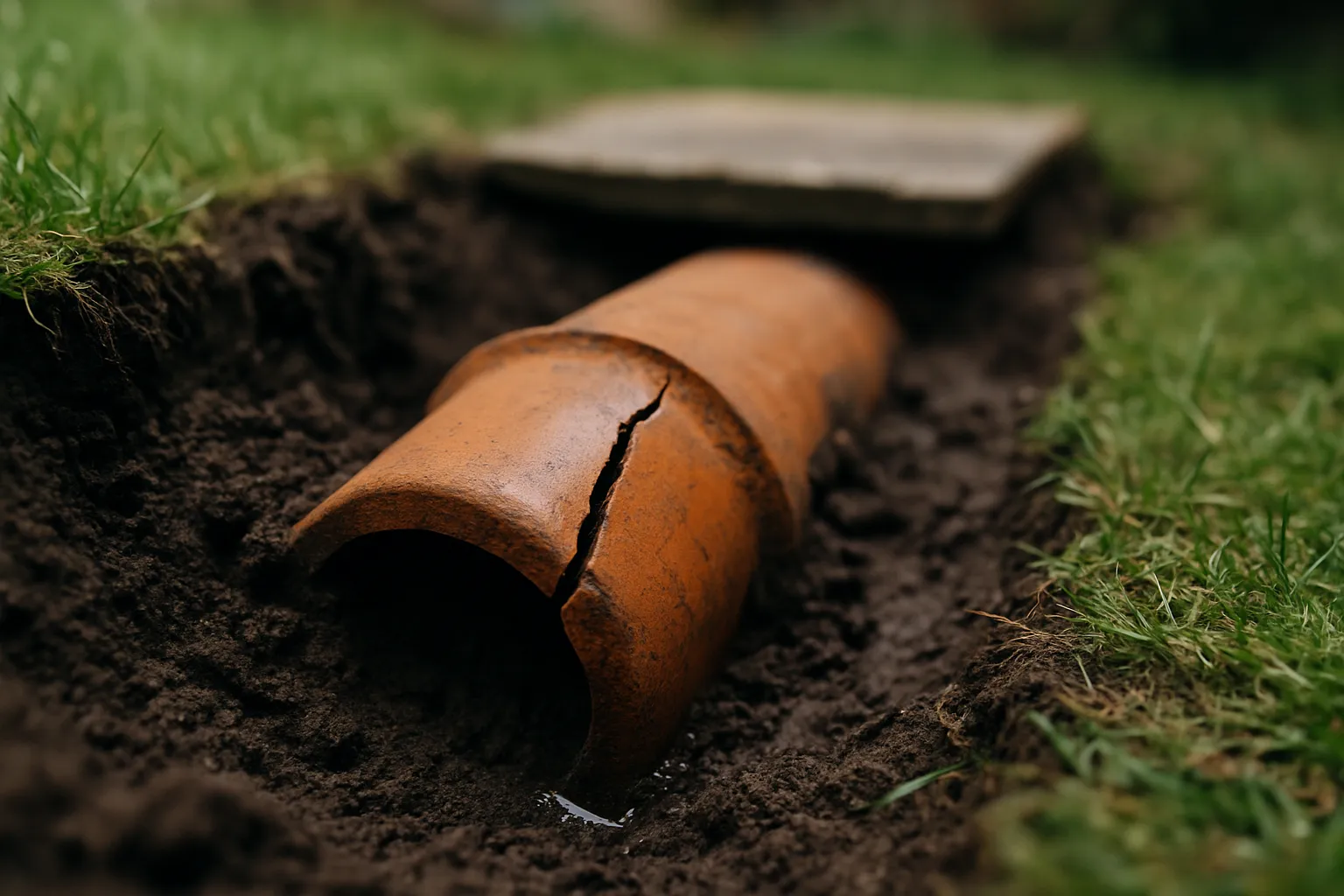
If you have spotted rats in your garden, heard scratching under the floorboards, or found droppings near a toilet or sink, your first instinct might be to call pest control. That is a reasonable step — but if the same problem keeps coming back, the real culprit may be hiding underground: a cracked or collapsed drain pipe.
Understanding the link between broken drains and rodent entry can save you months of frustration and repeated pest-control bills.
How Rats Get In Through Drains
Rats are exceptional swimmers and can tread water for several minutes. The UK sewer network is, unfortunately, an ideal highway for them — warm, dark, and full of food waste. Brown rats (the most common species in the TW area) routinely travel through the main sewer and into the lateral drain pipes that run beneath your property.
Under normal conditions, a sound drain pipe gives them nowhere to go. But once a pipe cracks, collapses, or develops a significant joint gap, rats can squeeze through an opening no larger than a 50p coin and work their way up towards your home.
Common entry routes include:
- Cracked clay or concrete pipes — older properties in Staines and across the TW postcodes often have Victorian-era clay drains that have shifted over time
- Broken or missing rodding eyes — inspection chambers that have lost their covers or seals
- Collapsed pipe sections — caused by ground movement, tree root intrusion, or heavy vehicle traffic overhead
- Poorly jointed modern plastic pipework — push-fit joints that have pulled apart slightly
Why Pest Control Alone Often Fails
A pest controller can bait, trap, and remove the rats currently in your home. What they cannot do is seal the underground entry point. If the broken pipe remains, new rats will find the same route within weeks. Many householders in Staines and the surrounding area cycle through repeated pest treatments before someone finally suggests a drain survey.
Pest controllers are not drainage engineers, and drainage engineers are not pest controllers. The two trades rarely speak to each other — which is why this crossover problem so often goes unresolved.
The Drain Rat Blocker: A Practical Solution
A drain rat blocker (sometimes called a rat flap or non-return valve) is a one-way valve fitted inside the drain pipe, typically at the point where your private lateral drain meets the public sewer. It allows waste water to flow out normally but physically prevents anything — including rats — from travelling back up the pipe towards your property.
Fitting a rat blocker is straightforward when the pipe is in reasonable condition. If the pipe is cracked or collapsed, the blocker needs to be fitted after the damage is repaired, otherwise the seal will not hold and rats can bypass it through the break itself.
What a CCTV Drain Survey Shows You
Before any repair or blocker installation, a CCTV survey gives a clear picture of what is actually happening underground. A small waterproof camera is fed through the drain and streams live footage to a screen above ground. The survey will typically reveal:
- Cracks, fractures, or collapsed sections
- Root intrusion from nearby trees or shrubs
- Displaced or open joints
- Existing blockages caused by debris or grease build-up
- The precise location and depth of any damage, which is essential before any excavation
You receive a recording and a written report. This documentation belongs to you and is useful evidence should you need to make a claim on your buildings insurance — your insurer will usually want to see proof of the cause and extent of damage, so keep the survey report, photographs, and any engineer’s notes together in one place.
Signs Your Drain May Be the Entry Point
Consider a drain survey if you notice any combination of the following:
- Recurring rat or mouse activity despite professional pest treatment
- A smell of sewage inside the property or near an external drain cover
- Slow-draining sinks, baths, or toilets
- Gurgling sounds from waste pipes
- Damp patches or subsidence near the drain run in the garden
- Rats seen emerging from or disappearing into drain covers
What to Do Right Now
- Do not pour poison down the drain. It rarely reaches rats in the sewer and can cause harm to other wildlife.
- Lift and inspect any accessible drain covers for obvious damage, debris, or signs of rodent activity.
- Book a CCTV survey so you know exactly what you are dealing with before spending money on repairs or pest control.
- Ask about a rat blocker at the same time — it is a sensible precaution even if the pipe is in reasonable condition.
We Cover Staines and the Wider TW Area
Our drainage team works across Staines, Twickenham, Teddington, Richmond, Hounslow, Feltham, Isleworth, and all surrounding TW postcodes. We carry CCTV survey equipment and rat blocker valves as standard, so in most cases we can survey, diagnose, and discuss repair options in a single visit.
If you are dealing with an active rat problem and suspect a broken drain, do not wait. The longer a cracked pipe is left, the more damage ground movement and root intrusion can cause — and the more rats will find their way in.
Call us any time on 07360 268948. We are available 24 hours a day, seven days a week.
Our sister drainage firm Drainiacs explain what rats in your drains mean and how they got in.