Emergencies
Mould After a Water Leak: Health Risks and What to Do
Mould can appear within 48 hours of a water leak. Learn the health risks, how to tackle damp mould safely, and how to stop it coming back.
Published 30 June 2026
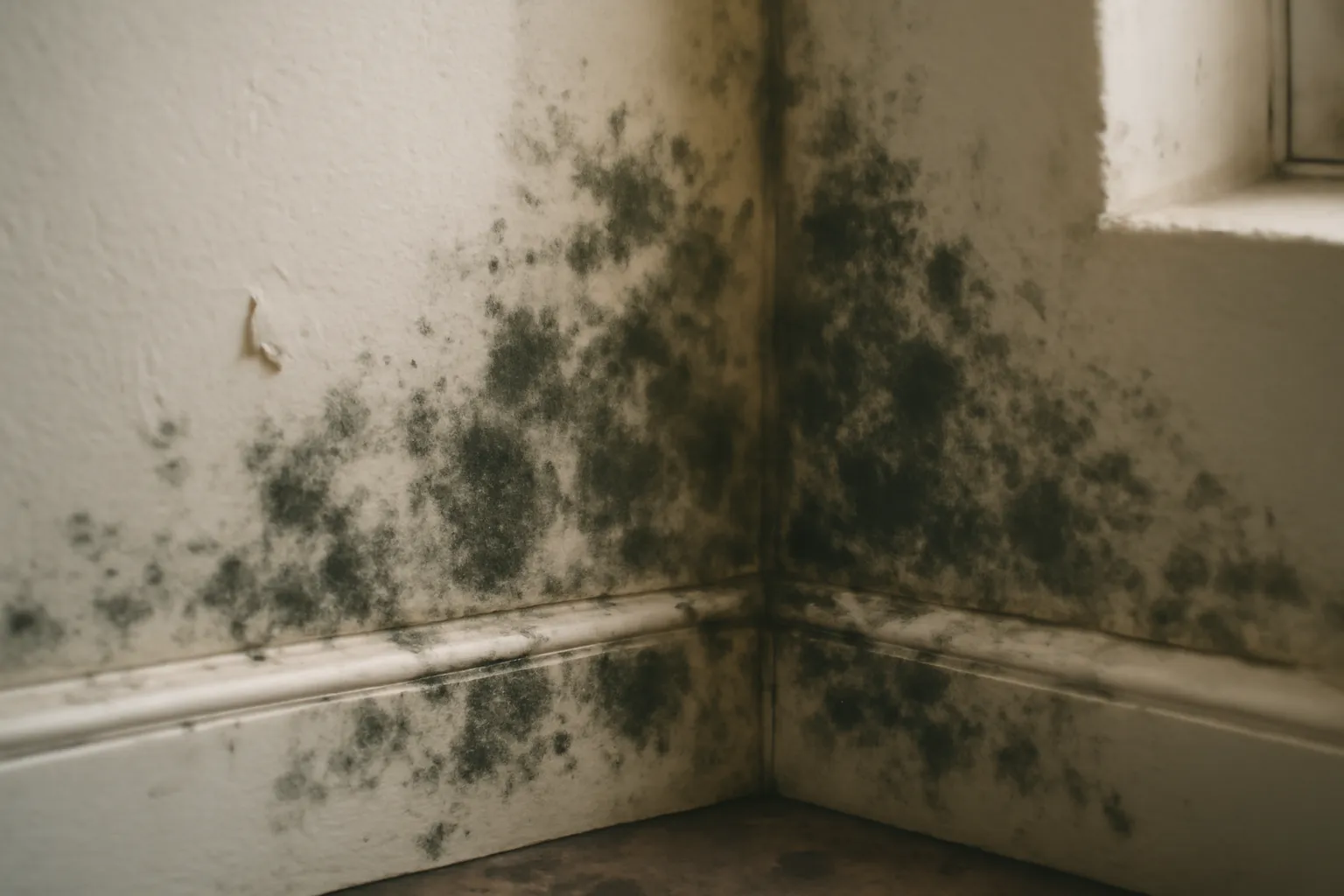
Why Mould Follows a Water Leak
A water leak does not end the moment the dripping stops. Moisture soaks into plasterboard, timber joists, skirting boards, and insulation — materials that dry out far more slowly than they became wet. Mould spores are present in every home, and all they need to germinate is a damp surface and a little warmth. Under the right conditions that can happen in as little as 24 to 48 hours.
This is why a burst pipe, an overflowing bath, or water coming through a ceiling can leave you dealing with mould days or even weeks after the plumbing problem itself has been fixed.
The 48-Hour Window
The first two days after a leak are critical. If affected materials are dried out thoroughly within that window, mould growth is far less likely to take hold. After 48 hours, the risk rises sharply.
What to do immediately after a leak:
- Remove standing water as quickly as possible using towels, a wet-and-dry vacuum, or a mop.
- Open windows and doors to increase airflow.
- Use a dehumidifier or fan heater (not a standard fan, which can spread spores) to accelerate drying.
- Lift saturated carpets and underlay — they hold moisture underneath even when the surface feels dry.
- If water has come through a ceiling, check the void above: insulation and timber can stay wet long after the visible plaster dries.
If you are not sure the source of the leak has been fully resolved, call a plumber before you start drying out. Drying a room while a slow leak continues is futile and can make mould worse.
Health Risks of Damp and Mould
Mould produces microscopic spores and, in some species, mycotoxins. Prolonged exposure in a damp home is associated with:
- Respiratory problems — coughing, wheezing, and worsening of asthma or chronic obstructive pulmonary disease (COPD).
- Allergic reactions — runny nose, itchy eyes, and skin irritation.
- Increased susceptibility to infection — particularly relevant for young children, the elderly, and anyone who is immunocompromised.
The NHS advises that damp and mould in the home should always be taken seriously, not simply painted over or masked with air fresheners. If anyone in your household has existing respiratory or immune conditions, prioritise dealing with mould quickly and consider speaking to your GP if symptoms worsen.
Removing Mould Safely
For small areas of surface mould (less than roughly one square metre), careful DIY removal is usually possible.
What you will need
- Disposable gloves, a face mask rated at least FFP2, and eye protection
- A fungicidal spray or a solution of one part bleach to four parts water
- Old cloths or disposable wipes
- A sealed bin bag for all waste
How to do it
- Ventilate the room well before you start.
- Spray the affected area and leave for the dwell time stated on the product (usually 5–10 minutes).
- Wipe away the mould using firm strokes, working from the edge inward to avoid spreading spores.
- Seal all cloths and wipes in a bin bag immediately.
- Allow the surface to dry completely before any redecoration.
When not to DIY
- The affected area is larger than one square metre.
- Mould has penetrated into plasterboard, timber, or insulation (not just surface growth).
- You or anyone in your home is vulnerable due to age or health.
- The mould keeps returning despite repeated cleaning.
In these situations, a professional damp and mould remediation specialist is the safer option. They have the equipment to test moisture levels deep within walls and to remove and replace affected materials where necessary.
Preventing Mould After a Leak
Once the immediate problem is dealt with, a few habits will reduce the chance of mould returning:
- Confirm the leak is fully fixed. A slow, hidden drip behind a wall can sustain mould indefinitely.
- Monitor moisture levels. A cheap digital hygrometer (under £10 from most hardware shops) lets you track humidity. Aim to keep indoor humidity below 60%.
- Keep heating consistent. Cold surfaces encourage condensation, which adds to any residual moisture.
- Redecorate with the right products. Use a stain-blocking primer before repainting, and consider a paint with a fungicidal additive in rooms that were badly affected.
- Check again after heavy rain. If the original leak was related to a roof, guttering, or external wall, rain may reveal whether the repair has held.
When to Call a Plumber First
If you can see or hear water still leaking, or if you are not certain the source has been identified and fixed, that is the priority — mould remediation is pointless while moisture continues to enter. Turn off your water at the stopcock if needed, and call a plumber straight away.
For a water leak or water coming through your ceiling anywhere in the TW postcode area, we are available around the clock. Call us on 07360 268948 and we will get someone to you as quickly as possible.