Emergencies
Low Water Pressure in the Whole House: Causes Explained
Find out why your whole house has low water pressure — from a half-shut stopcock to hidden leaks — and when to call an emergency plumber.
Published 30 June 2026
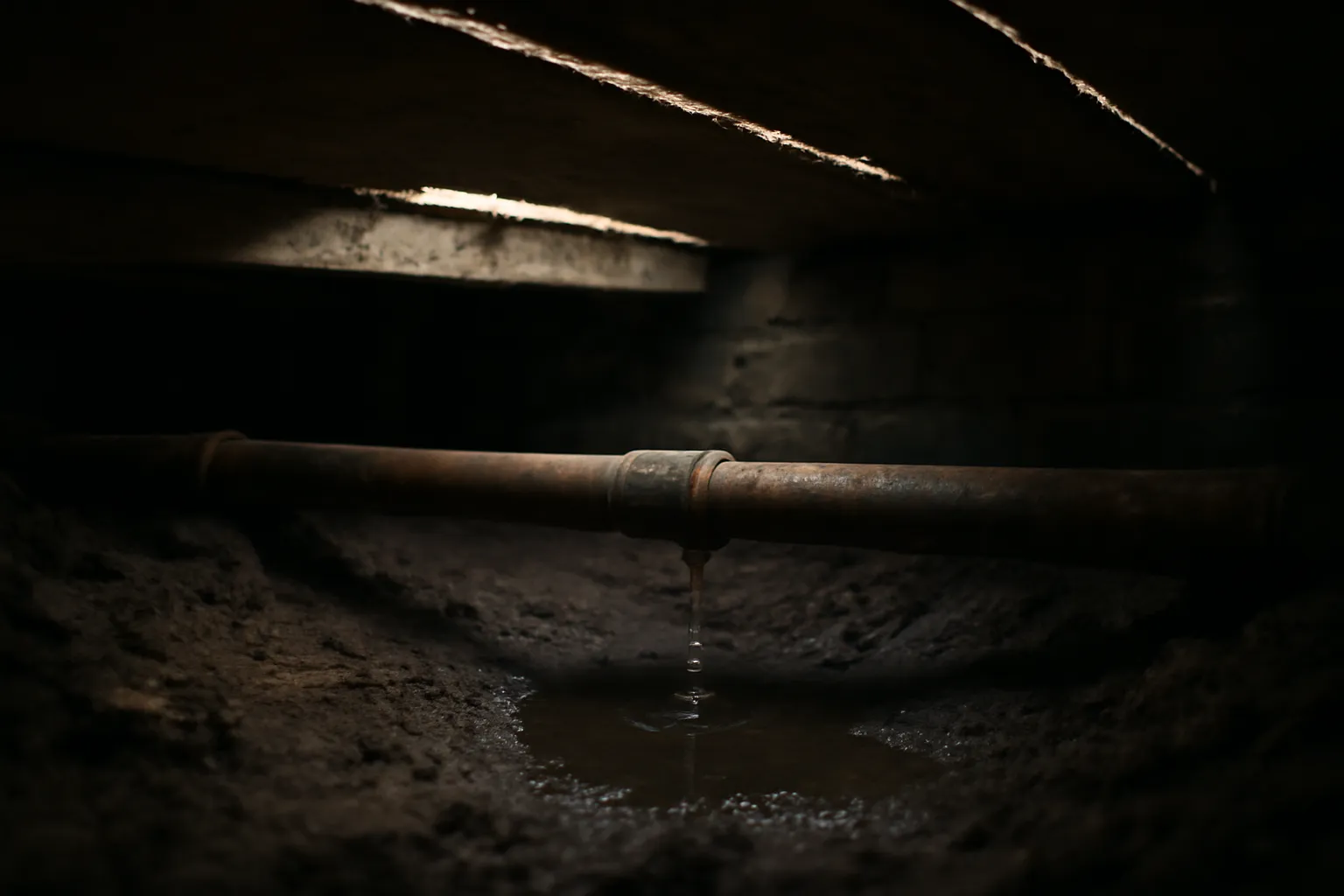
When every tap in the house produces a trickle instead of a proper flow, something has changed in the supply reaching your home. The good news is that several of the most common causes are straightforward to check yourself. Others need a plumber — and one in particular can mean water is escaping somewhere it should not be.
Work through the checks below in order. They go from the simplest fix to the most serious.
1. Check Your Internal Stopcock First
The internal stopcock is usually found under the kitchen sink, in a utility room, or beneath the stairs. It controls the entire water supply to your home.
If the stopcock has been knocked, partially turned, or was left half-shut after previous work, the flow through your pipework is restricted before it reaches a single tap.
What to do: Turn the stopcock fully anticlockwise until it stops. Then give it a quarter-turn back clockwise — this prevents the valve seizing in future. Check whether pressure has improved.
If pressure returns immediately, the stopcock was the culprit and no further action is needed.
2. Check Whether Your Neighbours Are Affected
Step outside and ask a neighbour whether they have the same problem. If they do, the issue is almost certainly with the mains supply in your street rather than anything inside your property.
Thames Water and other local suppliers occasionally carry out maintenance, deal with burst mains, or experience unexpected supply interruptions. You can report this to your water supplier directly, or check their website for known outages in the TW postcode area.
There is nothing a plumber can do about a street-level mains problem. Pressure should restore once the supplier resolves it.
3. Check the Boundary Stopcock
There is a second stopcock — sometimes called the external or boundary stopcock — located in a small chamber in the pavement or path just outside your property. This one is controlled by your water supplier, but it can occasionally be found partially closed, particularly after nearby works.
You can lift the cover and check the position of the valve. If it looks partially turned, contact your water supplier rather than attempting to adjust it yourself; this is their equipment.
4. Consider a Hidden Leak
If the stopcock is fully open, your neighbours have normal pressure, and the mains supply is fine, a significant drop in whole-house pressure can indicate a leak somewhere in your pipework — possibly underground, inside a wall cavity, or beneath a floor.
Signs that a leak may be involved:
- Pressure has dropped gradually over days or weeks rather than all at once
- You can hear running water when everything is turned off
- There are damp patches on walls, ceilings, or floors
- Your water meter (if you have one) is turning even when no taps are running
A leak of this type will not resolve itself. Left unattended, it can cause structural damage, encourage mould growth, and lead to a substantially higher water bill.
5. Pressure Reducing Valve or Accumulator Issues
Some properties in the TW area have a pressure reducing valve (PRV) fitted — often near the stopcock or where the supply pipe enters the house. These valves are designed to protect your pipework from excessively high mains pressure, but they can fail or drift out of adjustment over time, causing pressure to drop across the whole house.
Similarly, properties with a pressurised hot water cylinder or combination boiler may have an accumulator or expansion vessel that has lost its charge, which can affect perceived pressure at outlets.
Both of these are jobs for a qualified plumber. Attempting to adjust a PRV without the correct tools and knowledge can make the situation worse.
6. Older or Corroded Pipework
In older properties — particularly those with original lead or galvanised steel supply pipes — gradual corrosion and internal scaling can reduce the bore of the pipes over many years. The result is a slow, progressive reduction in pressure that the household barely notices until it becomes significant.
If your home is older and the pressure issue has crept up on you, this is worth discussing with a plumber. Repipe work is not an emergency, but it is worth planning.
When to Call an Emergency Plumber
Call us straight away if:
- You suspect a leak inside your property (especially if you can hear water running or see damp)
- Pressure has dropped suddenly and severely
- You have turned the stopcock fully open and there is still no improvement
- You notice your water meter moving with all outlets closed
A hidden leak can cause serious damage in a short space of time. The sooner it is found and isolated, the less disruption and cost you face.
Low water pressure is frustrating, but it is almost always traceable to a specific cause. Start with the stopcock, rule out a mains issue, and if neither explains the problem, treat it as a potential leak until proven otherwise.
If you are in the TW postcode area and need a plumber to investigate, call us any time on 07360 268948. We are available 24 hours a day, seven days a week.