Insurance
Leak From a Neighbour's Flat: Whose Insurance Pays?
Confused about who pays when water comes through your ceiling from the flat above? Here's how liability and insurance works in practice.
Published 30 June 2026
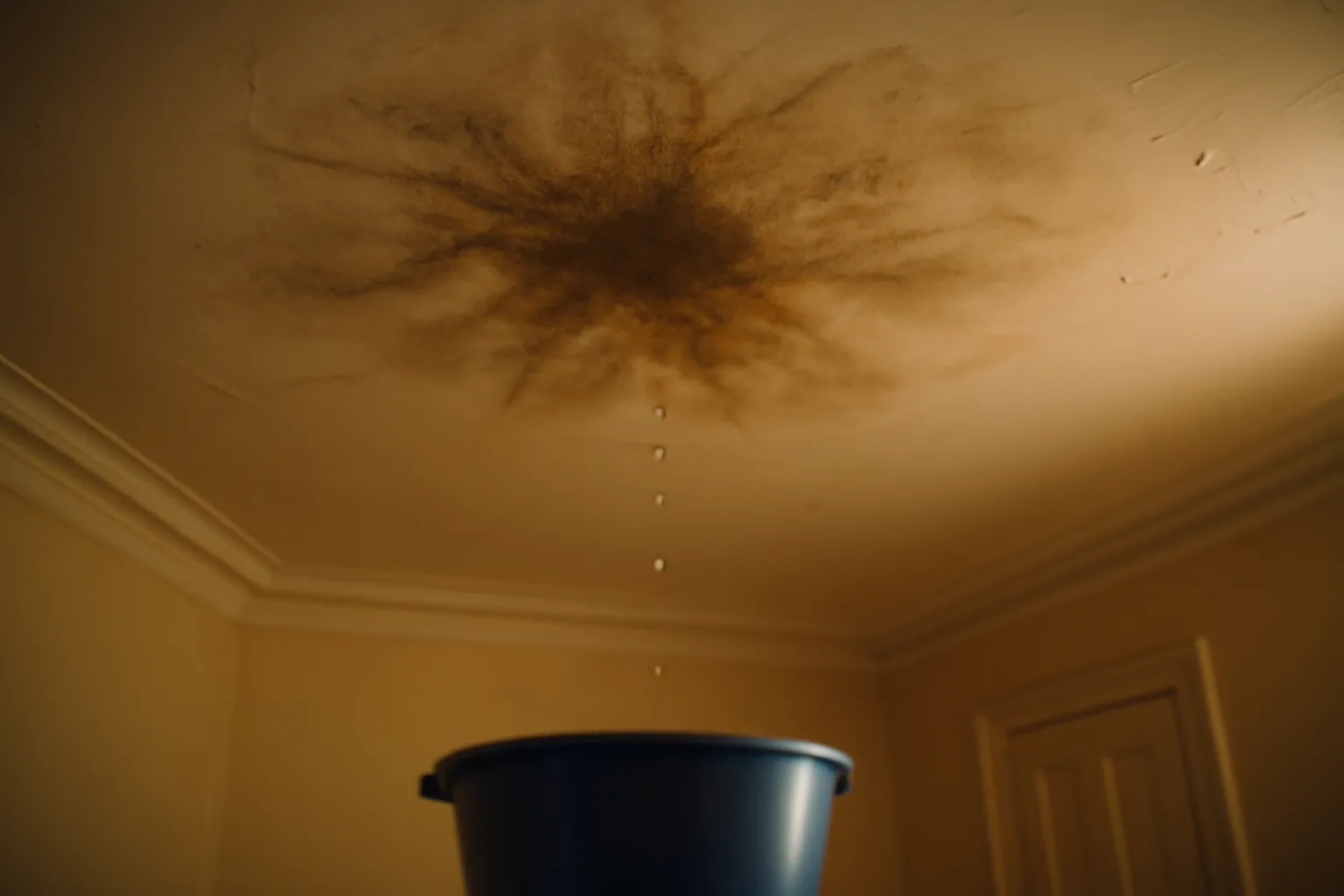
Water dripping through your ceiling from the flat above is one of the most stressful situations a flat owner or tenant can face. Beyond the immediate damage, there is almost always a dispute — polite or otherwise — about who is responsible and whose insurance should pick up the bill. This guide explains how liability typically works, what steps to take, and how a professional plumber can help you build a clear evidence trail.
Stop the Damage First
Before any conversation about insurance, your priority is to limit further damage. If water is actively coming through, do these things immediately:
- Move furniture, electronics, and valuables out of the affected area.
- Place towels or buckets to catch drips and protect flooring.
- Turn off electrics at the fuse board if water is near light fittings or sockets — water and electricity are a serious hazard.
- Call your neighbour or knock on their door so they can locate and isolate the source.
If you cannot reach your neighbour and water is pouring through, call us on 07360 268948 and we can attend, locate the source, and help stop the flow.
So, Whose Insurance Actually Pays?
The honest answer is: it depends on the cause. Here is how it generally breaks down.
If Your Neighbour Is Negligent or Their Plumbing Has Failed
If the leak originated from a burst pipe, a failed washing machine hose, an overflowing bath, or any other fault within your neighbour’s flat, their buildings or contents insurance is typically the policy that should respond — specifically the liability section of their policy.
However, insurers will look for evidence of negligence. A pipe that simply failed over time with no warning is not always treated the same way as a bath that was left running unattended.
If the Leak Comes From Shared or Communal Pipework
Many older TW-area conversions have pipework that runs through communal spaces or within shared walls. If the leak originates in communal pipework, the freeholder’s buildings insurance (managed through the managing agent or residents’ management company) is usually the right policy to claim against.
Check your lease — it will almost always state who is responsible for maintaining which pipes.
What About Your Own Contents Insurance?
Your own contents policy may cover your damaged belongings regardless of who caused the leak. It is worth claiming on your own policy for your possessions and letting the insurers argue out the liability between themselves — that is what subrogation clauses are for.
When Nobody’s Insurance Cooperates
If your neighbour has no insurance, is unresponsive, or disputes liability, you may need to pursue them through the small claims court. Good photographic evidence and a plumber’s written report become essential at that point.
The Evidence You Need to Collect
Whether you are dealing with your own insurer, your neighbour’s insurer, or a managing agent, strong evidence makes everything easier.
Document the damage immediately:
- Photograph and video the water ingress, staining, and any damaged belongings before anything is moved or dried out.
- Note the date and time, and keep a written log of every conversation with your neighbour and any managing agent.
Get a professional assessment:
- A plumber’s report identifying the source and cause of the leak carries real weight with insurers. We can provide a written account of what we found and where the fault lay.
- If a loss adjuster is involved, having an independent professional report helps ensure you are not disadvantaged.
Keep receipts and records:
- Hold on to any invoices for emergency call-outs, drying equipment, or temporary repairs. These form part of your claim.
Talking to Your Neighbour
Most leaks between flats are accidents, and most neighbours are reasonable once they understand the situation. Approach the conversation calmly, show them the damage, and ask them to contact their insurer. Many buildings have a managing agent who can help mediate if things become difficult.
If relations are strained, put communications in writing — a simple email creates a record without escalating tension.
How We Can Help
When water is coming through your ceiling, our job is to get to the source quickly, stop the damage, and give you a clear account of what happened and why. We cover the TW postcode area around the clock, including Twickenham, Richmond, Teddington, Hounslow, Isleworth, Feltham, and Staines.
We can provide:
- Emergency attendance to locate and isolate the leak
- Written reports suitable for insurance purposes
- Honest, straightforward advice on what caused the problem
If water is coming through your ceiling right now, do not wait — call us on 07360 268948 and we will be with you as quickly as possible.