Emergencies
Is It a Leak or Just Condensation? How to Tell
Water appearing on pipes or walls can be a leak or harmless condensation. Learn how to tell the difference and when to call an emergency plumber.
Published 29 June 2026
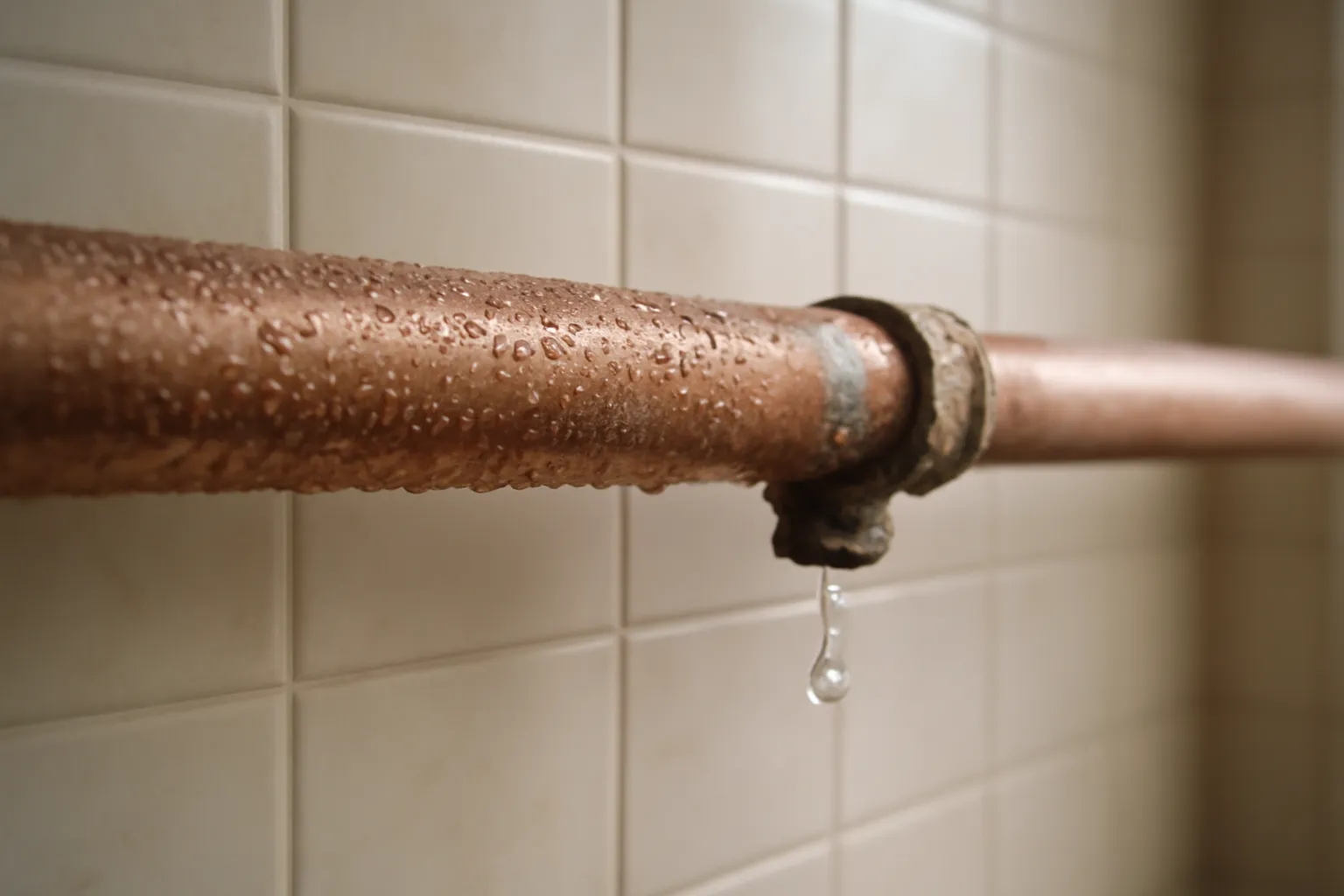
Is It a Leak or Just Condensation?
You’ve spotted water where it shouldn’t be — on a pipe, behind the toilet, or along a wall. Before you panic (or ignore it), it’s worth spending five minutes working out what you’re actually dealing with. Most of the time the answer is straightforward, and these checks will tell you which way to go.
What Condensation Looks Like
Condensation forms when warm, moist air meets a cold surface. It’s the same process that mists up a bathroom mirror. In plumbing terms, it tends to appear on:
- Cold-water supply pipes, especially in summer
- The outside of toilet cisterns
- Pipes running through unheated spaces (under floors, in loft voids)
Typical signs it’s condensation:
- The dampness appears mainly in warm or humid weather
- It’s spread evenly across the surface of the pipe rather than dripping from one point
- It dries up when you ventilate the room or the temperature drops
- There’s no staining, no smell, and no damage to the surrounding material
Condensation on pipes is rarely a structural problem, though persistent moisture can encourage mould and corrosion over time, so it’s worth improving ventilation if it’s a recurring issue.
What a Leak Looks Like
A genuine leak has a source — a joint, a fitting, a pinhole in the pipe, or a crack. The water isn’t coming from the air; it’s coming from inside the system.
Signs that point toward a leak:
- Water appears in cold, dry weather when condensation is unlikely
- There’s a distinct drip or trickle from a specific point
- You can see staining, rust marks, or mineral deposits (white or orange) on the pipe or surrounding surface
- The surrounding material — plaster, wood, insulation — is soft, discoloured, or smells damp
- Your water meter is moving when all taps are off (see below)
The Dry-Wipe Test
This is the simplest diagnostic step you can do right now.
- Dry the pipe or surface thoroughly with a cloth or paper towel.
- Wrap a fresh piece of dry tissue or kitchen roll around the suspect area.
- Wait 30–60 minutes without running any water.
- Check the tissue.
If it’s dry: the moisture was likely condensation that has now evaporated.
If it’s damp or wet: water is actively coming from that point, which strongly suggests a leak.
Check Your Water Meter
If you suspect a hidden leak — one you can’t see directly — your water meter is your best tool.
- Turn off every tap, appliance, and the washing machine.
- Note the meter reading (including the low-flow indicator dial if there is one).
- Wait 30 minutes without using any water.
- Check the reading again.
If the meter has moved, water is escaping somewhere in your system. At that point it’s time to call a plumber for a proper leak trace.
Check the Area Around the Pipe
Look beyond the pipe itself:
- Walls and ceilings: Damp patches that grow over days, or that appear on a floor directly below a bathroom or kitchen, usually indicate a leak above rather than condensation.
- Flooring: Warped or soft floorboards near a pipe run are a reliable indicator of sustained water ingress.
- Smell: A musty or earthy smell in an enclosed space (under a sink, inside a vanity unit) is a strong sign of a slow leak that has been present for some time.
Condensation rarely causes structural damage on its own. If you’re seeing material deterioration, treat it as a leak until proven otherwise.
When to Call a Plumber
Call a plumber if:
- The dry-wipe test shows active moisture and you can’t identify a benign cause
- Your water meter moves with everything switched off
- There’s staining, soft material, or mould around the suspect area
- The water is appearing on a ceiling or wall with no obvious surface explanation
- You can hear running water but no taps are on
A leak trace — using thermal imaging, acoustic equipment, or tracer gas — can pinpoint a hidden leak without unnecessary damage to your property. The sooner it’s found, the less secondary damage you’ll face.
Condensation: When to Act on That Too
Condensation isn’t always harmless. If cold-water pipes are sweating heavily and persistently, foam pipe lagging (available from any DIY shop) will insulate them and stop the moisture forming. For a condensing toilet cistern, insulation kits are available specifically for that purpose.
If you’re unsure whether your ventilation is adequate — particularly in bathrooms, kitchens, and utility rooms — it’s worth having it assessed.
Still Not Sure?
If you’ve run through these checks and you’re still not certain, err on the side of caution. A small, slow leak left untreated can cause significant damage to floors, joists, and plasterwork — and mould once established is expensive to remediate.
If you’re in the TW postcode area and you need a plumber to take a look, call us any time on 07360 268948. We’re available 24 hours a day, seven days a week, and we’ll give you a straight answer about what you’re dealing with.