Emergencies
How to Spot a Slow Leak Before It Becomes a Disaster
Learn the early warning signs of a slow water leak in your home so you can act before minor drips turn into costly damage.
Published 1 July 2026
Why Slow Leaks Deserve Your Attention
A burst pipe is hard to ignore. A slow leak, on the other hand, can quietly do its worst for weeks or even months before you notice anything obvious. By the time damp patches appear on a ceiling or a floor starts to warp, the damage is often already significant — and the repair bill follows suit.
The good news is that slow leaks leave clues. Knowing what to look for means you can catch the problem early, when a plumber can often fix it in an hour rather than a day.
Early Warning Signs to Look Out For
1. An Unexplained Rise in Your Water Bill
If your usage habits haven’t changed but your water bill has crept up, that extra water has to be going somewhere. Even a small, steady drip can waste hundreds of litres a month. Pull out two or three recent bills and compare them.
2. The Water Meter Moves When Nothing Is Running
Turn off every tap, appliance and outside tap. Then check your water meter. If the dial or digital display is still moving, water is flowing somewhere it shouldn’t be. This is one of the most reliable early checks you can do.
3. Damp or Musty Smells in Enclosed Spaces
Cupboards under sinks, airing cupboards and the space beneath baths are common hiding places for slow leaks. If you open a door and catch a musty or earthy smell, take a closer look. Run your hand along the pipework and the back of the cabinet — even slight dampness is a red flag.
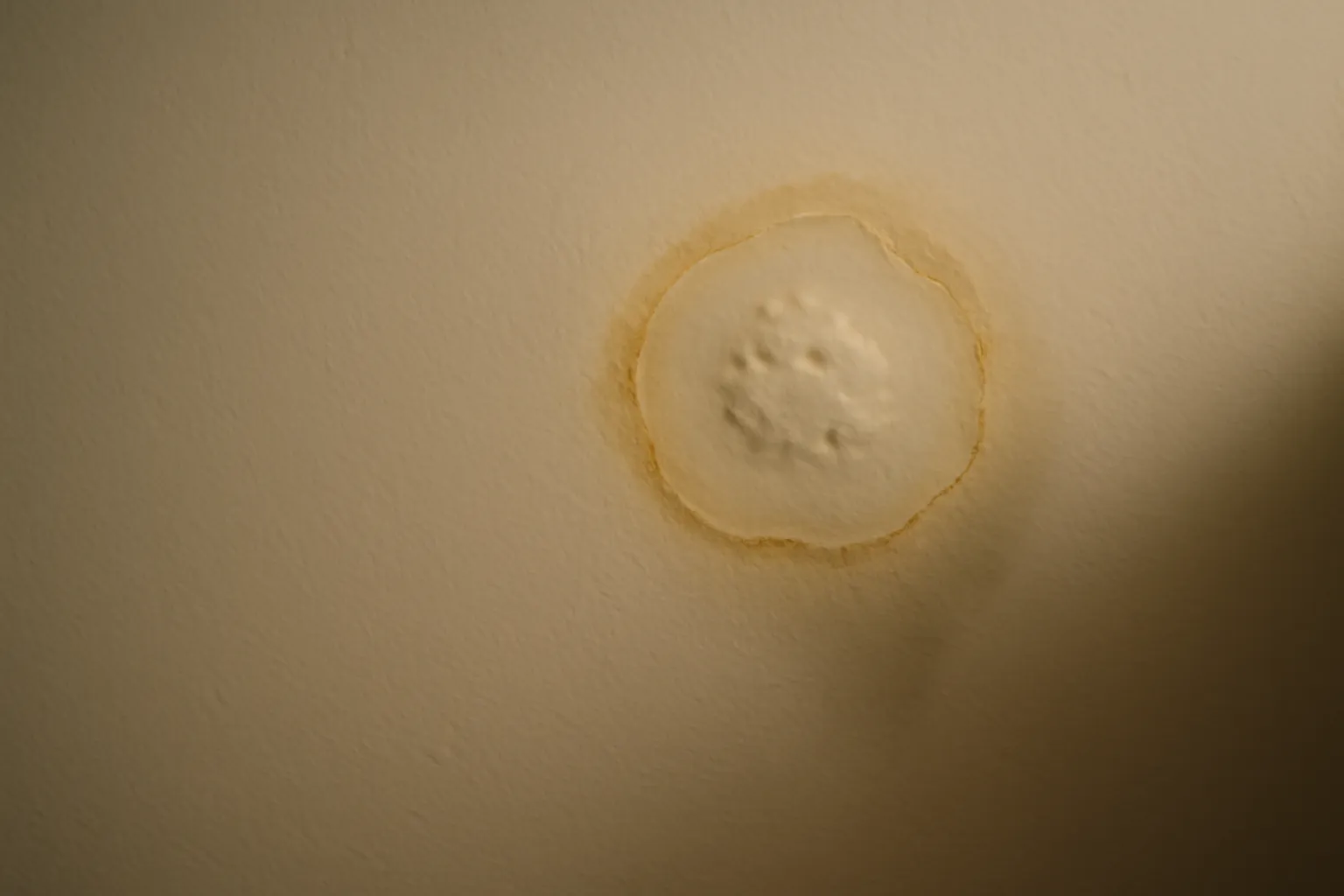
4. Discolouration or Soft Spots on Walls and Ceilings
Water stains often appear as yellowish or brownish rings. They may dry out and reappear, which can make them easy to dismiss as an old mark. Press gently around any stain — if the plaster feels soft or spongy, there is active moisture behind it.
5. Peeling Paint or Bubbling Wallpaper
Moisture migrating through a wall will eventually lift paint or cause wallpaper to bubble and separate. If this is happening in a room that isn’t especially humid — a hallway or a bedroom, for example — suspect a hidden leak rather than condensation.
6. Mould in Unexpected Places
Mould thrives on sustained moisture. A patch appearing on a wall that doesn’t face outside, or on a ceiling well away from a bathroom, is worth investigating. It rarely appears without a reason.
7. Warped or Stained Flooring
Timber and laminate floors are particularly sensitive to moisture. Boards that lift, buckle or feel springy underfoot — especially near a bathroom, kitchen or utility room — may be sitting on a slow leak from below.
8. Running Sounds When Everything Is Switched Off
A faint hissing, dripping or trickling sound in a wall or under a floor when all taps are off is worth pausing to listen for. It is easy to dismiss, but trust your instincts.
Where to Check First
Focus your initial inspection on the areas most likely to develop leaks:
- Under kitchen and bathroom sinks — check the waste pipe joints and the supply hoses to the taps
- Around the toilet — look at the base for any slight dampness and check the fill valve and supply pipe
- The boiler and its pipework — a small weep from a joint or pressure relief valve is common and easy to miss
- Washing machine and dishwasher connections — flexible hoses degrade over time; check for any mineral deposits or moisture around the fittings
- Loft and airing cupboard pipes — out of sight, out of mind, but worth a look every few months
What Makes Early Action Worth It
Catching a leak at the drip stage is almost always straightforward for a plumber. A joint can be re-made, a washer replaced, or a section of pipe re-routed without major disruption. Leave it until the water has tracked through a floor joist or soaked into a stud wall, and the repair expands to include drying out, possible replastering, and sometimes flooring or ceiling replacement — none of which is cheap.
Simple Habits That Help
- Check under sinks monthly — it takes thirty seconds
- Know where your stopcock is and make sure it turns freely
- Act on unexplained damp immediately rather than waiting to see if it gets worse
- Don’t ignore small stains — they rarely stay small
When to Call a Plumber
If you find active dripping, a stain that is growing, or your meter confirms water is moving when everything is off, it is time to get a professional in. A leak that has been running for a while may also need a proper assessment to check how far the moisture has spread.
If you are in the TW postcode area and you need help today — or in the middle of the night — call Emergency Plumbers TW on 07360 268948. We are available around the clock and can help you work out what is happening and stop it before it gets any worse.