Maintenance
Hard Water in the TW Area: Protecting Your Boiler and Pipes
TW postcodes sit in one of London's hardest water zones. Here's what limescale does to your boiler and pipes, and how to fight back.
Published 9 July 2026
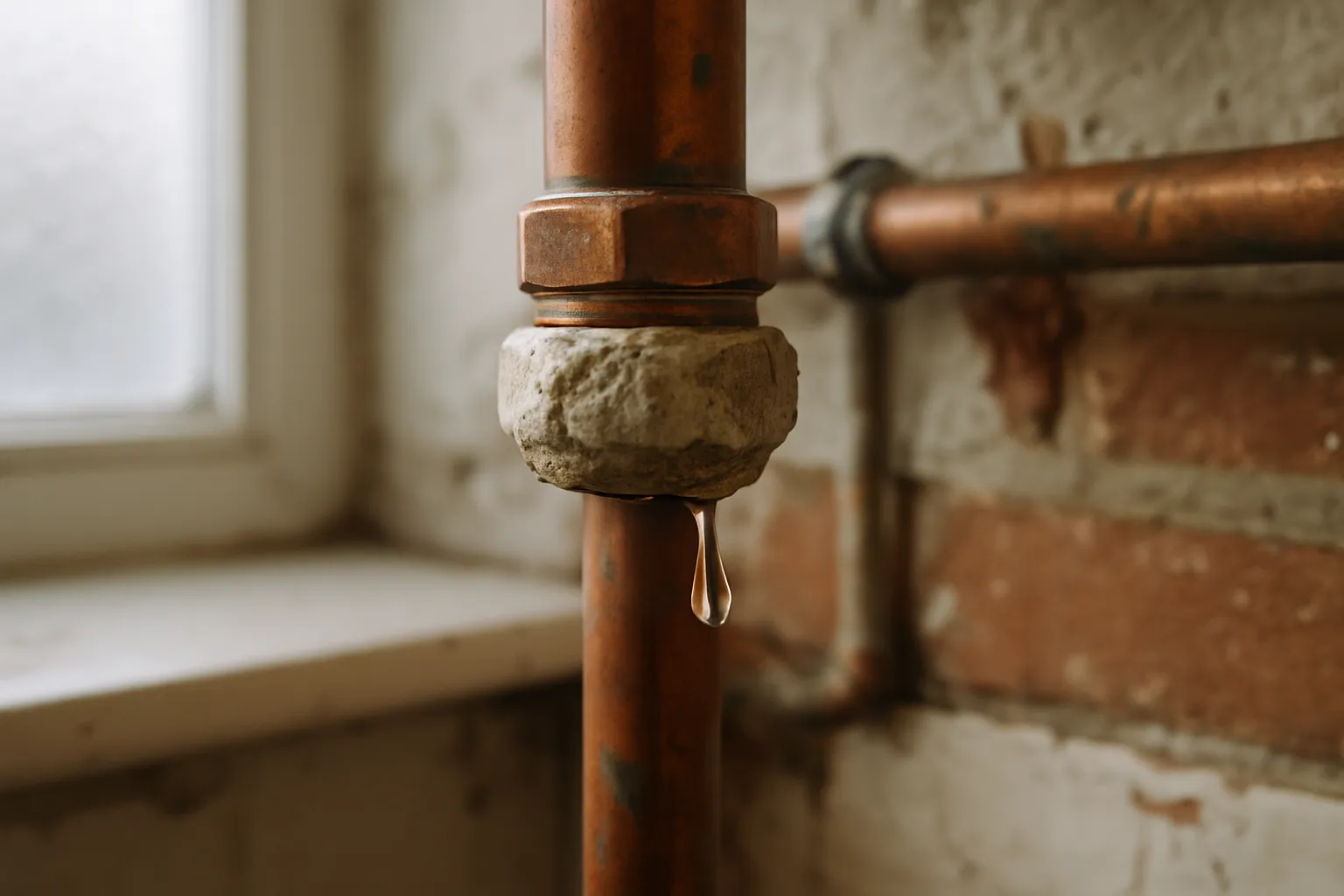
Hard Water in the TW Area: What Every Homeowner Should Know
If you live anywhere in the TW postcode area — Twickenham, Richmond, Teddington, Isleworth, Hounslow, Feltham or Staines — your water comes from Thames Water’s network, which draws heavily on chalk aquifers and the River Thames itself. The result is some of the hardest domestic water in the country, typically measuring between 300 and 360 mg/l (milligrams per litre of calcium carbonate). That is classified as very hard by the British Geological Survey.
You can see the evidence every day: the white crust around your taps, the film on a freshly boiled kettle, the grey tide-marks inside your toilet bowl. What you cannot see is the same process happening silently inside your boiler, your pipes, and your hot-water cylinder.
What Hard Water Actually Does to Your Plumbing
Inside the Boiler
Limescale is a poor conductor of heat. As water is heated repeatedly in your boiler’s heat exchanger, calcium and magnesium minerals drop out of solution and coat the internal surfaces. Even a 1 mm layer of scale can reduce heating efficiency by around 7–10%, meaning your boiler works harder, runs hotter, and costs more to operate. Over time this leads to:
- Kettling — a rumbling or banging noise from the boiler as trapped water boils unevenly around scale deposits
- Pinhole leaks on the heat exchanger caused by overheating
- Pressure relief valve discharges as the system struggles to regulate temperature
- Premature boiler failure, sometimes years ahead of the expected service life
Inside the Pipes
Hot-water pipes are particularly vulnerable. Scale builds up on the inside walls, gradually narrowing the bore. In older properties across Twickenham and Richmond — many of which still have original copper pipework from the 1960s and 1970s — this can become a serious restriction. Cold-water pipes are less affected but not immune, especially where water sits still for long periods.
Flexible tap connectors and washing-machine hoses can also harden and crack faster in hard-water areas, increasing the risk of a sudden burst.
Signs That Limescale Is Already Causing Problems
- Your boiler is making kettling or rumbling noises
- Hot water takes longer than usual to reach the tap
- Your energy bills have crept up without an obvious reason
- You can see scale around the pressure relief valve outlet pipe
- Taps or showerheads have noticeably reduced flow
If any of these sound familiar, it is worth acting sooner rather than later. A boiler that is kettling is under stress; left alone, it can develop leaks or fail altogether.
Practical Steps to Protect Your System
1. Annual Boiler Servicing
A yearly service by a Gas Safe registered engineer should include checks for scale build-up and heat exchanger condition. In the TW area this is not optional maintenance — it is genuinely necessary given local water hardness. Keep records of each service.
2. Magnetic System Filter
A magnetic filter (sometimes called a Magnaclean or similar) fits on the return pipe to your boiler and captures iron oxide sludge before it circulates. It does not remove limescale directly, but it reduces the combined burden on the heat exchanger and prolongs boiler life. Most reputable installers fit one as standard in London.
3. Scale Inhibitor or Water Softener
- Inline scale inhibitors are inexpensive devices fitted to the cold-water supply. They use polyphosphate or template-assisted crystallisation to alter the structure of calcium so it is less likely to bond to surfaces. They do not remove hardness minerals but reduce scale adhesion.
- Whole-house water softeners use ion exchange to replace calcium and magnesium with sodium. They are more expensive to install and require a regular salt top-up, but they offer the most thorough protection. Softened water is not recommended for drinking or cooking, so a separate hard-water drinking tap is usually fitted alongside.
4. Power Flushing
If your system already has heavy sludge and scale, a power flush — where a specialist pump forces a cleaning solution through the entire circuit — can restore flow and efficiency. It is particularly worthwhile before fitting a new boiler into an existing pipework system.
5. Kettle and Appliance Descaling
This will not protect your boiler, but regularly descaling kettles, dishwashers, and washing machines with a proprietary descaler or diluted white vinegar extends their working life and keeps running costs down.
A Note on TW Postcodes Specifically
Properties closest to the Thames — TW1 (Twickenham), TW9 (Richmond), TW11 (Teddington) — tend to see the effects of hard water most acutely, partly because of older pipe infrastructure and partly because of local supply routing. Properties in TW13 (Feltham) and TW18 (Staines) are on slightly different supply branches but still fall firmly in the very hard water category.
When to Call a Plumber
If your boiler is already kettling, leaking, or losing pressure, descaling products alone will not resolve the problem. A qualified plumber can assess whether the heat exchanger is salvageable or whether a leak has developed as a result of scale-related overheating.
Do not ignore a boiler that is making unusual noises or losing pressure repeatedly — these are early warnings, not quirks to live with.
If you are dealing with a boiler leak or a plumbing problem right now, call us any time on 07360 268948. We cover the full TW postcode area, 24 hours a day, seven days a week.