How-to
Escape of Water: What It Actually Means on Your Home Insurance Policy
Confused by 'escape of water' on your home insurance policy? We explain the term, what it covers, and what evidence your insurer will typically ask for.
Published 23 July 2026
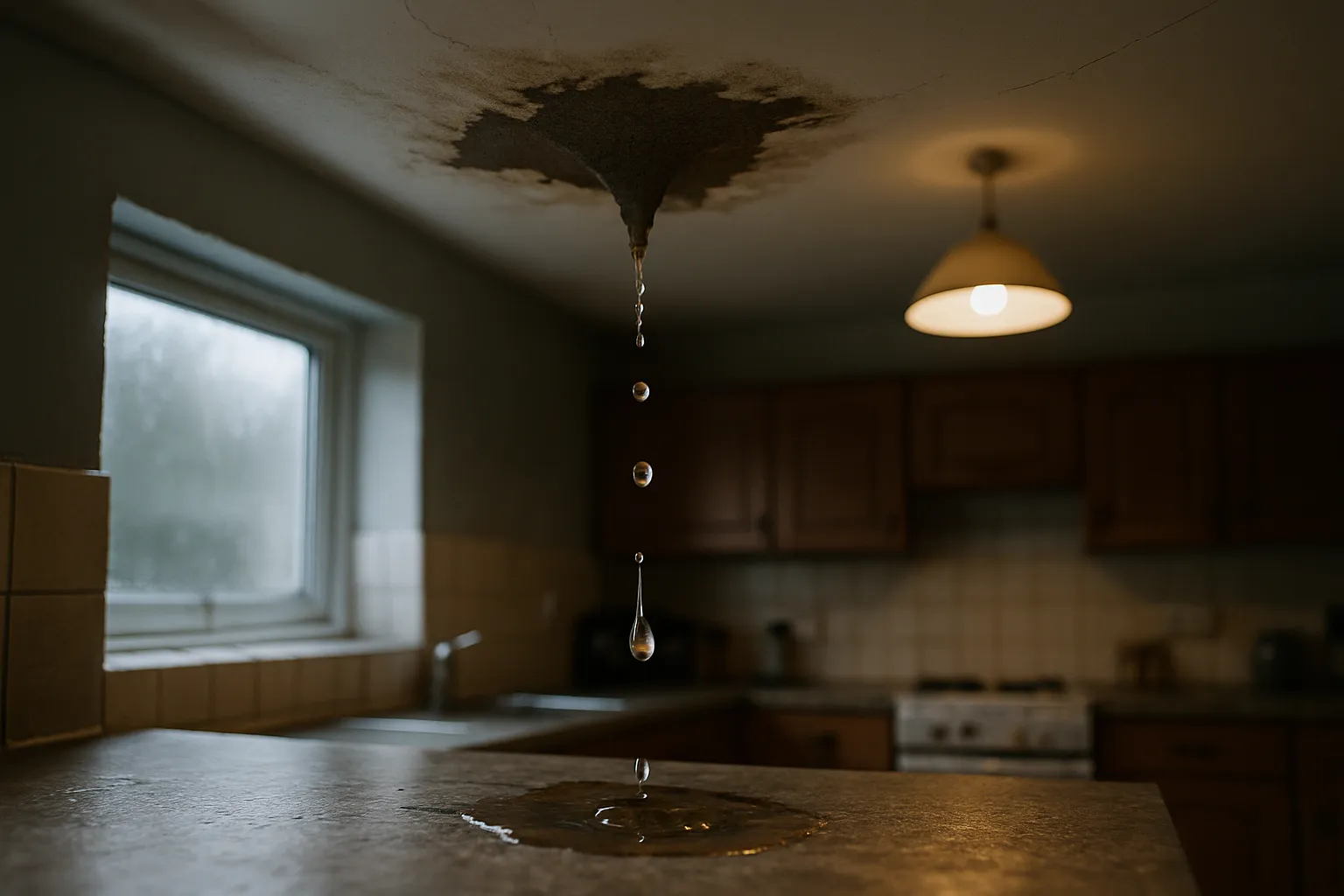
What Does “Escape of Water” Actually Mean?
If you have ever read your home insurance policy carefully, you will have noticed the phrase escape of water appearing as a named peril. It sounds straightforward, but the exact definition matters when you are standing in a wet kitchen wondering whether you are covered.
In insurance terms, escape of water means water that has leaked, burst or overflowed from a fixed domestic installation — a pipe, tank, cistern, central-heating system or similar fixed appliance — and caused damage to your home or its contents. The key word is fixed. The water must have come from a part of the building’s plumbing or heating infrastructure, not from an external flood or from rain coming through a window you left open.
Common examples include:
- A burst pipe behind a wall or under a floor
- A leaking radiator valve that has saturated floorboards and the ceiling below
- An overflowing cold-water storage tank in the loft
- A split washing-machine hose that has drenched a kitchen unit
How Is It Different from Accidental Damage?
This is where many people get confused. Accidental damage and escape of water are separate sections of a buildings or contents policy, and they cover different things.
- Escape of water covers the resulting damage caused by the water itself — ruined flooring, saturated plasterwork, damaged ceilings, spoiled contents.
- Accidental damage might cover, for example, a pipe you accidentally drilled through, depending on your policy wording.
- The pipe or appliance that failed is often not covered under escape of water; insurers typically treat the failed component as a maintenance issue. Check your policy schedule carefully.
Some policies bundle accidental damage in; others sell it as an optional add-on. If yours does not include it, a burst pipe may be covered for the water damage it causes but not for the cost of replacing the pipe itself.
What About the Excess?
Escape of water claims are notorious for carrying a higher excess than other perils. It is not unusual to see a specific escape-of-water excess of £250–£500 on a standard policy, separate from — and in addition to — any standard excess. A small claim may fall entirely below that threshold, making it worth repairing without claiming at all.
Always check your policy schedule for a line that reads something like “Escape of water excess: £[amount]” before deciding whether to notify your insurer.
What Evidence Does an Insurer Typically Ask For?
Insurers and loss adjusters generally want to see:
- Photographs of the damage taken as soon as it is safe to do so — before any drying or repair work begins.
- The source of the leak identified and ideally photographed — a cracked pipe, a failed valve, a split hose.
- A written report from the attending plumber describing the cause, the scope of damage, and the work carried out to stop the leak.
- Moisture readings if the damage involves floors, walls or ceilings — these help a loss adjuster quantify how far the water has spread.
- Receipts or evidence of value for any damaged contents you wish to claim for.
The more clearly documented the source and extent of the damage, the smoother the process tends to be. This evidence belongs to you; it is your record to submit to your own insurer in whatever way suits you.
What Should You Do First?
Before thinking about paperwork, stop the water. Every minute a leak continues is more damage accumulating — and more of your claim.
Immediate steps
- Turn off your stop tap (usually under the kitchen sink or where the mains enters the property) to isolate the supply.
- Switch off the boiler or heating system if the leak involves a radiator or heating pipe.
- Turn off the electricity at the consumer unit if water is near any electrics or has come through a ceiling.
- Photograph everything before mopping up — wide shots of the room, close-ups of the source, and any damaged possessions.
- Call a plumber to locate the source, carry out a repair, and provide you with a written record of findings.
A Note on Trace and Access
Some policies include trace and access cover, which pays for the cost of finding a hidden leak — cutting into tiles, lifting floorboards, opening up a wall — before the repair even begins. This is a separate section of the policy and has its own limit, often £5,000–£10,000. If your leak is concealed, check whether you have this cover before authorising any investigative work.
How We Can Help
Our role is simple: we stop the leak, identify the cause, carry out the repair, and give you a clear written record — cause of failure, photographs, moisture readings, and scope of work completed. That documentation is yours to use however you need it.
If you have water escaping right now, do not wait. Call us any time on 07360 268948 — we cover the TW postcode area around the clock, every day of the year.