How-to
Boiler Pressure Too Low or Too High? How to Fix It
Learn how to read your boiler pressure gauge, repressurise via the filling loop, and know when to call an emergency plumber. Covers TW postcode area.
Published 30 June 2026
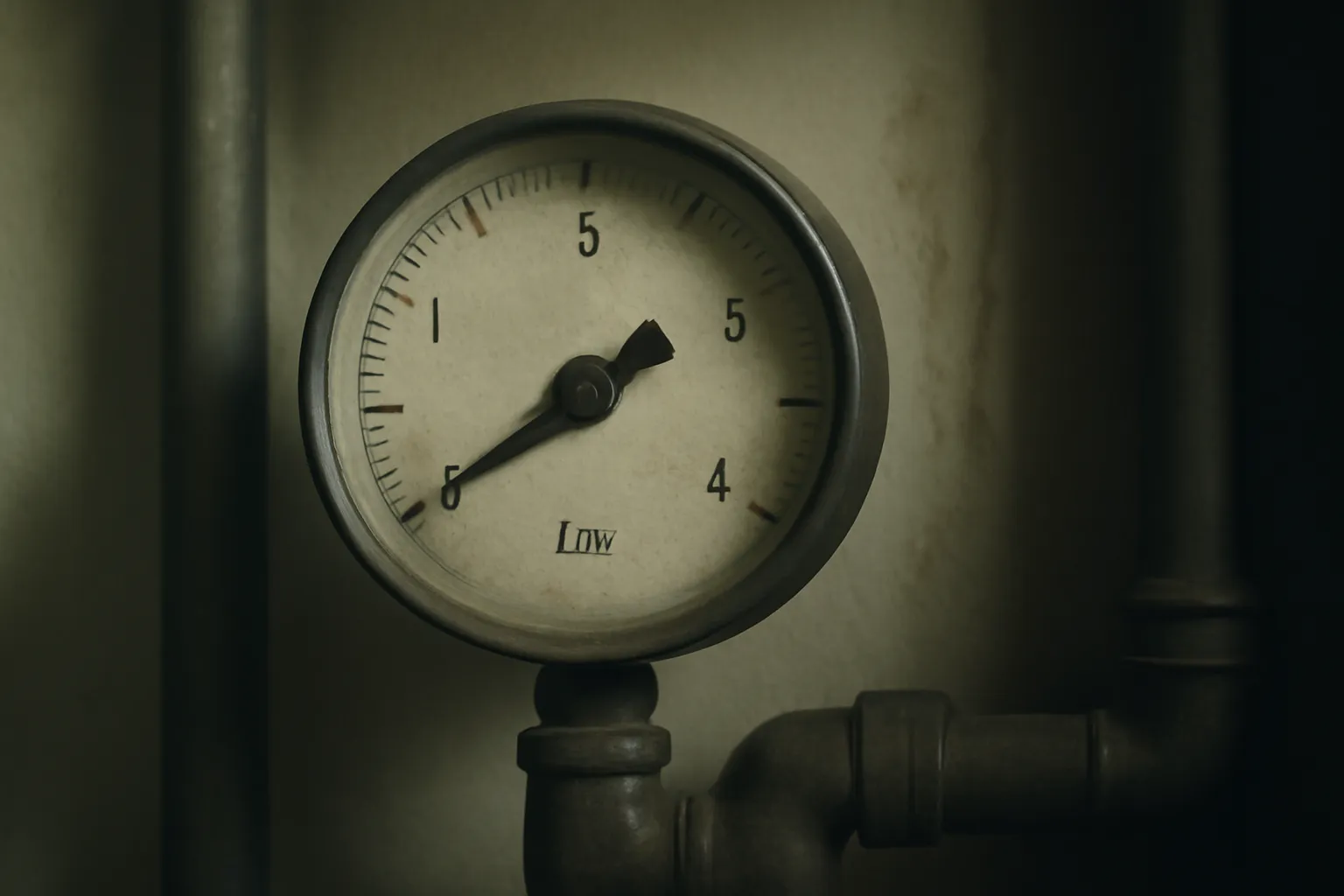
A boiler that has lost pressure will stop heating your home. One that has built up too much pressure can trigger a safety lockout — or, in rare cases, cause a leak. Neither situation is an emergency in itself, but both need sorting promptly. Here is how to diagnose what is happening and what to do about it.
Reading the Pressure Gauge
Most combi and system boilers have a pressure gauge on the front panel. It is either a round dial with a needle or a small digital display. The scale is measured in bar.
| Reading | What it means |
|---|---|
| Below 1.0 bar | Too low — boiler may lock out |
| 1.0 – 1.5 bar | Ideal operating pressure |
| 1.5 – 2.0 bar | Acceptable when the heating is running |
| Above 2.5 bar | Too high — needs attention |
| Above 3.0 bar | Pressure relief valve may activate |
Check the gauge when the boiler is cold (i.e. the heating has been off for at least an hour). A reading around 1.0–1.5 bar at rest is what you are aiming for.
Boiler Pressure Too Low: How to Repressurise
Low pressure is usually caused by a small amount of water escaping the system — through a bleed valve left open, a minor leak, or simply natural contraction over time.
What you will need
- Your boiler’s instruction manual (worth finding before you start)
- The filling loop — a short braided hose or built-in valve, usually found beneath the boiler
Step-by-step
- Switch the boiler off and let it cool completely.
- Locate the filling loop. On older boilers it is a flexible silver hose with a valve at each end. On newer models it may be a built-in keyway or lever valve.
- Check both ends are connected securely to the pipework.
- Open the valves slowly — usually a quarter-turn each — and listen for water entering the system.
- Watch the pressure gauge. Stop when it reaches 1.2–1.5 bar. Do not overshoot.
- Close both valves fully before switching the boiler back on.
- Reset the boiler if it is in lockout (hold the reset button for a few seconds — check your manual).
If the pressure drops again within a few days, there is likely a leak somewhere in the system. That needs a plumber, not another top-up.
Boiler Pressure Too High: What to Do
High pressure is less common but worth taking seriously. It is often caused by overfilling during a repressurise, a faulty filling loop that is letting water in continuously, or a failed expansion vessel.
Do not ignore it
Above 3 bar, the pressure relief valve (PRV) will discharge water — usually through a copper pipe that exits outside the property. If you notice a pipe dripping near an external wall, this is likely the cause.
Steps to reduce high pressure
- Do not repressurise further — this will make things worse.
- Bleed a radiator. Releasing a small amount of water from a radiator bleed valve can bring the pressure down by 0.2–0.5 bar. Have a cloth and small container ready.
- Check the filling loop is fully closed. A slightly open valve will keep adding water to the system.
- If pressure remains above 2.5 bar, call a plumber. The expansion vessel may need recharging or the PRV may need replacing — neither is a DIY job.
When to Call an Emergency Plumber
Some situations go beyond a simple repressurise. Call 07360 268948 straight away if:
- You can see water dripping or pooling around the boiler
- The pressure relief valve is discharging continuously
- The boiler keeps losing pressure despite topping it up repeatedly
- You smell gas near the boiler at any point — in which case also call 0800 111 999 (National Gas Emergencies) and leave the property
- The boiler is making loud banging or gurgling noises alongside the pressure problem
A Note on Gas Safety
Boiler pressure work — reading gauges, bleeding radiators, using the filling loop — is not gas work and does not require a Gas Safe engineer. However, anything involving the boiler’s internal components, the gas valve, or the heat exchanger does. Never attempt to open the boiler casing yourself.
If you are in the TW postcode area and your boiler pressure issue is not resolving, or you suspect a leak is behind the problem, our team is available around the clock. A quick call to 07360 268948 will get someone to you without delay.