How-to
Buying a House? Why a Pre-Purchase Drain Survey Can Save You Thousands
A CCTV drain survey before you exchange contracts can reveal costly hidden defects a standard homebuyer survey will miss. Here's what to know.
Published 20 July 2026
The One Thing Your Homebuyer Survey Won’t Check
A standard RICS homebuyer survey is a valuable document. It will flag a damp patch on a chimney breast, a sagging roof line, or evidence of subsidence. What it will not do is send a camera 15 metres underground to inspect the condition of the drains beneath the property you are about to spend several hundred thousand pounds on.
That blind spot can be expensive.
What Can Go Wrong Underground
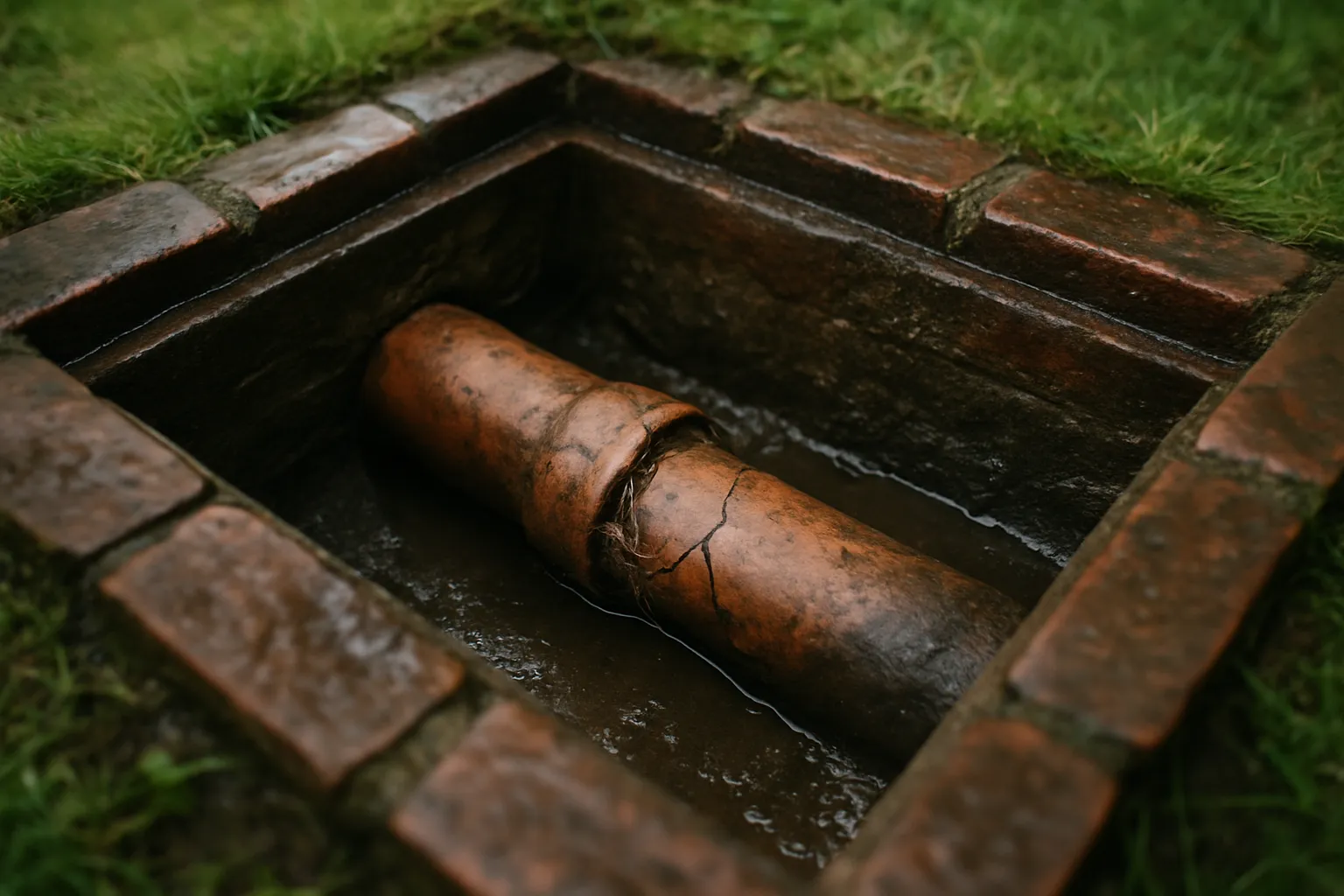
Drains are out of sight and, for most buyers, entirely out of mind. But beneath an otherwise immaculate Victorian terrace or a 1970s semi in Teddington, the underground drainage can be hiding a range of serious defects:
- Root ingress — tree roots from gardens and street trees work their way into pipe joints over decades, eventually causing blockages or collapse
- Displaced or cracked pipes — ground movement, heavy vehicles, and simple age cause clay or concrete pipes to crack, offset, or separate at joints
- Collapsed sections — a section of drain that has fully failed will back up sewage into the property; excavation and replacement is the only fix
- Poorly connected additions — extensions, conversions, and previous DIY work sometimes tie into the drainage system incorrectly, causing recurring problems
- Build-up of fat and scale — decades of use leave deposits that narrow the bore and make blockages a near-certainty
None of these show up on a visual inspection of the property. Many show no symptoms at all until they fail — often shortly after you move in.
The Cost Comparison That Matters
A CCTV drain survey typically costs in the region of £100–£200 for a standard residential property, depending on the number of inspection points and the length of run to be surveyed. The survey produces a recorded video and a written report identifying any defects, their location, and their severity.
Compare that with the cost of putting it right after exchange:
- Drain jetting and descaling: a few hundred pounds
- Patch lining a cracked section: £500–£1,500 depending on depth and access
- Excavating and replacing a collapsed drain run: £3,000–£8,000 or more, particularly if it runs under a driveway, extension, or public footway
The survey is not a luxury. For an older property — and much of the TW postcode area has housing stock dating from the Edwardian era through to the 1960s — it is straightforward due diligence.
When to Commission the Survey
The ideal window is after your offer has been accepted but before you exchange contracts. At that point you have enough commitment from both sides to justify the cost, but you still have the legal leverage to act on what you find.
If the survey reveals a defect, you have several realistic options:
- Negotiate a price reduction to reflect the cost of the remedial work
- Ask the vendor to remedy the defect before exchange
- Walk away, if the findings are serious enough and the vendor will not negotiate
Once you have exchanged contracts, those options largely disappear.
Coordinating with Your Solicitor
Let your conveyancer know you are commissioning a drain survey. They can factor the report into the timeline and, if a defect is found, incorporate any agreed remediation or price adjustment into the contract. A written survey report with photographs and a condition rating is exactly the kind of evidence a solicitor needs to support a renegotiation.
What a CCTV Survey Actually Involves
A qualified drainage engineer will locate the inspection chambers (manholes) on the property, introduce a small wheeled camera into the pipe, and record footage as it travels through the system. The camera transmits a live picture and the engineer notes any defects, their distance from the access point, and their condition rating — typically using a standard scale from minor to critical.
The whole process usually takes an hour or two for a typical residential property. You receive a copy of the footage and a written report. Keep both documents safely; they are useful not only during conveyancing but as a baseline record for future maintenance.
Shared and Adopted Drains
One detail worth checking: not all drains beneath a property are the sole responsibility of the homeowner. Since 2011, lateral drains and shared sewers that connect to the public sewer have been the responsibility of the relevant water company (Thames Water across most of the TW area). A drain survey can help establish which sections are private and which are adopted, which directly affects who is liable for any repairs.
Your solicitor can also obtain a drainage search through the Land Registry process, which will show whether any public sewers run beneath the property — relevant if you are planning an extension.
A Straightforward Step Worth Taking
Buying a home involves a great deal of cost and paperwork, and it is tempting to skip anything that feels optional. A pre-purchase drain survey is one of the few additional checks that genuinely pays for itself — either by giving you confidence that the drains are sound, or by giving you the information you need to negotiate properly.
If you are already in a property and suspect a drain problem — slow drainage, recurring blockages, or an unexplained smell — call us any time on 07360 268948. We are available 24 hours a day across the TW postcode area and can carry out CCTV surveys and drainage work at short notice.
Pre-purchase surveys in the TW area are carried out by our sister drainage firm Drainiacs. Book a CCTV drain survey before you exchange.