How-to
Drain Relining vs Excavation: Fixing a Broken Drain Without Digging Up Your Garden
No-dig drain repair explained: when relining works, when excavation is unavoidable, and what both options typically cost in the TW area.
Published 17 July 2026
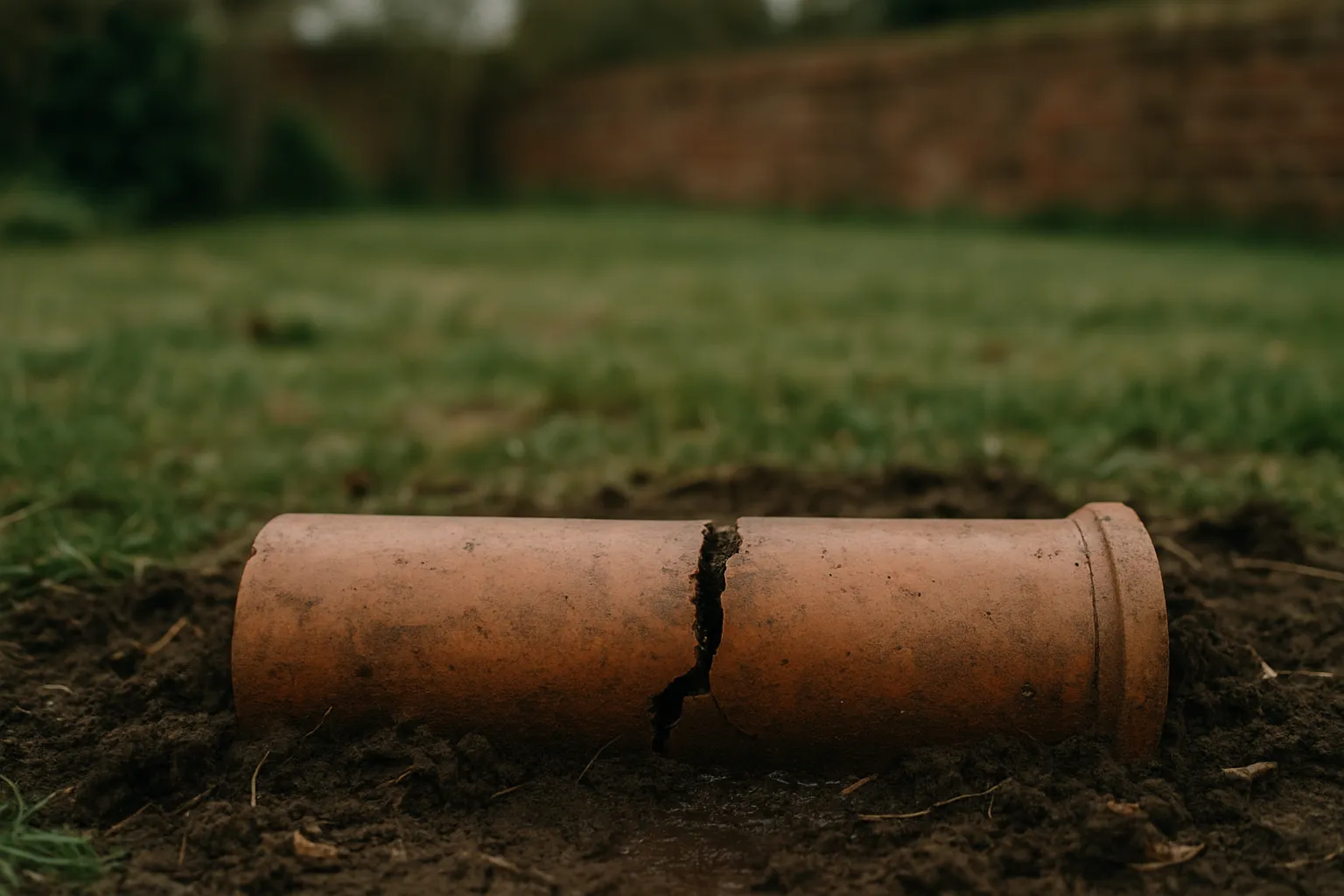
A broken or collapsed drain does not always mean a ruined garden. Over the last decade, no-dig repair technology has become reliable enough that many fractured pipes can be fixed from the inside — no excavator required. But relining is not right for every situation, and knowing the difference between the two approaches will help you make a sensible decision quickly.
What Causes a Drain to Break in the First Place?
Drains fail for several reasons, and the cause often points towards which repair method will work best.
- Root ingress — tree and shrub roots exploit hairline joints and widen them over time
- Ground movement — clay-heavy soils in much of the TW area shrink and swell seasonally, stressing pipe joints
- Age and material — older clay or pitch-fibre pipes become brittle and crack
- Blockage pressure — a long-standing blockage can cause water to back up and put stress on already-weakened sections
- Poor original installation — shallow falls, misaligned joints or inadequate bedding all shorten a drain’s life
What Is Drain Relining (No-Dig Repair)?
Drain relining — sometimes called cured-in-place pipe (CIPP) lining — involves inserting a resin-impregnated felt liner into the existing pipe. Once the liner is in position, it is inflated against the pipe wall and the resin is cured (hardened) using hot water or UV light. The result is a smooth, jointless new pipe inside the old one.
How the process typically works
- CCTV drain survey — a camera is passed through the drain to locate cracks, root intrusion or collapsed sections and to confirm the pipe diameter
- High-pressure jetting — the drain is thoroughly cleaned before the liner goes in
- Liner installation — the resin liner is fed in and positioned precisely
- Curing — the liner is hardened in place; this usually takes one to two hours
- Final camera check — a post-installation survey confirms the repair is sound
The whole process is normally completed in a single visit and leaves no trench, no spoil heap and no reinstatement work.
When Does Relining Work Well?
Relining is suitable for most cracked, fractured or root-infiltrated pipes provided the pipe retains enough of its original shape to accept the liner. It works across a wide range of pipe diameters — typically 75 mm up to 300 mm — and handles bends reasonably well with modern flexible liners.
It is particularly useful when the drain runs:
- beneath a driveway, patio or decking
- under a mature garden you want to protect
- below a conservatory or extension
- through ground that would be difficult or expensive to reinstate
When Excavation Is Still Necessary
There are situations where digging is unavoidable. A competent drainage engineer will tell you honestly when relining is not the right tool.
Excavation is usually required when:
- The pipe has fully collapsed — a liner needs a host pipe to press against; a completely flat section cannot be relined
- Severe offset joints — if sections have shifted significantly, a liner cannot bridge the gap safely
- The pipe is badly deformed — oval or crushed pipes may not allow a liner to pass through or seat correctly
- Access points are absent — relining requires an entry and exit point; if manholes are missing or inaccessible, access excavations are needed first
- The drain needs upsizing — relining reduces the internal diameter slightly; if capacity is already marginal, excavation and replacement may be the better long-term answer
Excavation is a proven, durable repair method. Where the ground conditions allow and the pipe genuinely cannot be relined, it is the right choice — not a failure of technology.
Indicative Costs
Costs vary with pipe diameter, depth, length of run, access and ground conditions. The figures below are rough guides only; you should always get a written quote after a CCTV survey.
| Repair type | Typical starting range |
|---|---|
| CCTV drain survey | £150 – £300 |
| Relining (per metre, domestic drain) | £80 – £150 per metre |
| Excavation and pipe replacement | £500 – £2,000+ depending on depth and length |
| Patch repair (short section only) | £300 – £600 |
A CCTV survey is money well spent before any repair. It tells you exactly what you are dealing with and prevents the wrong method being used.
What to Expect from a Reputable Drainage Engineer
Whoever carries out the work should provide you with:
- A pre-repair CCTV report showing the fault clearly
- A written scope of work before any repair begins
- A post-repair CCTV report confirming the repair
- Photographs and, where relevant, moisture readings — useful if you need to document the damage for your own records
That written record belongs to you and is worth keeping safely.
Not Sure What You Have?
If you have slow drainage, recurring blockages, damp patches near a drain run, or you can hear gurgling where you should not, the drain may already be damaged. A camera survey is the only way to know for certain.
If you have an active drainage emergency — sewage backing up, a drain that has suddenly collapsed, or flooding — do not wait. Call us now on 07360 268948. We cover the TW postcode area around the clock and can assess, jet and survey your drain the same day.
In the TW area the relining work is done by our sister drainage firm Drainiacs. See their drain repair and relining service.