How-to
Drain Jetting vs Drain Rods: Which Your Blockage Actually Needs
Rods or jetting? A plain guide to choosing the right method for your blocked drain, and why repeat blockages mean the cause was never cleared.
Published 15 July 2026
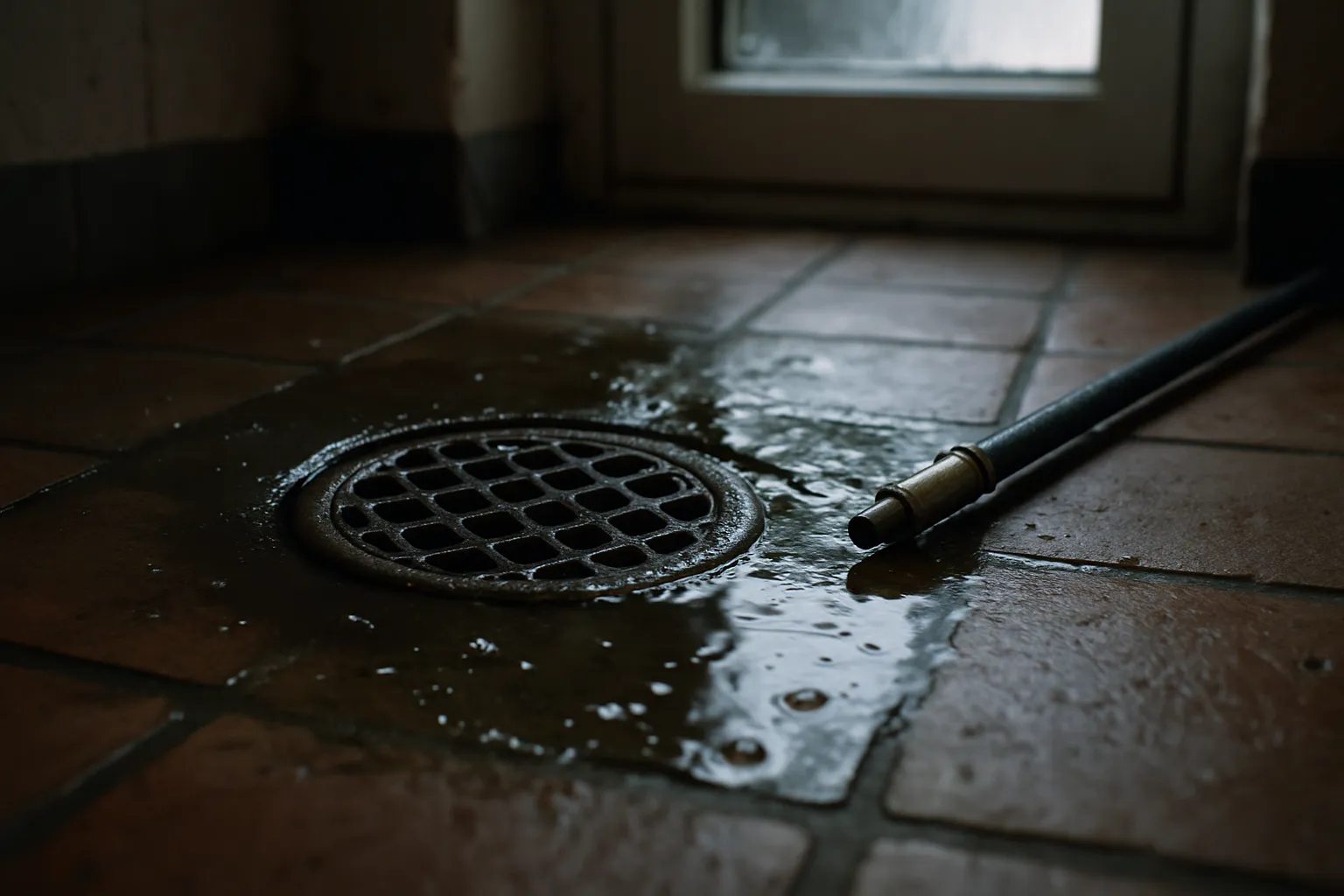
When a drain blocks, two tools come up in conversation: rods and a jetting machine. They are not interchangeable. Using the wrong one means the blockage comes back — sometimes within days. Here is a plain explanation of how each method works, when each one is the right choice, and what repeat blockages usually mean.
How Drain Rods Work
Drain rods are rigid, interlocking fibreglass sections that a plumber feeds into the drain and rotates by hand. A plunger head or corkscrew attachment at the tip pushes through the obstruction or breaks it apart enough to let water flow again.
Rods work well when:
- The blockage is a single, soft mass — a clump of wet wipes, a ball of hair, or a food build-up close to the access point
- The pipe is a standard 100 mm or 150 mm clay or plastic drain with no significant bends
- The blockage is recent and has not had time to harden or spread
Rods are quick, low-cost, and perfectly effective in these situations. There is no need to reach for a jetting machine every time.
How High-Pressure Water Jetting Works
A jetting machine pumps water at high pressure — typically between 80 and 150 bar for domestic drains — through a flexible hose with a specialist nozzle. The forward-facing jets cut through the blockage; the rear-facing jets propel the hose further into the pipe and flush debris back towards the access point.
Jetting is the right choice when:
- Grease, fat, or limescale has built up along the pipe walls rather than forming a single plug
- Tree roots have begun to infiltrate a joint (jetting cuts fine root growth; severe root intrusion may need cutting tools first)
- The blockage is deep in the system, beyond what rods can reach
- Rods have already been tried and the drain has blocked again within a short period
- A CCTV survey has shown scale or debris coating the inside of the pipe
The key difference is this: rods move a blockage, jetting removes it. If the cause is a coating on the pipe wall, rods will punch a temporary hole through it. Water will flow, but the coating stays and the drain will block again.
Why Repeat Blockages Are a Warning Sign
If your drain has blocked more than once in the same spot within a few months, the original cause was not fully cleared. Common reasons include:
- Grease accumulation — kitchen drains in particular build up fat deposits that rods cannot scrape away. Jetting is the only reliable fix.
- Partial root intrusion — rods may push past fine roots without removing them. They regrow quickly.
- Pipe deformation or collapse — a dip or crack in the pipe traps debris. No amount of rodding or jetting will solve a structural problem; a CCTV inspection is needed to confirm this.
- Incorrect fall — if a section of pipe is not laid to the right gradient, solids settle and block repeatedly. Again, a camera survey will show this.
Persistent blockages are worth investigating properly rather than clearing repeatedly. The cumulative cost of call-outs soon exceeds the cost of a survey and a lasting repair.
A Note on Drain Jetting Cost
Drain jetting cost varies depending on access, pipe diameter, the length of run being cleared, and how severe the build-up is. There is no single fixed price that applies to every job. What you should expect is a clear quote before work starts, based on what the plumber can see at your property. Be cautious of very low headline prices that do not account for the actual condition of your drain.
Choosing the Right Method in Practice
A straightforward sequence to follow:
- Single blockage, first time, accessible location — rods are a reasonable first step.
- Rods tried and drain re-blocked — move to jetting; the cause is still in the pipe.
- Slow drainage across multiple outlets — likely a shared drain further down the system; jetting with a camera survey is the sensible approach.
- Foul smell with no obvious blockage — partial blockage or build-up; jetting will clear what rods cannot reach.
- Any sign of subsidence, cracking, or damp near the drain run — stop and get a CCTV survey before any clearing work, to avoid making a structural problem worse.
When to Call Rather Than Wait
A blocked drain that is causing water to back up into the property, or that is affecting a toilet or ground-floor drain, should be treated as an emergency. Sewage backing up is a health risk and can cause damage quickly.
If you are in the TW postcode area — including Feltham, Hounslow, Twickenham, Richmond, or nearby — and you have a drain that is blocked or repeatedly blocking, call us any time on 07360 268948. We will assess the situation honestly, tell you which method is appropriate, and get it sorted.
The jetting itself is done by our sister drainage firm Drainiacs, who give the engineer’s view on jetting versus rodding in TW homes.