How-to
Blocked Outside Drain: Safe Ways to Clear It
Learn how to safely clear a blocked outside drain using rods and basic tools, when to tackle it yourself, and when to call an emergency plumber.
Published 6 July 2026
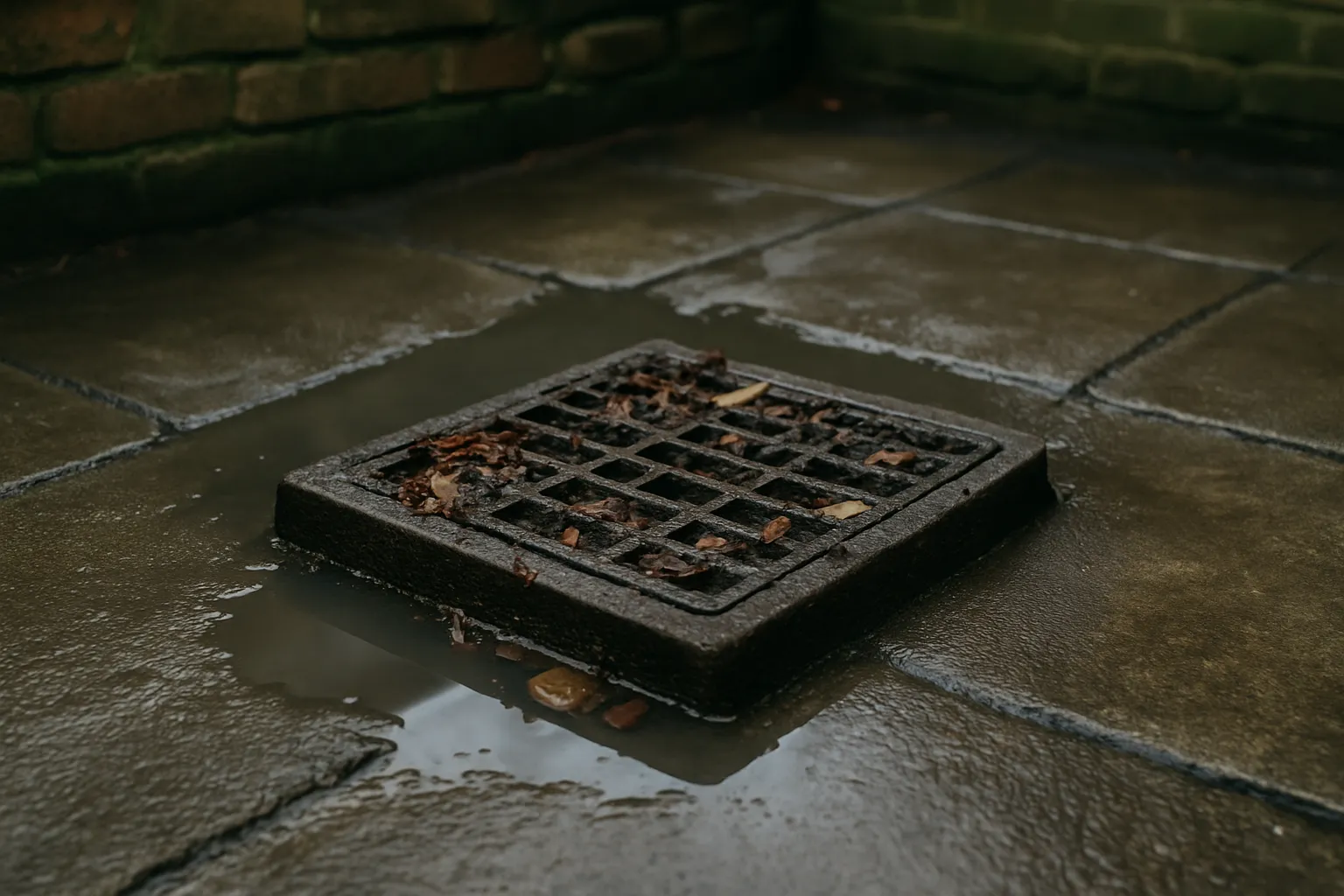
A blocked outside drain can go from minor inconvenience to genuine problem very quickly. Standing water, foul smells, and sewage backing up towards the house are all signs that something needs attention. The good news is that many blockages in external drains are straightforward to clear yourself — as long as you work safely and know when to stop and call a professional.
First: Identify What You Are Dealing With
Before reaching for any tools, take a moment to assess the situation.
- Inspection chamber or gully? A gully is the square or round grid-covered drain at ground level that collects rainwater and surface water. An inspection chamber gives access to the main underground sewer run.
- Is the blockage affecting just one drain, or multiple? If several drains inside and outside the property are slow or backing up, the blockage is likely further down the shared sewer — and that is a job for a professional.
- Is there any sewage visible? Raw sewage is a health hazard. Put on rubber gloves and old clothing before you go any further.
What You Will Need
- Rubber gloves (thick, elbow-length ideally)
- Old clothing you do not mind discarding
- A set of drain rods with a plunger or corkscrew head
- A garden hose or bucket of water
- Disinfectant spray or Milton solution
- A stiff brush for cleaning up afterwards
Drain rod sets are widely available from DIY shops and are worth having in the house for exactly this situation.
How to Use Drain Rods Safely
Step 1 — Lift the drain cover
Use a flat-head screwdriver or drain key to lift the cover. Set it aside on a hard surface. If the cover is stuck, do not force it; corrosion may mean it needs replacing and forcing it could damage the frame.
Step 2 — Assess the blockage
Look into the chamber. If the chamber is full of water, the blockage is downstream (away from the house). If it is empty, the blockage is between the house and this chamber.
Step 3 — Attach the rods
Screw a plunger head onto the first rod. Add rods one at a time as you work deeper into the drain. Always turn the rods clockwise as you push — turning anticlockwise risks unscrewing the sections inside the pipe, leaving you with a secondary problem.
Step 4 — Work the blockage
Push the rod assembly firmly but steadily towards the blockage. Use a gentle plunging action rather than brute force. You will often feel the blockage give way, followed by a rush of water draining through.
Step 5 — Flush through
Once the blockage has cleared, flush the drain thoroughly with a hose or several buckets of clean water. This washes debris further down the system and confirms the drain is running freely.
Step 6 — Clean up properly
This is not a step to skip. Drain blockages often involve bacteria and pathogens.
- Hose down all rods before disassembling them
- Disinfect rods, the drain cover, and any surfaces you touched
- Bag and bin your gloves; wash your hands thoroughly with soap and water
- Disinfect your boots before bringing them indoors
Common Causes of Blocked Outside Drains
- Leaves and garden debris accumulating in gullies, especially in autumn
- Grease and fat washed from kitchen waste pipes that solidifies in cooler outdoor sections
- Tree root ingress — roots seek out moisture and can crack or block older clay pipes
- Collapsed or displaced pipe — common in older properties with Victorian-era drainage
- Build-up of silt after heavy rain
When Not to DIY
There are situations where putting down the rods and picking up the phone is the right call.
- The blockage does not shift after two or three attempts
- You can see or smell raw sewage at surface level
- Multiple drains in the property are affected simultaneously
- The drain cover is over a shared sewer (often marked on deeds or visible as a larger chamber)
- You suspect a collapsed or cracked pipe — continued rodding can make the damage worse
- The drain is close to a gas meter or service pipes
Shared sewers are the responsibility of the water company (Thames Water in much of the TW area), so it is worth a quick call to them before spending time on a problem that may be theirs to fix.
Staying Safe Throughout
A few simple habits make a real difference:
- Never work alone if there is any risk of falling into an open chamber
- Keep children and pets well away from open drains
- Wash hands thoroughly even if you wore gloves — gloves can develop small tears
- Do not use drain-clearing chemicals in an already-flooded chamber; they can splash back and cause burns
Still Blocked? We Can Help
If the blockage will not shift, or if you are not comfortable tackling it yourself, that is completely understandable. A blocked outside drain that backs up into the house can cause significant damage and is a genuine sanitation risk. At that point it is a job for a drainage specialist with proper rods and a jetter, and our sister firm Drainiacs handles blocked drains across the same TW postcodes.
Our team covers the TW postcode area around the clock and can clear most external drain blockages quickly and without fuss. Call us any time on 07700 137648 — we are available 24 hours a day, seven days a week.