Maintenance
Autumn Leaves and Blocked Gullies: The 20-Minute Job That Prevents Winter Floods
Blocked gullies are one of the most common causes of winter flooding. Here's how to clear them yourself — and when to call a local plumber.
Published 21 July 2026
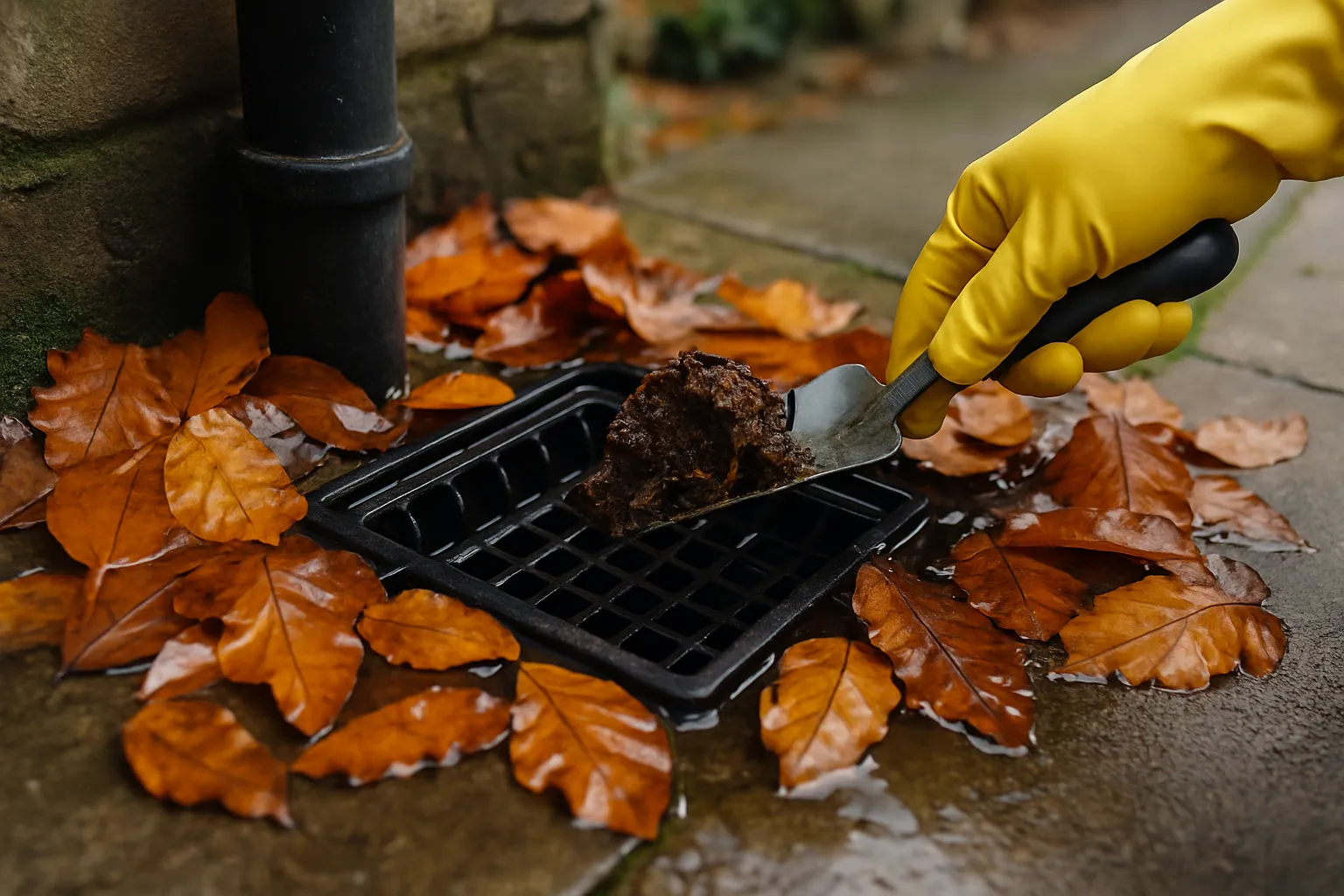
Every autumn, the same thing happens across the TW postcode area. Leaves fall, pile up against the house, and quietly funnel themselves into the gullies at the base of your downpipes and around your patio edges. By the time the first serious November rain arrives, those gullies are already half-blocked — and the water has nowhere to go except back towards your property.
The good news: clearing a gully properly takes about 20 minutes and costs almost nothing. The bad news: most people skip it, and end up dealing with flooded patios, waterlogged gardens, or — in worse cases — water finding its way under a door or through a wall.
This guide covers what to do, when to do it, and what to look for.
What Is a Gully, and Why Does It Block?
A gully is the small drain — usually a square or round metal or plastic grid set into the ground — that collects surface water from your patio, driveway, or the base of a downpipe and channels it into the underground drainage system.
Gullies block because they were designed to catch water, not debris. Autumn leaves, seed pods, moss, and silt all wash into the trap beneath the grid, building up layer by layer until the drain can no longer cope with normal rainfall. In the TW area, properties with mature trees nearby — common in Teddington, Twickenham, and Richmond — are particularly prone.
Signs Your Gullies Need Attention
- Water pooling on the patio or driveway after rain, even light rain
- A gurgling sound from the drain during or after a shower
- Visible debris or a mat of leaves sitting on the grid
- Slow drainage from your downpipe, or water spilling over the top of it
- A faint smell of stagnant water near the drain
If you spot any of these before winter sets in, act now. Once temperatures drop and debris compacts, a partial blockage becomes a full one very quickly.
The 20-Minute Gully Clear: A Checklist
You will need: rubber gloves, a bucket, a stiff brush, a garden trowel or old spoon, and a hosepipe or a couple of watering cans.
Step 1 — Lift the grid
Most gully grids simply lift out. Some older metal ones are heavier than they look. Set the grid aside and rinse it clean before you replace it.
Step 2 — Remove surface debris
Scoop out any leaves, mud, or compacted matter sitting in the top of the trap. Put it straight into a bucket — don’t rinse it further into the drain.
Step 3 — Check the trap
Below the debris, there should be a water-filled trap (similar in principle to the one under your kitchen sink). If the trap is completely dry, or if you can see a blockage deeper in the run, that is a sign the problem goes beyond the gully itself.
Step 4 — Flush through
Use a hosepipe or watering can to flush clean water through the gully. Watch how quickly it drains. It should clear within a few seconds. Slow drainage means there is still a partial blockage further along the pipe.
Step 5 — Replace and record
Put the clean grid back. If you have more than one gully, work through them all. Note which ones drained slowly — these are the ones most likely to cause trouble in January.
How Often Should You Do This?
For most properties in the TW area, once in mid-October is sufficient. If you have large deciduous trees nearby, a second check in late November — after the main leaf fall — is worth the ten minutes it takes.
When a Hosepipe Is Not Enough
If flushing the gully makes no difference, or if water is actively backing up into the trap rather than draining away, the blockage is likely further down the underground run. This is where DIY stops being practical.
Common causes of deeper blockages include:
- Compacted silt and leaf matter in the underground pipe
- Root ingress from nearby trees (particularly an issue in older TW streets with mature street trees)
- A collapsed or displaced pipe joint
- A shared drain that is blocked at a point on a neighbour’s side
A drain jetting service can clear most of these in a single visit. A CCTV drain survey will tell you exactly what is happening if the problem keeps coming back.
A Note on Costs
Clearing a single gully or a short external drain run is one of the more straightforward jobs a plumber carries out. It does not require excavation, specialist parts, or a long visit. If you are unsure what is involved or want a professional to check and clear your gullies before winter, it is worth calling to get a clear idea of what the job entails and what it will cost before anyone turns up.
Do This Now, Not in January
The single most effective thing you can do to protect your property from winter water damage is to clear your gullies before the cold arrives. It is not dramatic, and it is not expensive — but skipping it is one of the most common reasons we get called out to flooded patios and waterlogged utility rooms in the depths of winter.
If you have already checked your gullies and something does not look right — water not draining, a smell, or visible damage to the grid or surrounding ground — give us a call on 07360 268948. We cover Teddington, Twickenham, Richmond, and the surrounding area, and we are available 24 hours a day if the worst has already happened.
Our sister drainage firm Drainiacs follow the leaves further down the system in autumn leaves and the gully chain.