Emergencies
Why Your Drains Back Up After Heavy Rain (and When It's the Sewer, Not You)
Drains backing up in heavy rain? Learn the difference between a surcharged sewer and your own blockage, and what to report to Thames Water.
Published 19 July 2026
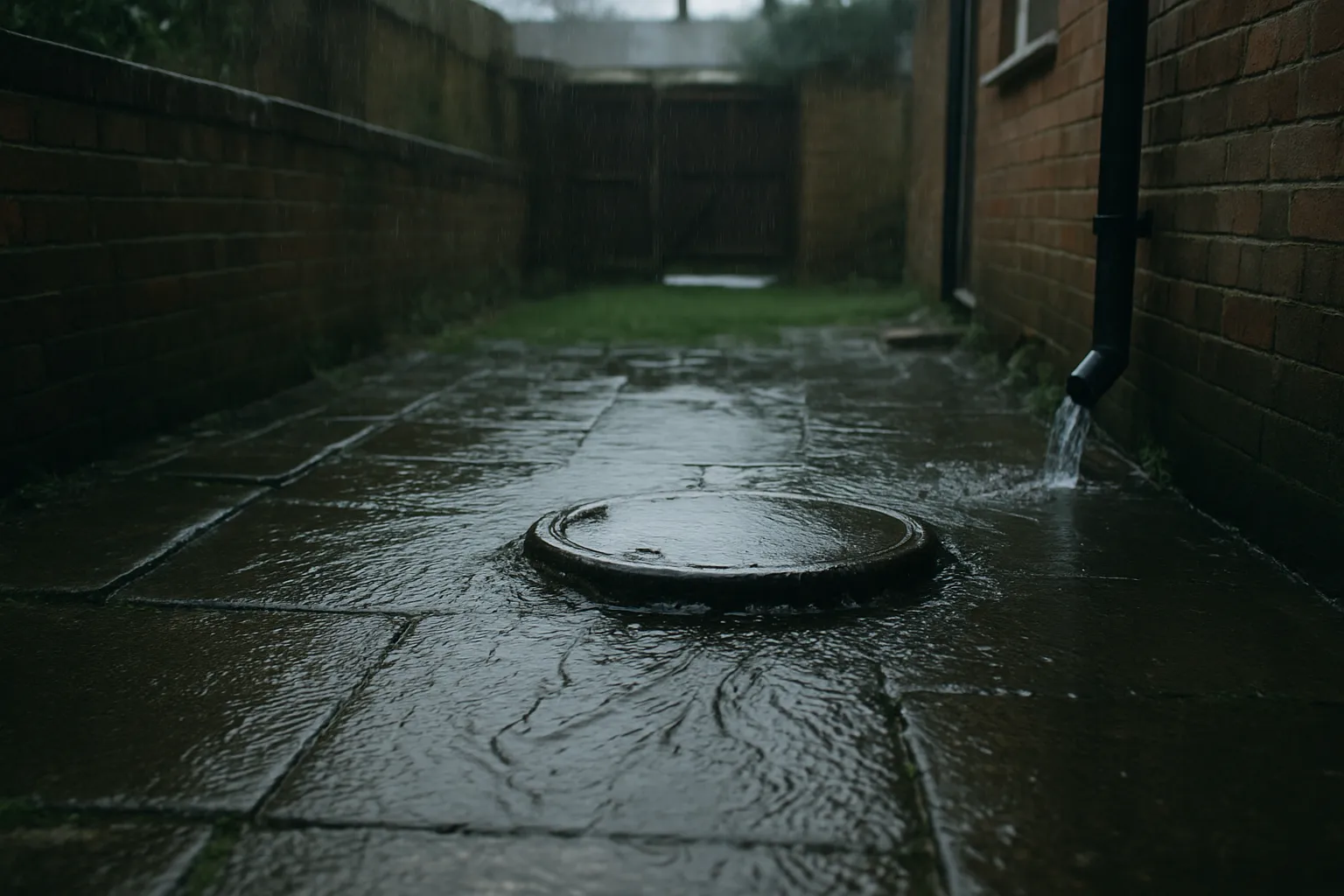
Why Your Drains Back Up After Heavy Rain
There are few things more alarming than watching dirty water bubble up through a manhole cover or gurgle back into your shower tray during a downpour. The good news is that this does not always mean you have a blockage. Often, the culprit is something called a surcharged sewer — and understanding the difference can save you an unnecessary call-out charge or, equally importantly, stop you waiting when you actually do need a plumber.
What Is a Surcharged Sewer?
The combined or surface-water sewer network beneath your street is designed to handle a certain volume of water. During sustained or very heavy rainfall, that volume is exceeded. Water has nowhere to go, so it backs up through the path of least resistance — which is often the lowest drain on a property, such as a gulley, inspection chamber, or ground-floor toilet.
This is called surcharging, and it is a network problem, not a problem with your drains.
In the TW postcode area — including parts of Shepperton, Staines, and the Thames floodplain — the sewer network can be particularly vulnerable after prolonged wet weather, given the relatively high water table and the age of some of the infrastructure.
How to Tell the Difference
Signs it is likely a surcharged sewer (network problem)
- Multiple properties on your street are affected at the same time
- The problem clears within a few hours of the rain stopping
- Water backs up through an outside gulley or inspection chamber, not an inside fitting
- There is no foul smell beyond what you would expect from a drain
- It only happens during or immediately after heavy rain — never at other times
Signs it is likely your own blockage (private drain problem)
- Only your property is affected; neighbours are fine
- The problem persists well after the rain has stopped
- Slow drainage or gurgling has been building up for days or weeks before the rain
- Foul odours inside the property suggest a partial blockage trapping waste
- Multiple internal fittings — sink, bath, toilet — are draining slowly or backing up together
Who Is Responsible for What?
This is where many homeowners get confused, so here is a straightforward breakdown.
Thames Water’s responsibility:
- Public sewers running beneath the road or shared land
- Shared lateral drains (the section of pipe that serves more than one property)
- Sewer flooding that originates from the public network
If you believe the issue is a surcharged public sewer, report it to Thames Water on 0800 316 9800. They have a legal duty to investigate sewer flooding and to log it, which also matters if you ever need to evidence a pattern of flooding.
Your responsibility (as a homeowner):
- The drain from your property boundary up to where it connects to the public sewer
- Any shared private drain that serves only your home or a small group of properties built before 2011 that was not adopted
- Internal pipework and fittings throughout the property
If the problem is on your side of the boundary — or if you are unsure — that is where a private plumber comes in.
What to Do Right Now
- Stay safe. Do not wade through flood water inside or outside the property. It may contain sewage.
- Check with neighbours. A quick knock on a door or a message to a local group can tell you immediately whether the problem is widespread.
- Photograph everything. Note the time, take photos of any overflowing chambers or backed-up fittings, and keep a record. This is useful evidence whether you end up reporting to Thames Water or making an insurance notification.
- Do not use water unnecessarily. If you suspect a blockage on your own drain, stop running taps, flushing toilets, and using appliances until it is cleared. Adding more water to an already overwhelmed pipe makes things worse.
- Report to Thames Water if it is a network issue. Ask for a reference number. If sewer flooding affects the inside of your home, ask Thames Water specifically about their sewer flooding register and any compensation scheme they operate.
- Call a plumber if it is your drain. If the problem is isolated to your property and persists after the rain stops, it is time to get the drain inspected.
Can a Blocked Drain Make Surcharging Worse?
Yes. A partial blockage in your private drain — grease build-up, root ingress, or a collapsed section — reduces the pipe’s capacity. Under normal conditions it may drain slowly but adequately. Under the additional pressure of a surcharged network, that reduced capacity tips the balance and causes a full backup. Clearing your drain will not fix the network, but it will make your property more resilient during future heavy rain events.
When to Call Us
If your drains are still backing up after the rain has stopped, if only your property is affected, or if you are seeing slow drainage between wet weather events, there is a good chance you have a blockage or a damaged drain that needs attention.
We cover Shepperton, Staines, Twickenham, and the surrounding TW postcode area around the clock. A CCTV drain survey can confirm exactly what is happening inside your pipework and give you a clear picture before any work begins.
Call 07360 268948 any time — day or night — and we will help you work out what you are dealing with and what needs to happen next.
Our sister drainage firm Drainiacs cover the drainage side in blocked drains after heavy rain in TW.