How-to
Why Does My Tap Splutter or Spit Water?
Tap spluttering or spitting water in your TW home? Learn the common causes – air, aerators, pressure – and what you can do to fix it.
Published 1 July 2026
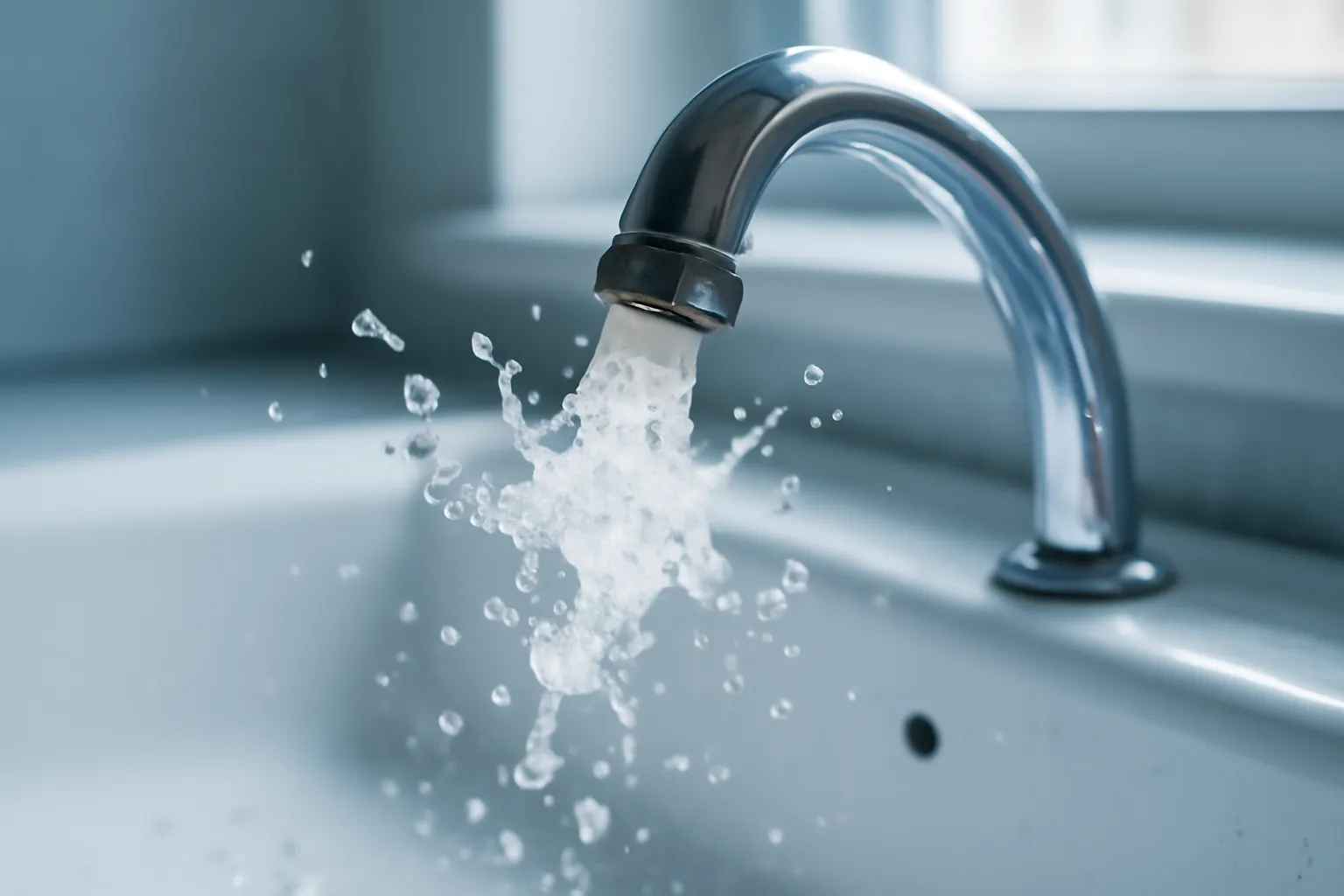
A tap that splutters, spits, or coughs water across the sink is one of those minor annoyances that can quietly drive you mad. The good news is that it is usually harmless and often something you can sort yourself in a few minutes. Here is what is likely causing it and what to do about it.
The Most Common Causes
1. Air Trapped in the Pipes
This is the single most frequent reason for a spluttering tap. Air can enter your pipework when:
- A nearby supply is turned off and back on (for repairs or meter work)
- You have recently had plumbing work carried out
- Thames Water or your local supplier has been working on the mains in your street
The air has nowhere to go except out through your taps, which produces that characteristic spitting and gurgling. It normally clears on its own within a few minutes of running the water.
What to do: Turn on the cold tap at the highest point in your home (usually a bathroom basin) and let it run at a slow trickle for two or three minutes. Work your way down to the ground floor. This helps push trapped air through the system.
2. A Blocked or Dirty Aerator
Most modern taps have a small mesh screen screwed onto the end of the spout called an aerator. Its job is to mix air into the flow and reduce splashing. Over time, limescale, grit, and debris build up in the mesh and partially block it — causing an uneven, spitting stream.
In hard-water areas of the TW postcode (Richmond, Twickenham, and surroundings), limescale build-up is particularly common.
What to do:
- Unscrew the aerator by hand or with a cloth-wrapped spanner — turn anti-clockwise.
- Rinse the mesh under running water.
- Soak it in a cup of white vinegar for 20–30 minutes to dissolve limescale.
- Rinse again and screw it back on.
If the mesh is torn or heavily corroded, a replacement aerator costs very little from any hardware shop.
3. Fluctuating or Low Water Pressure
If the spluttering only happens at certain times of day, pressure fluctuations on the mains supply may be to blame. Peak demand periods — early morning and early evening — can cause brief drops in pressure that produce an inconsistent flow.
You can check whether this is a wider issue by visiting the Thames Water website or contacting them directly. If multiple taps in your home are affected simultaneously, the problem is likely external rather than anything you have done.
4. A Partially Closed Stopcock or Service Valve
If a stopcock or isolating valve under the sink is not fully open, the restricted flow can cause turbulence and spluttering at the tap.
What to do: Locate the isolating valve on the supply pipe beneath the affected tap. It should be turned fully anti-clockwise (open). If it was only partially open, opening it fully often resolves the problem immediately.
5. Worn Washers or Internal Valve Damage
An older tap with a worn washer or a damaged cartridge can allow air and water to mix unevenly inside the valve body itself. If the spluttering is accompanied by dripping, a juddering handle, or a high-pitched squeal, worn internal components are the likely cause.
This is straightforward for a plumber to fix — a new washer or cartridge is inexpensive and the job usually takes under an hour.
When Should I Be Concerned?
Occasional spluttering after a supply interruption is perfectly normal. However, you should take things more seriously if:
- The spluttering is persistent and does not clear after running the taps
- You notice a drop in water pressure across the whole house
- The water is discoloured (brown, orange, or milky white)
- You can hear banging or hammering in the pipes (known as water hammer)
- There are damp patches near the pipework beneath the sink
Discoloured water or persistent pressure loss can indicate a pipe fault or, in older properties, corrosion inside the supply pipework.
Quick-Reference Checklist
- Run taps from top floor to bottom to purge air
- Remove and clean the tap aerator
- Check the isolating valve is fully open
- Check whether neighbours are affected (mains issue)
- Look for damp under the sink or around the pipe connections
Still Not Sorted?
Most cases of tap spluttering are easily resolved with the steps above. If you have worked through the checklist and the problem persists — or if you have noticed any signs of a leak, water damage, or discoloured water — it is worth having a plumber take a look before a minor issue becomes a bigger one.
If you are in the TW area and need a plumber to investigate, Emergency Plumbers TW are available 24 hours a day, seven days a week. Call us on 07360 268948 and we will talk you through what to do or arrange a visit at a time that suits you.