How-to
How Professional Leak Detection Actually Works
Find out how professional plumbers locate hidden water leaks without unnecessary damage — and when to call for emergency help in the TW area.
Published 29 June 2026
A dripping tap is easy to spot. A slow leak behind a wall, under a concrete floor, or beneath a garden path is a different matter entirely. Left undetected, hidden leaks can cause structural damage, encourage mould growth, and push your water bill up significantly. Professional leak detection is the process of finding those leaks quickly and with as little disruption to your home as possible.
Here is what actually happens when a qualified plumber carries out leak detection.
Why Hidden Leaks Are Hard to Find
Water is remarkably good at travelling. A pinhole leak in a pipe joint can seep along a joist or through a screed floor before it ever appears as a damp patch — and by the time you see visible signs, the leak may have been active for weeks. Guesswork and random digging are not only disruptive; they often miss the source altogether.
That is why professional plumbers use a combination of diagnostic methods rather than relying on a single tool.
The Main Techniques Professionals Use
Acoustic Listening Equipment
Sound is one of the most reliable ways to locate a pressurised water leak. Specialist acoustic devices — including ground microphones and listening rods — pick up the hiss or vibration that escaping water creates in a pipe. By comparing readings at different points, a plumber can narrow the leak down to a specific section of pipe, often to within a few centimetres.
This method works particularly well on supply pipes buried under driveways, paths, and solid floors.
Thermal Imaging Cameras
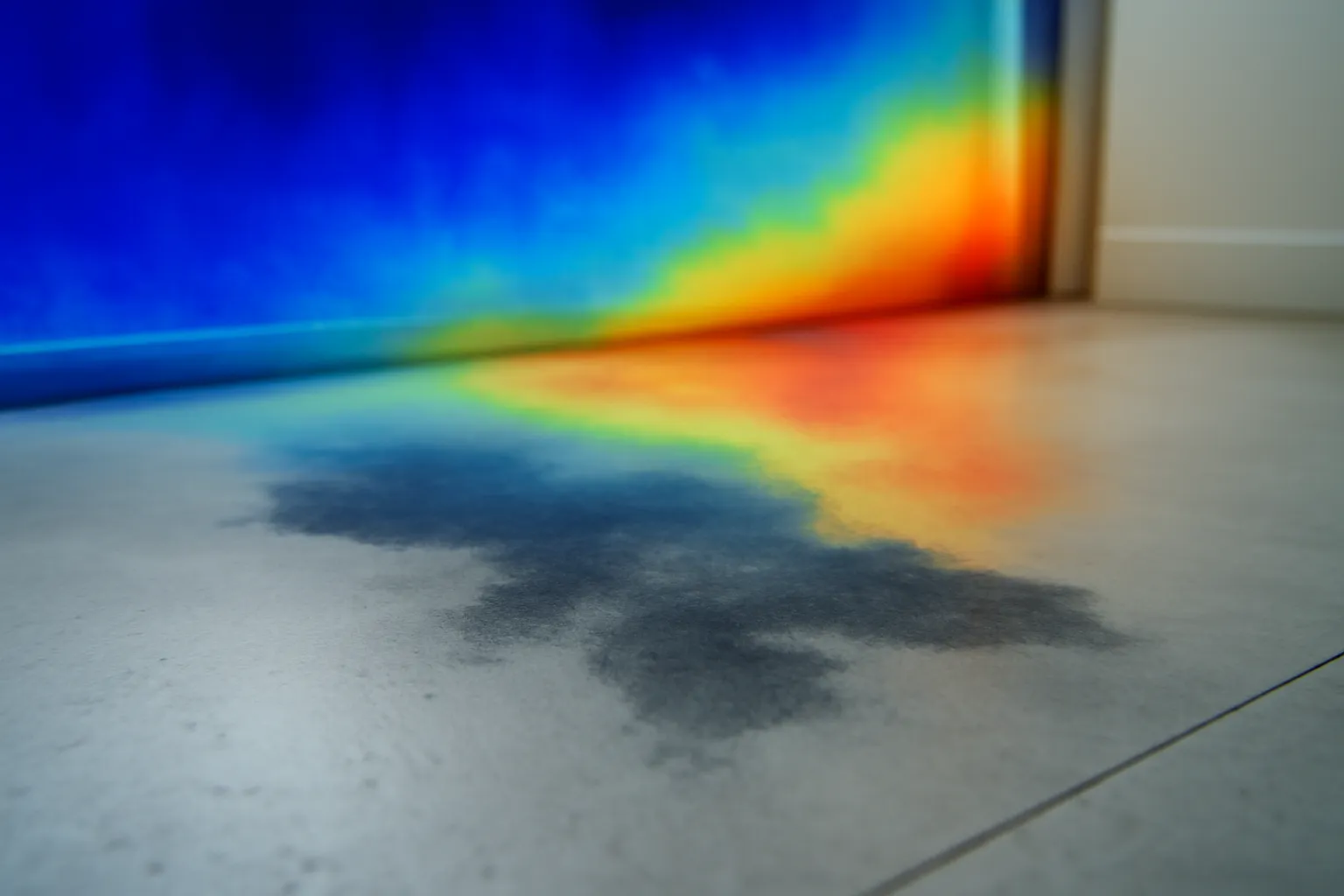
Leaking water changes the temperature of the surrounding material. A thermal imaging camera detects these temperature differences and displays them as a colour map. Warm-water leaks under a floor or behind a wall show up clearly as irregular heat signatures that do not match the rest of the surface.
Thermal imaging is fast, completely non-invasive, and especially useful in bathrooms, kitchens, and anywhere wet underfloor heating is installed.
Tracer Gas Testing
For leaks that are very small or in locations that are difficult to survey acoustically, plumbers sometimes use tracer gas. A harmless mixture of nitrogen and hydrogen is introduced into the pipe. Because the gas molecules are tiny, they escape through even the smallest crack and rise to the surface. A sensitive detector then traces the gas back to its exit point, pinpointing the leak precisely.
This technique is particularly effective under solid concrete slabs and in complex pipework runs.
Pressure Testing
Before any of the above methods are used, a plumber will often carry out a simple pressure test. The water supply is isolated and the pipe is pressurised. If the pressure drops, there is a leak somewhere in the system. This confirms a leak is present and helps the plumber understand how significant it is before choosing the most appropriate detection method.
Moisture Meters and Damp Testing
Where a leak has already caused visible dampness, a moisture meter can map exactly how far the water has spread through walls, ceilings, or floors. This helps distinguish between an active leak and residual damp from an older problem that has already been fixed.
What Happens After the Leak Is Found
Once the source is confirmed, the plumber will discuss the repair options with you. In many cases — particularly with acoustic or tracer gas detection — the actual excavation or access required is minimal. A single, precisely placed cut into a floor or wall is far less disruptive than exploratory digging across a wide area.
Your plumber should also check whether the leak has caused secondary damage, such as saturated insulation, compromised joists, or damaged screed, and advise you accordingly.
Signs You May Have a Hidden Leak
Keep an eye out for these warning signs in your home:
- An unexplained rise in your water bill
- The sound of running water when all taps are off
- Damp patches on walls, ceilings, or floors with no obvious cause
- Soft or discoloured areas on a ceiling below a bathroom
- Cracking or lifting floor tiles
- A drop in water pressure that has appeared gradually
- Unusually green or lush patches in your garden (possible underground supply pipe leak)
When to Call an Emergency Plumber
If you can see water coming through a ceiling, notice a sudden drop in pressure, or suspect a leak near your consumer unit or electrical fittings, do not wait. Turn off your stopcock if it is safe to do so, move valuables away from the affected area, and call a plumber straight away.
For hidden leaks that are causing damp but no immediate emergency, it is still worth acting promptly. Water damage compounds over time and repairs become significantly more expensive the longer a leak runs.
If you are in the TW postcode area — covering Twickenham, Richmond, Teddington, Hounslow, Feltham, Staines, and surrounding areas — and you suspect a hidden leak, our team is available around the clock. Call us any time on 07360 268948 and we will talk you through the next steps.