How-to
Kitchen Leak Detective: How to Find Hidden Kitchen Leaks
Spot the most common hidden kitchen leak sources — under-sink, appliances and supply lines — with this systematic step-by-step check.
Published 8 July 2026
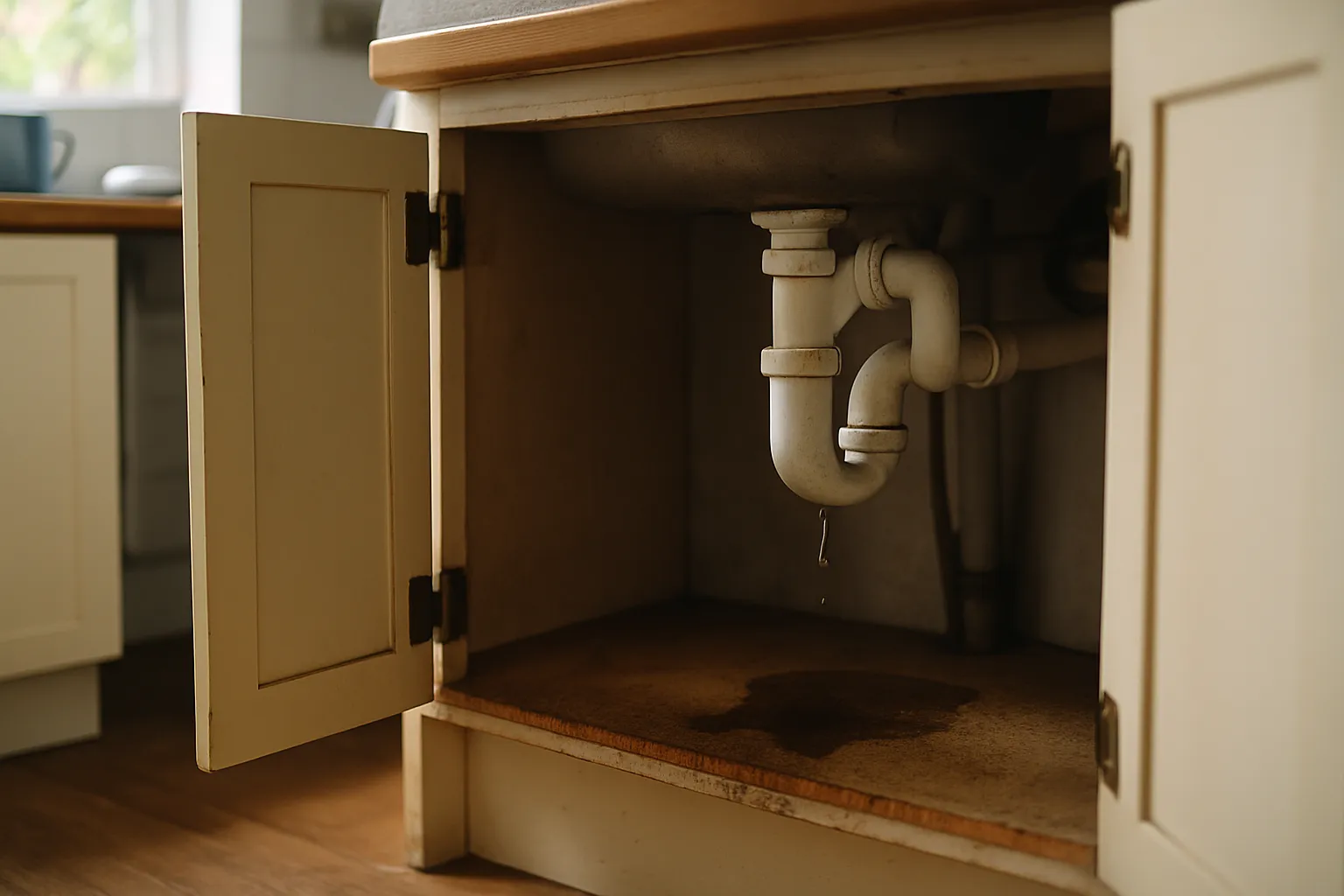
Kitchen Leak Detective: Common Hidden Sources
A damp patch on the kitchen floor or a musty smell under the worktop are classic signs that water is escaping somewhere it shouldn’t be. The frustrating part is that kitchen leaks are often hidden — tucked behind a cabinet door, dripping slowly inside a wall, or seeping from a joint you can’t easily see. The good news is that most kitchen leaks come from a fairly short list of suspects, and a methodical check can pinpoint the culprit quickly.
Why It Matters to Find the Source Quickly
Even a slow drip wastes hundreds of litres of water a week and, left unchecked, will:
- Rot timber cabinet bases and flooring
- Encourage mould growth behind kick-boards
- Damage plaster and ceilings in rooms below
- Raise your water bill noticeably
The sooner you find the source, the cheaper and simpler the repair.
Step 1 — Check Under the Sink First
The under-sink cupboard is the most common hiding place for kitchen leaks. Open the doors and look carefully at:
- Waste trap and P-trap joints — the curved plastic or chrome pipework under the plughole. These joints can work loose over time or crack if knocked. Run the tap and watch for drips.
- Hot and cold supply pipes — trace each pipe back to the isolation valve or stopcock. Look for moisture at every compression fitting or push-fit joint.
- Isolation valves themselves — the small valves on the supply pipes can weep from their spindle, especially older brass ones.
- The basin or sink seal — if the silicone bead around the sink bowl has cracked or pulled away, water splashing during washing-up can track down into the cabinet.
Dry everything thoroughly with a cloth first, then run the tap and watch in real time. This makes it far easier to spot exactly where moisture is appearing.
Step 2 — Inspect Appliance Connections
If you have a dishwasher, washing machine, or fridge with a water dispenser, each one is a potential leak point.
Dishwasher
- Inlet hose — the braided hose that runs from the under-sink supply to the machine. Check both ends; the connection at the machine valve is a frequent drip point.
- Drain hose — should loop up high (the anti-siphon loop) before connecting to the waste. A loose jubilee clip or a split hose will leak during the drain cycle only, which makes it easy to miss.
- Door seal — a worn or gunked-up door gasket lets water escape onto the floor during a wash cycle.
Washing Machine (if in the kitchen)
- Fill hoses — feel along the full length; rubber hoses older than five years should be replaced as routine maintenance.
- Pump filter area — a loose filter cap at the front bottom panel can weep slowly.
Fridge-Freezer with Ice or Water Dispenser
- Supply line — usually a thin plastic or copper tube running to the back of the fridge. Check the compression fitting at the wall valve and at the fridge inlet.
Step 3 — Look at Supply Lines Behind Panels
Some kitchens have pipework running inside the wall or behind a false panel. Signs of a leak here include:
- Bubbling or staining on painted plasterboard
- A soft or springy area on the wall surface
- Persistent damp smell even after you’ve dried out the cabinet
If you suspect a leak inside a wall, avoid probing or drilling without professional advice — you need to know where the pipe runs before opening anything up.
Step 4 — Check the Stopcock and Meter
If you can’t find the source under the sink or behind appliances, check whether your water meter (usually outside near the boundary) is ticking over when all taps are off. If it is, water is escaping somewhere in the supply — possibly in a buried section of pipe. This needs a professional leak detection survey.
A Quick Checklist
- Under-sink waste trap joints
- Under-sink supply pipe fittings and isolation valves
- Sink-to-worktop silicone seal
- Dishwasher inlet and drain hoses
- Washing machine fill hoses and pump filter
- Fridge water supply line
- Wall panels for damp or staining
- Water meter movement with all taps off
When to Call a Plumber
Some leaks are straightforward DIY fixes — tightening a loose compression fitting or re-sealing a sink, for example. But call a professional if:
- You cannot locate the source after a systematic check
- The leak appears to be inside a wall or under the floor
- There is significant water damage already present
- You need to isolate the leak but aren’t sure which valve controls which pipe
If your kitchen is actively flooding or you can hear water running that you can’t account for, treat it as an emergency.
Need help right now? Call Emergency Plumbers TW any time, day or night, on 07360 268948. We cover the full TW postcode area and can be with you quickly to find the source and stop the damage.