How-to
How to Turn Off the Water to a Single Tap or Toilet
Learn how to use isolation valves to shut off water to one tap or toilet without cutting supply to the whole house. Clear, step-by-step guidance.
Published 1 July 2026
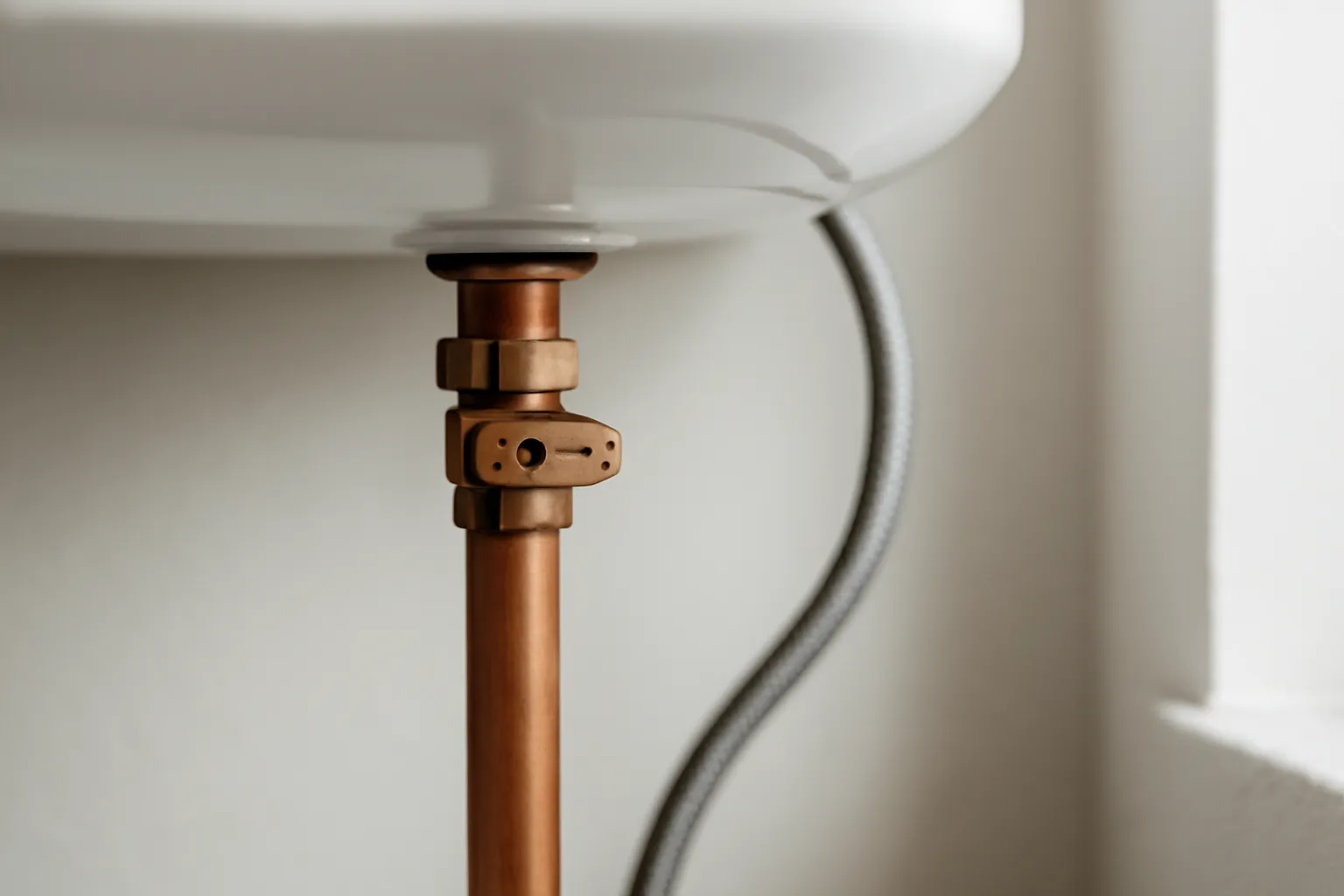
Isolate One Tap or Toilet — Without Cutting the Whole House Off
When a tap drips constantly or a toilet cistern won’t stop filling, your first instinct might be to rush to the main stopcock and kill the water supply to the entire house. That works, but it also means no water for cooking, washing, or flushing any other loo until the job is done.
The good news: most modern taps and toilets have their own isolation valve (sometimes called a service valve) fitted right on the supply pipe beneath them. Turn that one valve and only that fitting loses its water. Everything else carries on as normal.
What Is an Isolation Valve?
An isolation valve is a small brass fitting, usually about 2–3 cm long, fitted inline on a 15 mm copper or plastic pipe. It has a single slot-head screw — the kind you turn with a flat-bladed screwdriver.
- Slot parallel to the pipe = water is flowing (valve open)
- Slot at 90° to the pipe = water is off (valve closed)
That quarter-turn is all it takes.
Where to Find the Valve
Under a basin or kitchen tap
Open the cupboard beneath the sink. Follow the hot and cold pipes up from the wall or floor to where they connect to the tap tails. You should see a valve on each pipe — one for hot, one for cold.
Under a toilet cistern
Look behind or just below the cistern, where a single pipe comes out of the wall or floor. The isolation valve sits on this cold-supply pipe, often within 30 cm of the wall.
Under a bath
Baths sometimes have a small access panel on the side or in an adjacent airing cupboard. The valves are on the pipes feeding the taps.
If you cannot see a valve, there may not be one fitted — in which case you will need to use the main stopcock instead (usually under the kitchen sink or where the rising main enters the property).
Step-by-Step: Turning Off the Valve
- Locate the valve on the pipe feeding the tap or toilet.
- Get a flat-bladed screwdriver — a standard medium-sized one is fine.
- Turn the screw a quarter-turn (90°) so the slot sits across the pipe rather than along it.
- Test the fitting — open the tap and check no water flows, or flush the toilet and watch whether the cistern refills. If it does not, the valve is closed correctly.
- Make a note of which valve you turned, especially if there are several close together.
That is it. The rest of the house still has running water.
Turning the Water Back On
Reverse the process: turn the screw back a quarter-turn so the slot runs parallel to the pipe again. Open the tap slowly to let air escape, or allow the cistern to refill before flushing.
When the Valve Won’t Turn
Isolation valves that have not been touched in years can seize. Do not force it — the valve body can crack, turning a minor job into a leak. Try a small amount of penetrating oil around the screw head, wait a few minutes, then try again with gentle pressure.
If it still will not budge, close the main stopcock instead and call a plumber. A seized valve is straightforward to replace but does require the main supply to be off while the work is done.
Common Situations Where This Helps
- A dripping tap you want to leave until the weekend without wasting water
- A running toilet cistern keeping you awake at night
- Replacing a tap washer or cartridge yourself
- Fitting a new toilet fill valve
- Isolating a leaking flexi-hose under a basin before it causes damage
A Word on Flexi-Hoses
The braided flexible hoses that connect isolation valves to taps and cisterns are convenient but they do fail — often without warning. If yours look corroded, kinked, or are more than ten years old, it is worth having them replaced. A burst flexi-hose can discharge a significant amount of water in a short time.
Still Unsure, or Is It an Emergency?
If water is actively leaking, if you cannot find or operate the isolation valve, or if closing it has not stopped the flow, close your main stopcock straight away and call us.
Emergency Plumbers TW are available 24 hours a day, 7 days a week across the TW postcode area. Call us on 07360 268948 and your details go straight to a local plumber.