How-to
How to Turn Off the Water to a Toilet in the UK
Find and close your toilet isolation valve, check the water has stopped, and learn what to do if the valve is stuck or missing. Help for TW homeowners.
Published 4 August 2026
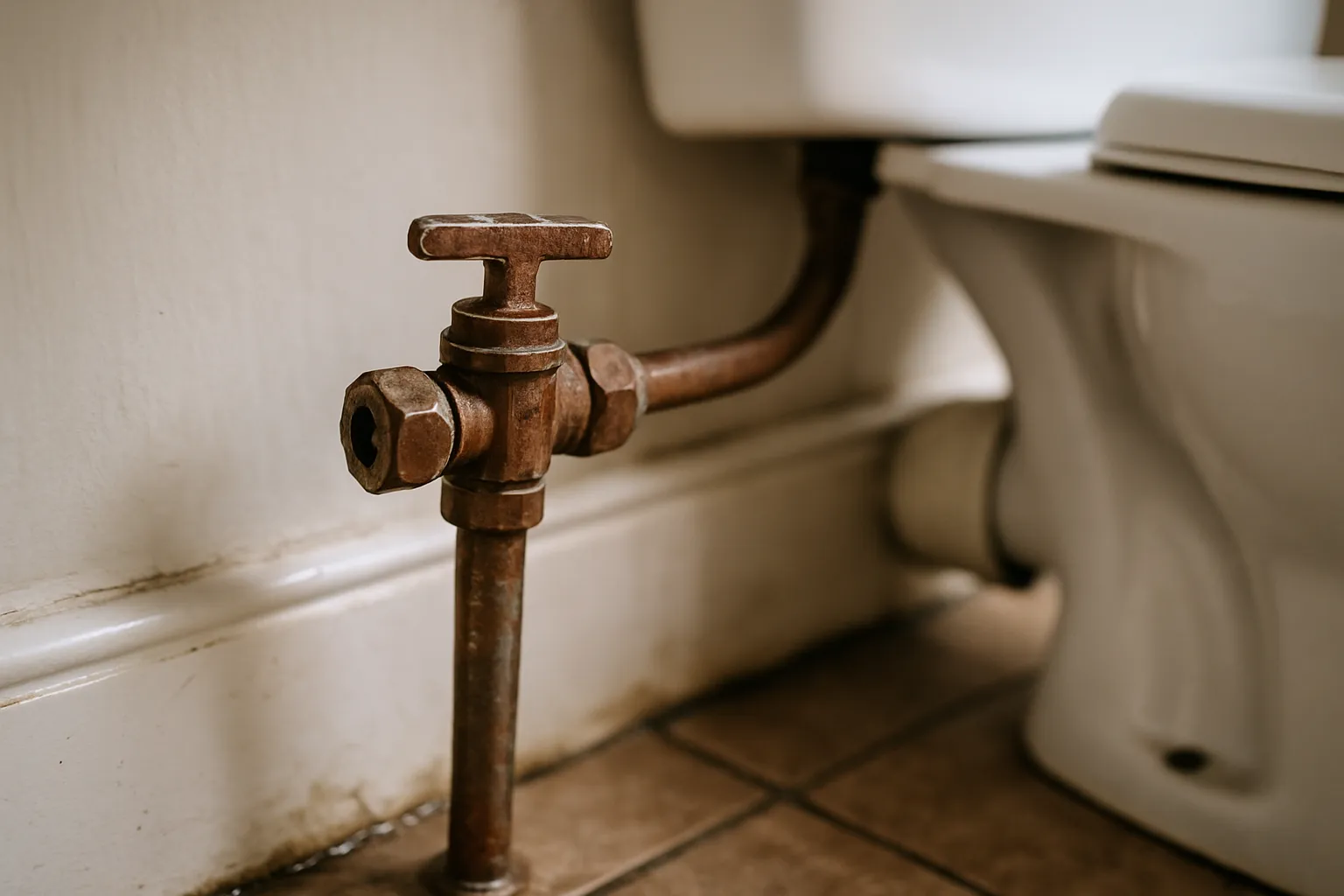
To stop water entering a toilet cistern, find the isolation valve on its supply pipe. On a slotted quarter-turn valve, turn the slot across the pipe to close it. If the valve is stuck, missing or leaking, use your home’s internal stop tap if you can reach it safely. Do not force a seized valve.
Water escaping and you cannot stop it? Call 07360 268948 for help in the TW area. We cover Teddington TW11, Ashford TW15 and the surrounding towns. If the toilet bowl is blocked or filling up, stop flushing. Shutting the supply stops new water entering the cistern; it does not clear a blockage.
The steps below explain how to identify the valve, check it has worked and deal with a shower supply too.
What Is an Isolation Valve?
An isolation valve (sometimes called a service valve or stop valve) is a small inline valve fitted on the supply pipe leading to a single appliance — your toilet cistern, shower, basin, or washing machine. Turning it cuts the water to just that one fitting.
They come in two main types:
- Flathead (slotted) isolation valve — turned with a flat-head screwdriver. When the slot is in line with the pipe, the valve is open. Turned a quarter-turn (90°) so the slot sits across the pipe, it is closed.
- Lever valve: lever parallel to the pipe means open; lever across the pipe means closed. A wheel-handled gate valve is different and needs several turns clockwise to close.
Step 1: Find the Isolation Valve for Your Toilet
Look behind or beside the toilet pan, near where the pipe enters the wall or floor. The supply pipe to the cistern is usually 15 mm copper or plastic. The isolation valve will be somewhere on that pipe, often within 300–500 mm of the cistern inlet.
Can’t see one? Some toilets have no accessible individual isolation valve. See our guide to finding and turning off the main stopcock. Thames Water also explains how to find and use your inside stop valve.
Step 2: Close the Valve
- Place a small towel or tray underneath the valve to catch any drips.
- Insert a flat-head screwdriver into the slotted head (or turn the lever handle).
- Turn the slotted head or lever a quarter-turn so it sits across the pipe. Stop if it resists or starts leaking.
- Check that water has stopped entering the cistern. Closing the valve does not empty water already stored in it.
If the toilet drains normally and is not leaking from the pan, you can flush once to check that the cistern does not refill. Do not flush a blocked or overflowing toilet to test it. If water keeps entering the cistern, the valve may not be closing properly. Use the internal stop tap if safe and ask a plumber to check the supply.
How to Turn Off the Water Supply to a Shower in the UK
The process is identical. Look for isolation valves on the hot and cold supply pipes feeding the shower valve — they are often concealed behind an access panel on the wall, or visible under a bath if it is an over-bath shower.
Common locations for shower isolation valves
- Inside a bath panel (remove the end or side panel to access)
- In an airing cupboard on the floor above or below
- On exposed pipework in a bedroom or landing cupboard
- Beneath a thermostatic shower cartridge — some shower valves have built-in service ports
Turn both the hot and cold valves a quarter-turn so the slots are across the pipe. Run the shower briefly to release any pressure remaining in the pipe.
When There Is No Isolation Valve
This is more common in older properties. Your options are:
- Turn off the main stopcock — usually under the kitchen sink or where the supply pipe enters the property.
- Ask for help if the internal stop tap is inaccessible or does not work. An external valve may serve other homes. Contact your water supplier before operating it; WaterSafe explains the restrictions on external stop taps.
If your property has no accessible isolation valves at all, it is worth having a plumber fit them during a routine visit — they are inexpensive and save a great deal of hassle in an emergency.
After You Have Isolated the Supply
- Note where you turned off and which fittings are now without water.
- If there has been a leak, photograph the area thoroughly before drying anything — this creates a useful record of the damage and its cause.
- If the leak has been running for some time, check for damp behind the wall or under the floor.
Quick Reference: Isolation Valve Summary
| Valve type | How to close |
|---|---|
| Slotted flathead | Quarter-turn so the slot sits across the pipe |
| Lever handle | Turn lever perpendicular to pipe |
| Gate valve (wheel) | Turn clockwise until it stops |
When to Call a Plumber
Turn off the valve, then call us if:
- The valve is seized and will not turn
- The cistern or shower continues to run after isolation
- There is visible water damage to walls, floors, or ceilings
- You cannot locate any isolation valve or stopcock
- There is a burst pipe or significant leak that is not slowing down
If you are dealing with an active leak and cannot get it under control, call 07360 268948. We cover the TW postcode area around the clock. Tell us whether the problem is a filling cistern, a blocked bowl or water escaping onto the floor so we can understand what help you need. See our overflowing toilet service for blockage and overflow problems.