Emergencies
Wet Wipes and 'Flushable' Products: The No.1 Cause of Blocked Drains We See
Why 'flushable' wipes block drains every time, what we pull out of pipes weekly, and the simple 3P rule that keeps your drains clear.
Published 18 July 2026
The Word ‘Flushable’ Is Doing a Lot of Heavy Lifting
If you have ever stood in a supermarket aisle reading the word flushable on a packet of wipes and thought “well, that settles it” — you are not alone. Millions of households across the UK do the same thing every day. And yet wet wipes are, without question, the single most common cause of blocked drains we attend across the TW postcode area.
The problem is not that the wipes will not travel the first metre or two of pipe. They will. The problem is what happens next.
Why Wipes Do Not Break Down (and Toilet Paper Does)
Toilet paper is designed to disintegrate in water within seconds. Manufacturers test this specifically. Pull a sheet apart when it is wet and it falls to pieces almost immediately.
Wet wipes — even those labelled flushable — are made from synthetic fibres, plant-based nonwoven fabrics, or a blend of both. Those fibres are bonded together to stay strong when wet. That is the entire point of a wipe: it holds together while you use it. That structural integrity does not vanish the moment it enters your drain.
Independent tests by Water UK and various consumer organisations have repeatedly shown that so-called flushable wipes do not break down within the timeframe or distance needed to pass safely through a domestic drainage system. They arrive at the first bend, the first narrowing, or the first fat deposit — and they stop.
What We Actually Pull Out of Drains
We attend blocked drains across Feltham, Hounslow, Twickenham, Staines and the surrounding area every week. Here is an honest account of what we find most often:
- Wet wipes — baby wipes, facial wipes, antibacterial wipes, makeup removal wipes, and yes, those labelled flushable
- Cotton wool pads and cotton buds — the plastic stems catch on everything
- Sanitary products — these expand significantly when wet
- Nappy liners — even the biodegradable ones
- Paper towels and kitchen roll — much thicker than toilet paper and slow to break down
- Dental floss — it tangles around everything else and acts like a net
- Clumps of grease and fat that have caught the above and held them in place
A single wipe can begin a blockage. A week’s worth of wipes, caught on a small grease deposit, can create a mass that requires a professional drain jetting machine to shift.
The 3P Rule: The Easiest Thing to Remember
Water companies across the UK promote the same simple rule, and it is the one we recommend to every customer:
Only flush the 3 Ps:
- Pee
- Poo
- Paper (toilet paper only)
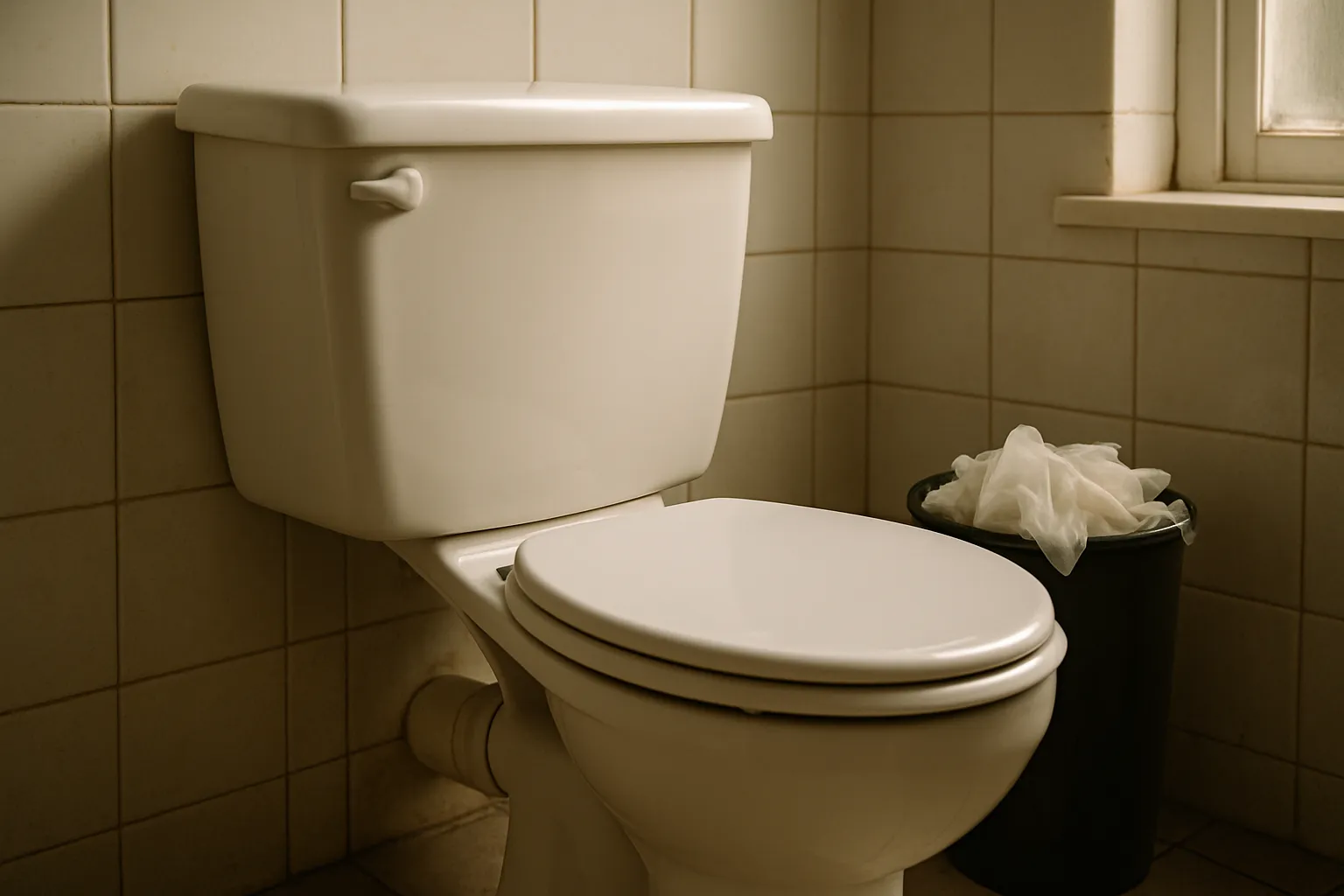
Everything else — regardless of what the packaging says — goes in the bin. Keep a small lidded bin next to the toilet. It takes about thirty seconds to install that habit and it can save you a significant call-out cost and a very unpleasant morning.
The Grease Problem Makes It Worse
Wipes rarely cause a blockage entirely on their own. In most drains we attend, there is a layer of solidified fat and grease already coating the inside of the pipe. This comes from cooking oil poured down the kitchen sink, butter washed off pans, and the natural fats in food waste.
That greasy coating is sticky. Wipes adhere to it. Then more wipes adhere to those. Then cotton buds, then hair, then more grease — and within a few weeks you have a dense, solid mass that no amount of boiling water will shift.
If you want to protect your drains fully, the 3P rule for the toilet pairs with a simple kitchen rule: never pour fats, oils or grease down the sink. Let them cool, scrape them into a container, and put them in the bin.
Signs Your Drains Are Already Struggling
Blockages rarely happen without warning. Watch for:
- Water draining slowly from the toilet, bath or sink
- A gurgling sound from the plughole after you flush
- An unpleasant smell rising from drains
- Water backing up into the bath when you flush the toilet
If you notice any of these, the blockage is already forming. Acting early — before the drain stops completely — usually means a simpler and less disruptive fix.
When to Call Us
If your drain has stopped draining, is backing up, or you can smell something coming from your pipes, do not wait. A partial blockage can become a complete one quickly, and in some cases water can back up into the property.
We cover Feltham, Hounslow, Twickenham, Teddington, Richmond, Isleworth, Staines and the surrounding TW area, 24 hours a day, seven days a week.
Call us on 07360 268948 and we will get someone to you as quickly as we can. We will also tell you honestly what we find — so you can make sure it does not happen again.
For a real local example, our sister drainage firm Drainiacs traced Whitton’s wet wipe problem to six houses on one pipe.