How-to
Water Pressure Problems in Higher-Ground TW Streets: Why It Happens and What to Do
Low water pressure in Twickenham, Richmond Hill and nearby TW streets explained — causes, quick fixes, and when to call an emergency plumber.
Published 10 July 2026
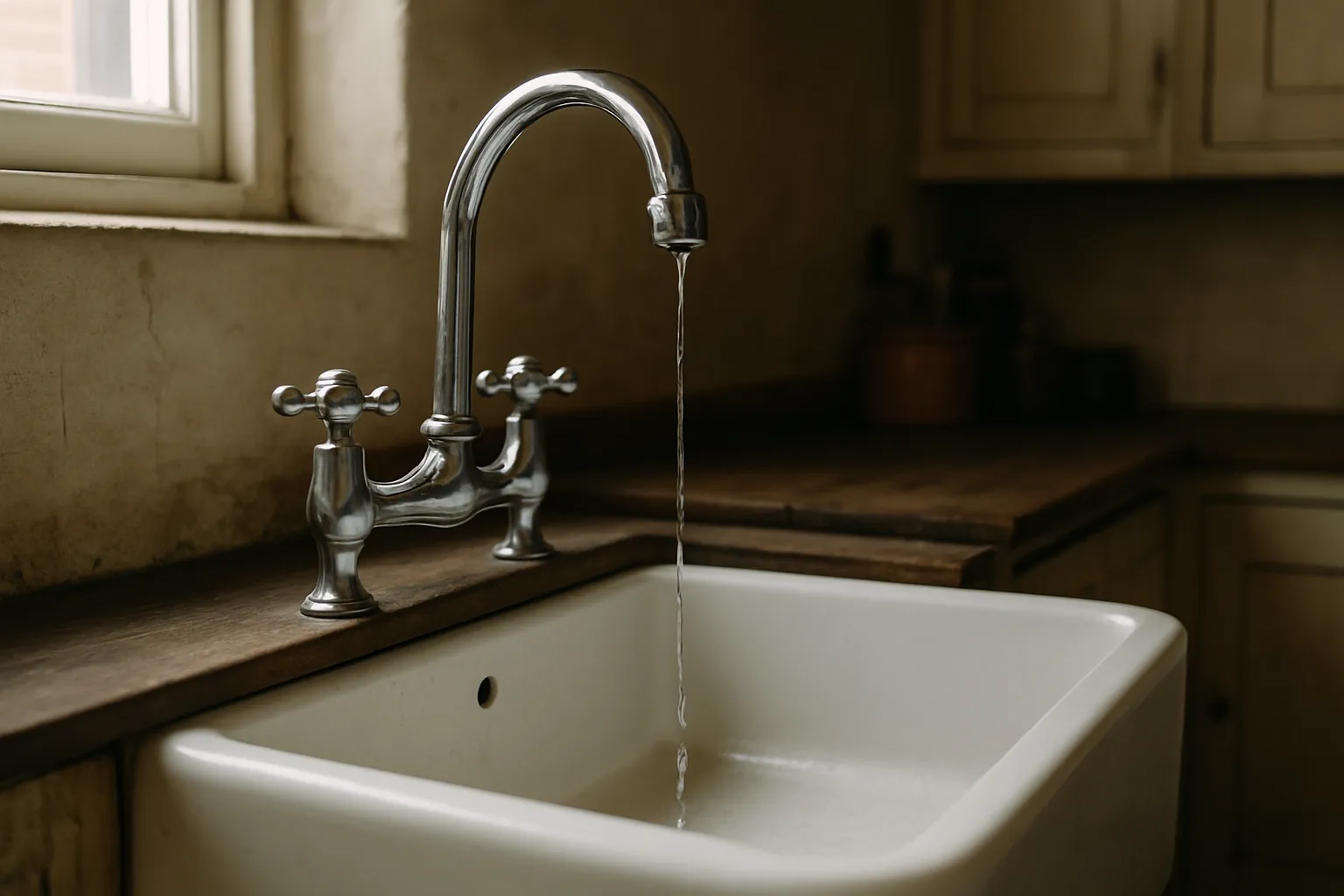
Why Water Pressure Is a Particular Problem on Higher-Ground TW Streets
If you live on or near Richmond Hill, Petersham Road, the upper parts of St Margarets, or any of the other elevated streets across the TW postcode area, you may have noticed that your water pressure is noticeably weaker than your neighbours a few streets downhill. This is not a coincidence, and it is not simply a faulty tap. Topography, ageing infrastructure, and the way the local water network was originally designed all play a part.
The Simple Physics of Water Supply
Mains water is delivered at pressure generated either by pumping stations or, in older systems, by gravity from elevated service reservoirs. The higher your property sits above the local supply point, the less residual pressure arrives at your tap. In parts of the TW area — particularly around Richmond Hill, which rises sharply above the Thames — this gradient effect is pronounced. Properties near the top of the hill can sit 30–40 metres above the river valley below, and every metre of elevation costs a small but measurable amount of pressure.
Victorian Mains: An Ageing Network
Much of the water infrastructure beneath TW streets dates from the Victorian era or the early twentieth century. Cast-iron mains corrode internally over decades, gradually narrowing the effective bore through which water can flow. Scale, sediment, and partial blockages accumulate quietly for years. The result is reduced flow rates that worsen over time, often without any single dramatic event to prompt a repair.
Higher-ground streets tend to be at the end of long supply runs, which compounds the problem. By the time water has travelled through miles of ageing pipework and climbed the local gradient, pressure losses add up.
Common Signs You Have a Pressure Problem
- Showers that trickle rather than flow, particularly on upper floors
- Slow-filling baths or cisterns
- Appliances such as combination boilers, washing machines, or dishwashers displaying low-pressure warnings or failing to start cycles
- Noticeably worse pressure in the morning or early evening (peak demand periods)
- Pressure that is fine downstairs but poor upstairs
Step-by-Step: Diagnosing the Cause
1. Check Whether It Affects Hot and Cold Equally
If only your hot water pressure is low, the problem is likely internal — a partially closed service valve on your hot water cylinder, a failing pump, or a blocked filter on a combination boiler. If both hot and cold are affected, the issue is more likely at the incoming supply.
2. Check Your Stopcock and Any Inline Valves
A partially closed stopcock — the valve under your kitchen sink or where the supply enters the property — is one of the most common and easily overlooked causes of poor pressure. Turn it fully anticlockwise to ensure it is completely open.
3. Talk to Your Neighbours
If nearby properties on the same street share the same poor pressure, the fault is likely in the shared mains rather than your private supply pipe. Thames Water is responsible for the public main; you are responsible for the supply pipe from the boundary of your property inward.
4. Report to Thames Water
Thames Water have a pressure complaints process and are obliged to investigate if mains pressure falls below the guaranteed standard (normally 10 metres head, or around 1 bar). You can report online or by phone. Keep a note of when pressure is worst — this helps their engineers identify whether it is a network-wide or localised fault.
What a Plumber Can Do
Where the problem lies within your private pipework, there are several practical remedies:
- Replacing corroded or undersized internal pipework. Older properties sometimes still have lead or narrow-bore iron supply pipes internally. Replacing these with modern 22 mm or 28 mm copper or plastic pipe can make a significant difference.
- Installing a pressurisation unit or booster pump. For properties where mains pressure is genuinely low and unlikely to improve, a correctly sized booster pump fitted on the rising main can restore adequate flow throughout the house.
- Fitting an accumulator tank. This stores pressurised water and helps maintain steady flow during peak demand without putting continuous strain on a pump.
- Checking and cleaning filters and strainers. Combination boilers and some appliances have inline filters that become blocked with debris from ageing mains. Cleaning or replacing these is a quick win.
When Low Pressure Signals a Leak
A sudden or progressive drop in pressure — rather than a longstanding background problem — can indicate a leak on your supply pipe, sometimes underground between the boundary and your property. This is worth taking seriously: a slow leak beneath a garden or driveway can cause ground movement and structural damage over time, and you are responsible for repair costs on your side of the boundary.
If you suspect a leak, check your water meter (if you have one) when all taps and appliances are off. If the dial is still moving, water is escaping somewhere.
When to Call an Emergency Plumber
Most pressure problems are not immediate emergencies, but some situations do warrant an urgent call:
- Pressure has dropped suddenly and you can see or hear water escaping
- A pipe has burst or you have visible water damage
- Your boiler has locked out due to low pressure and you have no heating or hot water
In those cases, do not wait. Call us any time on 07360 268948 — we cover the TW postcode area around the clock, including Richmond, Twickenham, and the higher-ground streets where pressure problems are most common.
For non-urgent pressure issues, we are still happy to assess and advise. A proper diagnosis now prevents a more expensive problem later.