How-to
Understanding Your Home's Plumbing: A Beginner's Map
Learn the basics of your home plumbing system — mains supply, stopcocks, cylinders and waste pipes — so you can act fast when something goes wrong.
Published 7 July 2026
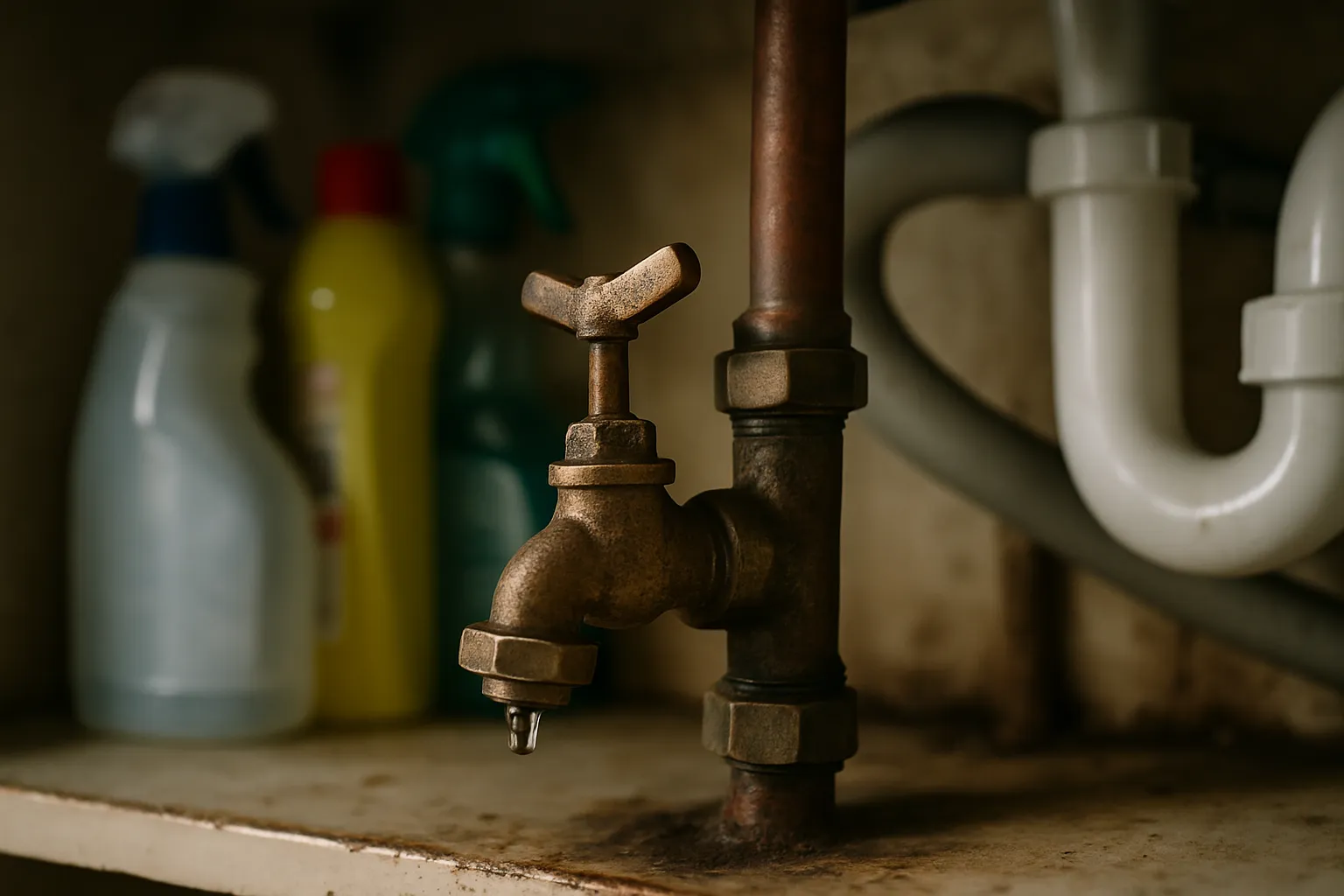
You do not need to be a plumber to understand your home’s plumbing system. Knowing where the water comes from, where it goes, and where to turn it off in an emergency can save you thousands of pounds in damage. This guide gives you a plain-English tour of the key components.
Where Your Water Comes From
Your home is connected to the public water mains, which in the TW postcode area is managed by Thames Water. Cold water enters the property through a service pipe buried underground. This pipe runs beneath your front garden or path and connects to the internal stopcock — the single most important valve in your home.
The Internal Stopcock
The internal stopcock is usually found:
- Under the kitchen sink
- In a downstairs cupboard near the front of the property
- Sometimes in a utility room or garage
It looks like a small brass tap or lever. Turning it clockwise shuts off the water supply to the entire house. Find it now, before you need it. If it has not been touched in years, turn it gently — old stopcocks can seize.
There is also an external stopcock (sometimes called a boundary stopcock) in a small metal box set into the pavement or path outside your property. This one belongs to Thames Water and requires a special key to operate.
Cold Water Supply
From the internal stopcock, cold water typically travels in one of two ways depending on your property type:
Direct system — cold water goes straight from the mains to all your taps, toilets, and appliances at mains pressure. Common in modern homes.
Indirect system — mains water fills a cold water storage tank (usually in the loft), which then feeds most of the house by gravity. Only the kitchen cold tap and sometimes one bathroom tap run directly from the mains. Older Victorian and Edwardian properties across Richmond, Twickenham, and Teddington often have this arrangement.
Hot Water
How your home heats water depends on the system installed:
- Combi boiler — heats water on demand with no storage cylinder. Compact and common in flats and smaller houses.
- System boiler with a hot water cylinder — the boiler heats water that is stored in an insulated cylinder, usually in an airing cupboard. Feeds hot water to all outlets.
- Unvented (pressurised) cylinder — fed directly from the mains, so hot water arrives at high pressure. These must be serviced regularly and should only be worked on by a qualified plumber.
The Cylinder Thermostat and Immersion Heater
If you have a cylinder, it will have a thermostat set to around 60 °C (hot enough to prevent legionella). Many cylinders also have an immersion heater — an electric backup element inside the tank — useful if your boiler breaks down.
Waste and Drainage
Once water has been used, it leaves through the waste system:
- Sink and bath wastes run to a vertical soil stack or directly through the external wall to a drain.
- Toilets connect to the soil stack, which carries waste down to the underground drain.
- Underground drains run beneath your garden to the sewer in the street.
Each fixture has a trap — a U-shaped bend that holds a small amount of water, blocking sewer gases from entering the house. If a trap dries out or becomes blocked, you may notice unpleasant smells.
Key Valves to Know
| Valve | Location | What it does |
|---|---|---|
| Internal stopcock | Under kitchen sink / cupboard | Shuts off all water to the property |
| Isolation valves | Behind toilets, under sinks | Shuts off supply to one fixture only |
| Gate valve | Near cold water tank (older homes) | Controls flow from the storage tank |
| Pressure relief valve | On unvented cylinder | Safety device — never block or remove |
A Simple Checklist for Every Householder
- Locate and test your internal stopcock
- Note where your boiler and cylinder are
- Check whether you have a loft tank
- Find the isolation valves under each sink and behind each toilet
- Know which bin your external stopcock is in (outside the front of the property)
When Something Goes Wrong
Understanding your system means you can act in the first few minutes of an emergency — turning off the stopcock before a burst pipe floods your kitchen, or isolating a leaking toilet without cutting water to the whole house.
If you have found a leak, heard an unusual noise from your cylinder, or simply cannot locate your stopcock, do not wait. Call us any time on 07360 268948. We cover the TW area around the clock and your details go straight to a local plumber.