How-to
Toilet Won't Stop Running: Causes and Fixes
A running toilet can waste hundreds of litres a day. Learn how to diagnose the flapper, float, and fill valve — and when to call a plumber.
Published 30 June 2026
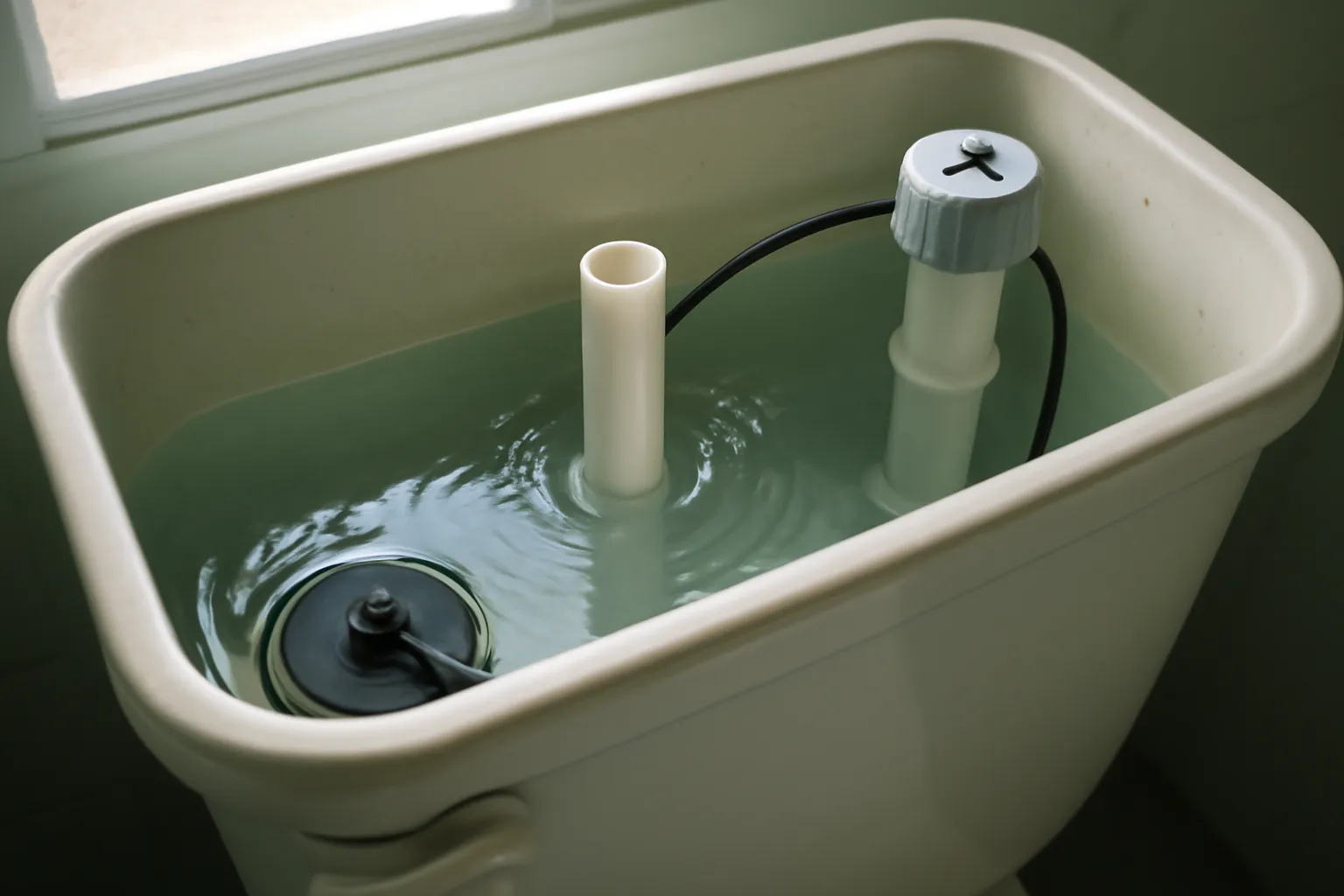
Why You Should Not Ignore a Running Toilet
That faint hissing or trickling sound from your cistern is easy to tune out — but a continuously running toilet can waste anywhere from 200 to 400 litres of water every single day. Over a month, that is enough to fill a small swimming pool. Beyond the environmental impact, it will show up on your water bill, and in some cases it signals a fault that is about to get worse.
The good news is that most running toilets have one of three common causes, and two of them are straightforward DIY fixes.
The Three Most Common Causes
1. A Worn or Warped Flapper
The flapper is the rubber seal at the bottom of the cistern. When you flush, it lifts to release water into the bowl, then drops back down to create a watertight seal while the cistern refills. Over time, rubber degrades — it warps, cracks, or accumulates limescale — and the seal becomes imperfect.
How to check it:
- Lift the cistern lid and look at the flapper.
- Drop a small amount of food colouring into the cistern. Wait ten minutes without flushing. If colour appears in the bowl, the flapper is leaking.
The fix: Flappers are inexpensive and sold at most DIY stores. Turn off the water supply (the isolation valve is usually on the pipe behind or beneath the toilet), flush to empty the cistern, unclip the old flapper, and clip in the new one. Turn the water back on and test.
2. A Misadjusted or Faulty Float
The float tells the fill valve when the cistern is full. In older toilets it is a ball-float on an arm; in modern toilets it is typically a cylindrical float that rides up and down the fill valve shaft.
If the float is set too high, water rises above the overflow tube and drains continuously into the bowl — you will often hear a steady trickle rather than a hiss.
How to check it:
- Remove the cistern lid. If water is sitting at or above the top of the overflow tube (the vertical pipe inside the cistern), the float level is too high.
The fix:
- Ball-float arm: Gently bend the arm downward, or adjust the adjustment screw at the pivot point, so the float shuts off the water roughly 25 mm below the top of the overflow tube.
- Cylindrical float: Pinch the clip on the float and slide it down the fill valve shaft.
If the float itself is cracked and waterlogged, it will not rise properly regardless of adjustment — replace it.
3. A Failing Fill Valve
The fill valve (also called the ballcock in older cisterns) controls the flow of water into the cistern after a flush. When it wears out, it may not shut off completely, causing a constant hiss even when the float is in the correct position.
How to check it:
- Push the float arm or float down firmly by hand. If the hissing stops, the float adjustment is the issue (see above). If it continues, the fill valve itself is likely faulty.
The fix: Fill valves can sometimes be rebuilt with a seal kit, but in most cases a full replacement is the more reliable option. Modern fill valves are not expensive, but the job does involve draining the cistern, disconnecting the water supply, and refitting the new valve correctly. If you are not confident doing this, it is worth calling a plumber.
Other Possible Causes Worth Checking
- A kinked or tangled flush chain: If the chain between the handle and the flapper is too short or caught, it can hold the flapper slightly open. Adjust the chain length so there is a small amount of slack.
- A cracked overflow tube: Rare, but a cracked tube can cause water to drain away before the cistern reaches the correct level.
- High water pressure: Excessively high mains pressure can overpower a fill valve. A plumber can fit a pressure-reducing valve if this is the issue.
When to Call a Plumber
Most running toilets can be sorted with a replacement part and half an hour of your time. Call a professional if:
- You have adjusted the float and replaced the flapper, but the cistern still will not stop running.
- Water is leaking from the base of the cistern or around the pan connector.
- The toilet is overflowing rather than simply running.
- You are not comfortable working with the water supply isolation valve.
Quick Reference: Symptom Checklist
| What you hear / see | Most likely cause |
|---|---|
| Steady trickle into the bowl | Float set too high |
| Constant hiss, water not overflowing | Worn flapper or failing fill valve |
| Coloured water appears in bowl | Flapper not sealing |
| Cistern never fully fills | Float too low, or fill valve fault |
A running toilet is rarely a crisis, but it is worth sorting promptly to save water and avoid the fault developing into something more disruptive. If you have worked through the steps above and the problem persists — or if water is actively overflowing — we are available around the clock across the TW postcode area.
Call us any time on 07360 268948.