Emergencies
Toilet Won't Flush and the Water Keeps Rising: A 10-Minute Emergency Plan
Water rising in your toilet? Follow this calm, step-by-step plan to stop the overflow, clear a basic blockage, and know when to call a plumber.
Published 17 July 2026
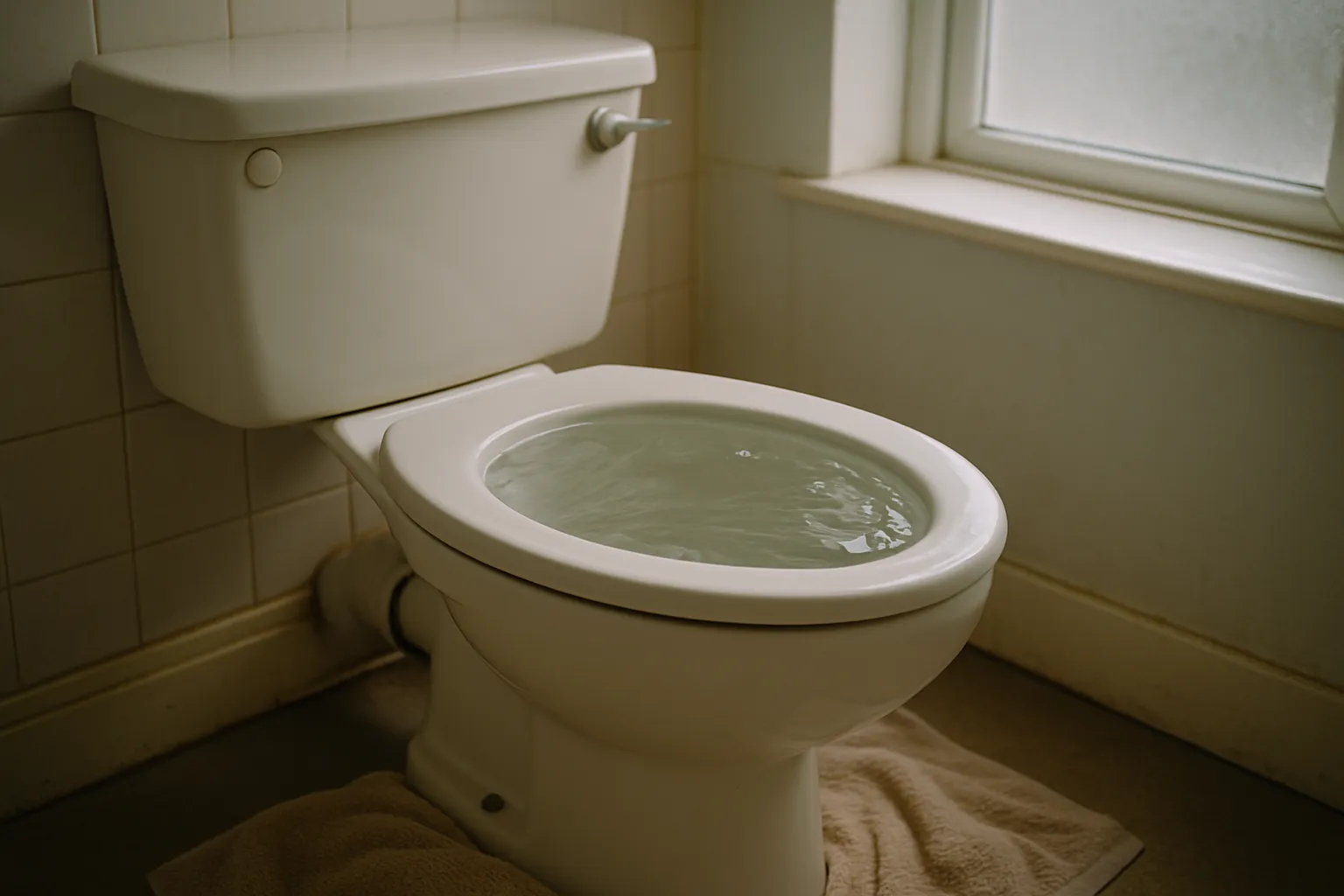
A toilet bowl filling up rather than draining is one of those moments that triggers instant panic. Take a breath. In most cases you have a minute or two before anything reaches the floor, and there are clear steps you can take right now to stop the situation getting worse.
Work through this plan in order. If the water is already spilling over the rim, skip straight to Step 1.
Step 1 — Stop More Water Entering the Bowl
Do not flush again. This is the single most important rule. A second flush adds several more litres to a bowl that has nowhere to send them.
Reach behind or beside the toilet pan and find the isolation valve on the supply pipe — it looks like a small tap or a slotted screw. Turn it clockwise (or turn the tap handle to the closed position). This cuts the water supply to the cistern so that even if someone flushes by accident, no fresh water can enter.
If you cannot find the isolation valve, lift the cistern lid and prop the float arm up with your hand or a pencil laid across the top of the cistern. This keeps the inlet valve closed and stops the cistern refilling.
Step 2 — Give the Water a Moment to Settle
Once no more water is entering, watch the bowl for 30 to 60 seconds. If the level drops even slightly, that is a good sign — there is a partial blockage rather than a complete one, and it may respond to a plunger.
If the level is completely static or still rising, the blockage is solid. Move to Step 3 and be prepared to call a plumber.
Step 3 — The One Plunger Technique That Actually Works
A standard cup plunger is often the wrong tool for a toilet. What you need is a flange plunger — the kind with a rubber cup that has a soft sleeve folded inside it. That sleeve fits into the toilet outlet and creates a proper seal.
If you have one:
- Lower it slowly into the water at an angle to let air escape from the cup. Trapped air breaks the seal.
- Push it gently into the outlet so the flange seats firmly.
- Use slow, steady pushes and pulls — not fast jabbing. You are trying to move the blockage, not compact it further.
- After six to eight strokes, pull the plunger away sharply. This reverse pressure often dislodges the obstruction.
- Watch whether the water starts to drain. If it does, wait a full minute before turning the water supply back on and attempting a careful, single flush.
Do not use chemical drain unblockers in a toilet that is not draining. If the bowl is full, the chemicals have nowhere to go and will sit in the pan, creating a hazard for anyone working on it later.
Step 4 — Protect the Floor
While you work, lay old towels or newspaper around the base of the toilet. If water does spill, this limits how far it spreads and reduces the risk of it seeping through to a ceiling below. Take a quick photograph of any water on the floor — this is useful evidence should you need it for a home insurance claim later.
When to Stop and Call a Plumber
Stop what you are doing and call a plumber if:
- The water is at or above the rim
- Plunging has made no difference after two or three attempts
- Water is coming up in a nearby basin, bath or shower at the same time (this suggests a shared drain blockage further down the line)
- You can see or smell sewage-contaminated water
- The toilet has blocked repeatedly in recent weeks
A shared drain blockage or a collapsed pipe will not respond to a plunger, and continued attempts can push waste further into the system.
What a Plumber Will Do
A professional will use a closet auger (a flexible drain rod designed specifically for toilet traps) to reach and break up blockages that a plunger cannot shift. For deeper or shared drain blockages, high-pressure water jetting and a CCTV drain survey may be needed to locate the exact cause.
Covering the TW Area
If you are in Isleworth, Twickenham, Teddington, Richmond, Hounslow, Feltham, Staines or anywhere else in the TW postcode area, help is close by.
You have done the right thing by staying calm and following these steps. If the situation is not resolving or the water is threatening to overflow, do not wait — call 07360 268948 now. We are available 24 hours a day, every day, and we can usually reach you quickly across the TW area.
If the pan is clear and the water still rises, the blockage is further down, and our sister drainage firm Drainiacs handle blocked toilets and sinks across TW.