Emergencies
Saniflo and Macerator Problems: Why They Block and Who Actually Fixes Them
Saniflo blocked or macerator toilet making strange noises? Find out why they fail, what to do right now, and who to call in the TW area.
Published 20 July 2026
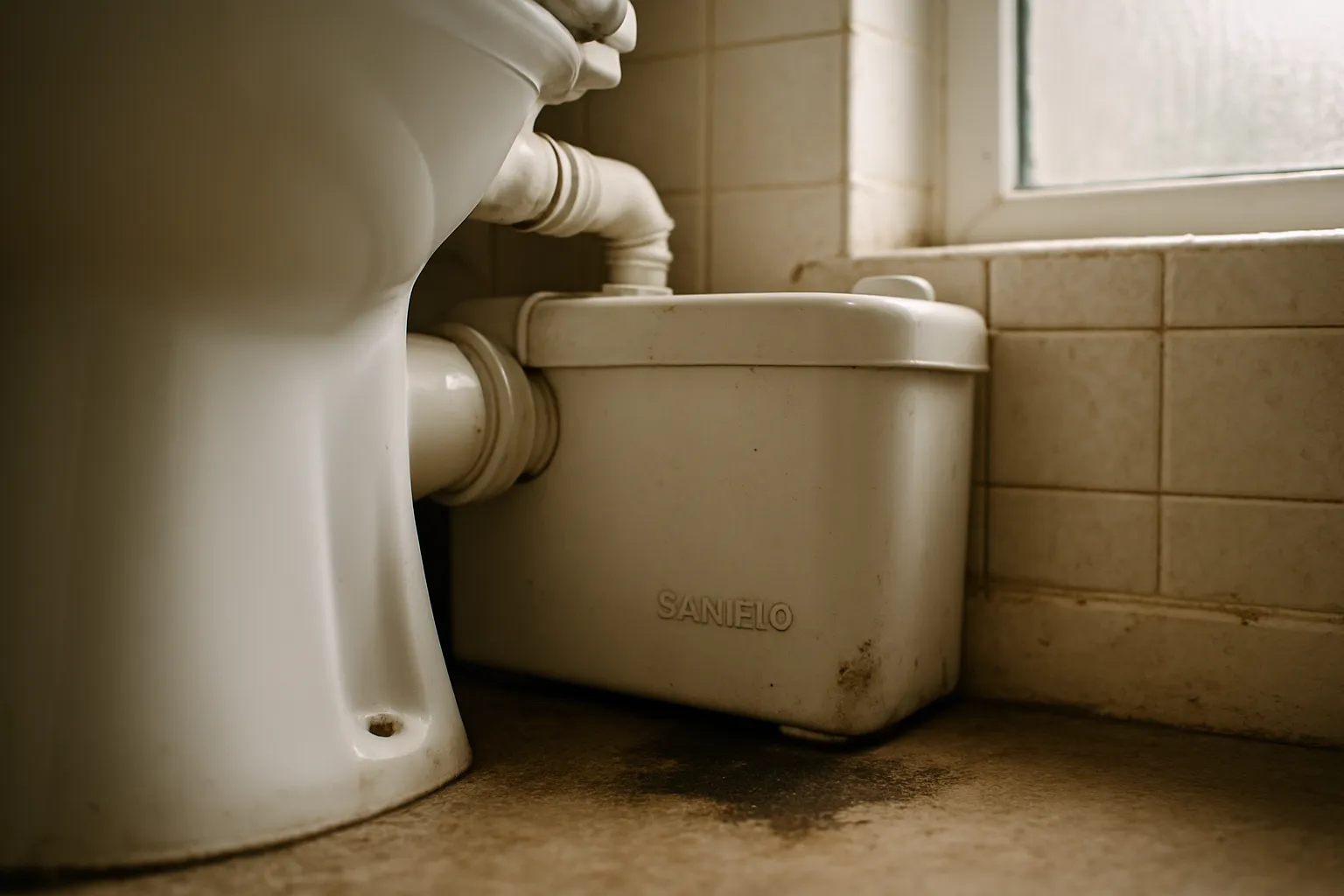
If you have a loft conversion, a basement loo, or a bathroom added to a room that was never meant to have one, there is a reasonable chance it runs through a macerator unit — quite possibly a Saniflo. When these systems work, they are almost invisible. When they stop working, the problem is very hard to ignore and surprisingly difficult to get fixed quickly.
Most general plumbers will not touch them. This guide explains why macerators fail, what the warning signs are, and what to do when yours gives up.
What Is a Macerator, and Why Does It Need Specialist Attention?
A macerator is a small pump unit that sits behind or beneath the toilet pan. It grinds waste and pumps it upward or across long horizontal runs to reach the main soil stack — something a conventional gravity toilet cannot do. That is what makes them so useful in awkward spaces.
The trade-off is mechanical complexity. Unlike a standard toilet that relies purely on gravity, a macerator has a motor, rotating blades, rubber seals, a pressure switch, and a non-return valve. Any one of those components can fail, and diagnosing which one requires specific knowledge of how these units are built.
The Most Common Macerator Problems
1. Blockage from non-flushable items
Macerators are genuinely sensitive. Wet wipes — even those labelled “flushable” — are the single biggest cause of blocked macerators. Cotton wool, sanitary products, dental floss, and excessive toilet paper all cause the same problem. The blades jam, the motor overheats, and the unit trips out.
What you will notice: The unit hums but does not pump, or it runs continuously without clearing.
2. Limescale build-up
In hard-water areas like much of the TW postcode — Twickenham, Staines, Feltham and surrounding towns — limescale accumulates on the blades and inside the pump chamber over time. This slows the motor and eventually causes it to seize.
What you will notice: Slow flushing, gurgling, or the unit taking much longer than usual to empty.
3. Worn or perished rubber seals
The rubber membrane and seals inside a macerator degrade over years of use. When they fail, you may get leaks at the base of the unit, or the pressure switch stops sensing waste correctly and the pump either runs non-stop or refuses to start.
What you will notice: Water pooling around the unit, or a motor that runs continuously even when nothing has been flushed.
4. Failed non-return valve
The non-return valve prevents pumped waste from flowing back toward the toilet when the motor stops. If it fails, you will often smell sewage, and waste may back up into the pan.
What you will notice: Unpleasant odours, slow drainage, or waste reappearing in the bowl.
5. Motor failure
Motors do eventually burn out, particularly if the unit has been repeatedly overloaded or has run dry. This is not always a reason to replace the entire unit — motors can often be replaced — but it does require a plumber familiar with the specific brand and model.
What You Can Do Right Now
- Stop using the toilet. Continuing to flush a blocked or failing macerator can force waste back up into the pan or overflow the unit.
- Switch the unit off at the isolator switch (usually on the wall nearby). This prevents the motor from burning out while it is jammed.
- Do not attempt to dismantle the unit yourself. Macerators contain waste under pressure and sharp internal components. Opening the casing without the right tools and knowledge causes more harm than good.
- Note the model. Most Saniflo units have a model name printed on the casing — Saniflo Saniplus, Saniaccess, Sanibest, and so on. This helps the engineer arrive with the right parts.
Why Many Plumbers Will Not Attend
It is frustrating, but honest: a large proportion of general plumbing engineers will decline a macerator job. The units require brand-specific knowledge, the fault-finding process is different from standard plumbing, and the parts vary significantly between models. If you have already rung two or three firms and been turned away, that is why.
The answer is to call a plumber who specifically works on macerators and pump systems — not simply a general emergency plumber.
Preventing Future Problems
- Use only toilet paper — no wipes, no cotton products, no sanitary items.
- Descale the unit every three to six months using a macerator-specific descaler (not bleach, which damages rubber seals).
- If you hear any change in the sound the motor makes — louder, slower, or intermittent — get it looked at before it becomes a full blockage.
Need Help in the TW Area?
A blocked or failed macerator is a genuine emergency, particularly if it is your only downstairs or loft bathroom. If you are in Shepperton, Staines, Twickenham, Teddington, Feltham, Hounslow, Richmond, Isleworth or anywhere across the TW postcode, call Emergency Plumbers TW on 07360 268948. We are available 24 hours a day, seven days a week, and we attend macerator and Saniflo faults that other firms will not.
When the blockage is in the macerator outlet rather than the pump, our sister drainage firm Drainiacs cover what you can and cannot fix yourself on a blocked Saniflo.